If you’re dealing with moisture in your crawl space, you’ve probably come across two common solutions: crawl space encapsulation and crawl space dehumidifiers. Both address humidity, but they work in very different ways. For homeowners in Raleigh and the greater Triangle area, understanding when you need one, the other, or both can save you thousands of dollars and years of structural damage.
This guide breaks down exactly what each solution does, how they compare, and which combination makes the most sense for homes in Wake County and surrounding areas.
What Is Crawl Space Encapsulation?
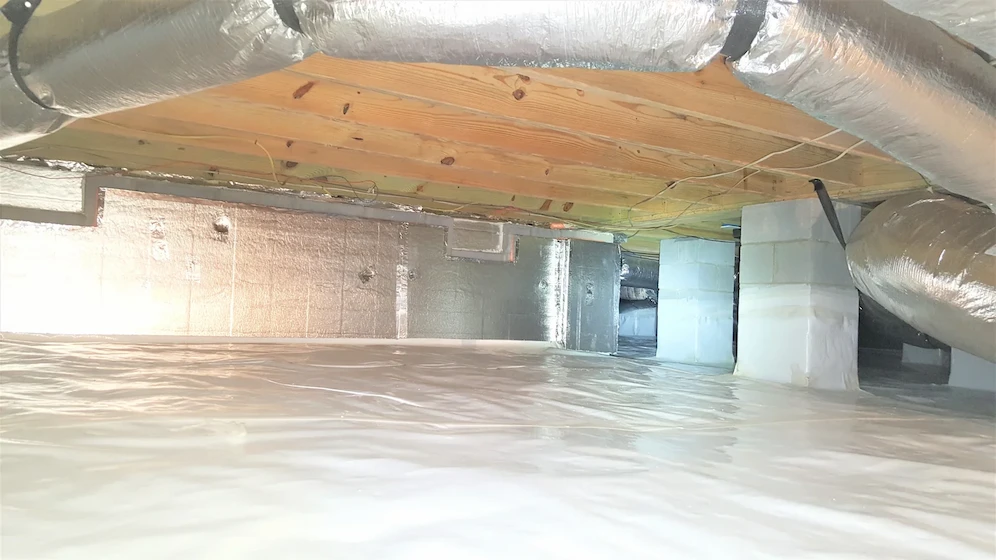
Crawl Space encapsulation is the process of sealing your crawl space from outside moisture. A heavy-duty polyethylene vapor barrier is installed across the floor and walls of the crawl space, and all foundation vents are sealed shut. The goal is to create a controlled environment that blocks ground moisture, humid outside air, and water vapor from entering the space beneath your home.
In Raleigh’s humid subtropical climate, traditional vented crawl spaces actually pull in moisture-laden air rather than ventilating it out. This is why the building science community has largely moved away from recommending vented crawl spaces in our region. Encapsulation solves this by eliminating the source of uncontrolled moisture infiltration.
A properly encapsulated crawl space typically includes:
- A 20-mil (or thicker) vapor barrier covering the floor and walls
- Sealed foundation vents
- Insulated crawl space walls
- A drainage system if standing water is present
- Sealed gaps around pipes, wires, and other penetrations
If your home was built before 2010 in Wake County, there is a strong chance your crawl space still has open foundation vents. These vents were once considered best practice but are now recognized as a primary contributor to crawl space moisture and mold problems.
What Does a Crawl Space Dehumidifier Do?
A crawl space dehumidifier is a mechanical device that actively removes moisture from the air inside your crawl space. Unlike portable household dehumidifiers from big-box stores, commercial-grade crawl space dehumidifiers are designed to handle the unique demands of a below-grade environment: low clearance, high humidity, and continuous operation.
These units are rated by pints per day (PPD) at saturation conditions, and a properly sized unit for most Raleigh homes will remove between 90 and 120 pints of moisture per day. They maintain your crawl space humidity at an ideal range of 45 to 55 percent relative humidity, which is the sweet spot for preventing mold growth, wood rot, and pest infestations.
Professional crawl space dehumidifier installation in Raleigh includes selecting the right unit size based on your crawl space square footage, installing proper drainage (either gravity drain or condensate pump), and configuring the humidistat for automatic operation.
How They Work Together in Raleigh’s Climate
Here is the key point most homeowners miss: encapsulation and dehumidification are not competing solutions. They are complementary.
Encapsulation is the barrier. It stops the bulk of moisture from entering your crawl space in the first place. Without it, your dehumidifier is fighting a losing battle against Raleigh’s relentless humidity, which averages above 70 percent for much of the year.
A dehumidifier is the active control. Even in a well-encapsulated crawl space, residual moisture from concrete curing, minor water intrusion, and seasonal fluctuations needs to be managed. The dehumidifier handles this ongoing moisture load and keeps conditions stable year-round.
Think of it this way: encapsulation is like closing the windows in your house during a rainstorm. The dehumidifier is like running the AC to keep the indoor air comfortable. You need both for the best result.
What Happens If You Only Encapsulate?
Without a dehumidifier, an encapsulated crawl space can still accumulate moisture over time. Concrete floors and walls release moisture for years, and even small amounts of water intrusion can raise humidity levels into the danger zone above 60 percent. You may not see problems immediately, but mold and wood rot can develop within a few months of elevated humidity.
What Happens If You Only Install a Dehumidifier?
A dehumidifier in a vented, un-encapsulated crawl space is fighting a losing battle. The unit will run continuously, driving up your energy bills, and it may still fail to maintain safe humidity levels during Raleigh’s hottest and most humid months from June through September. An Advanced Energy study of 12 central North Carolina homes found that closed crawl spaces use 15–18% less energy for heating and cooling than identical homes with vented crawl spaces — savings that are lost when a dehumidifier runs nonstop in an open crawl space.
Cost Comparison for Triangle Homeowners
Understanding the investment involved helps with planning. Here are typical cost ranges for homes in the Raleigh, Durham, and Chapel Hill area:
Crawl space encapsulation: $5,000–$15,000 depending on crawl space size, accessibility, and whether drainage work is needed.
Crawl space dehumidifier (professionally installed): $3,000–$5,000 including the unit, drainage setup, and professional installation.
Combined encapsulation and dehumidifier: $7,500–$15,000 for a complete moisture control system.
While the upfront cost of the combined approach is higher, homeowners typically see returns through lower energy bills, reduced HVAC strain, and avoided repair costs from moisture damage. Replacing floor joists damaged by wood rot can cost $5,000 or more, making prevention far more affordable than remediation.
Which Solution Is Right for Your Home?
Every home is different, but here are general guidelines for Raleigh-area homeowners:
You May Only Need a Dehumidifier If:
- Your crawl space is already encapsulated but lacks humidity control
- You have an encapsulated crawl space with HVAC ducts that provide some conditioning
- Moisture levels are mildly elevated (55 to 65 percent) with no visible water intrusion
You Likely Need Full Encapsulation Plus a Dehumidifier If:
- Your crawl space has open foundation vents
- You see standing water, condensation on pipes, or visible mold
- Your home has musty odors, uneven floors, or increased allergy symptoms
- Relative humidity in your crawl space regularly exceeds 65 percent
- You are also dealing with whole-house humidity issues
You Might Also Consider an ERV
For homeowners focused on overall indoor air quality, an energy recovery ventilator (ERV) can complement your crawl space moisture control system by managing humidity and fresh air exchange throughout the entire home.
Questions Raleigh Homeowners Ask
Do I need a dehumidifier if I encapsulate my crawl space? In almost every case, yes. Encapsulation dramatically reduces moisture, but it does not eliminate it. A dehumidifier ensures humidity stays in the safe range of 45 to 55 percent year-round.
Can I use a regular dehumidifier from a hardware store? No. Residential portable dehumidifiers are not designed for crawl space conditions. They lack the capacity, durability, and drainage options needed for continuous below-grade operation. A commercial crawl space dehumidifier rated at 90-plus PPD is the minimum for most Raleigh homes.
What humidity level should my crawl space be? The ideal range is 45 to 55 percent relative humidity. Anything above 60 percent creates conditions for mold growth, and anything above 70 percent can accelerate wood rot and attract pests like termites.
How long does encapsulation last? A properly installed encapsulation system with a quality vapor barrier should last 15 to 25 years. The dehumidifier will typically need replacement every 7 to 10 years depending on the unit and operating conditions.
Protect Your Raleigh Home the Right Way
Crawl Space moisture is not a problem that goes away on its own, especially in the Triangle. Whether your home needs encapsulation, a dehumidifier, or a complete moisture control system, the right approach depends on your specific situation.
At Triangle Dehumidifiers, we help homeowners across Raleigh, Durham, Cary, Apex, and the surrounding service areas find the right solution for their home. We offer free assessments so you know exactly what your crawl space needs before spending a dollar.
Call us today at (919) 867-0580 or contact us online to schedule your free crawl space evaluation. We will help you determine whether encapsulation, a dehumidifier, or both will keep your home dry, healthy, and protected for years to come.