
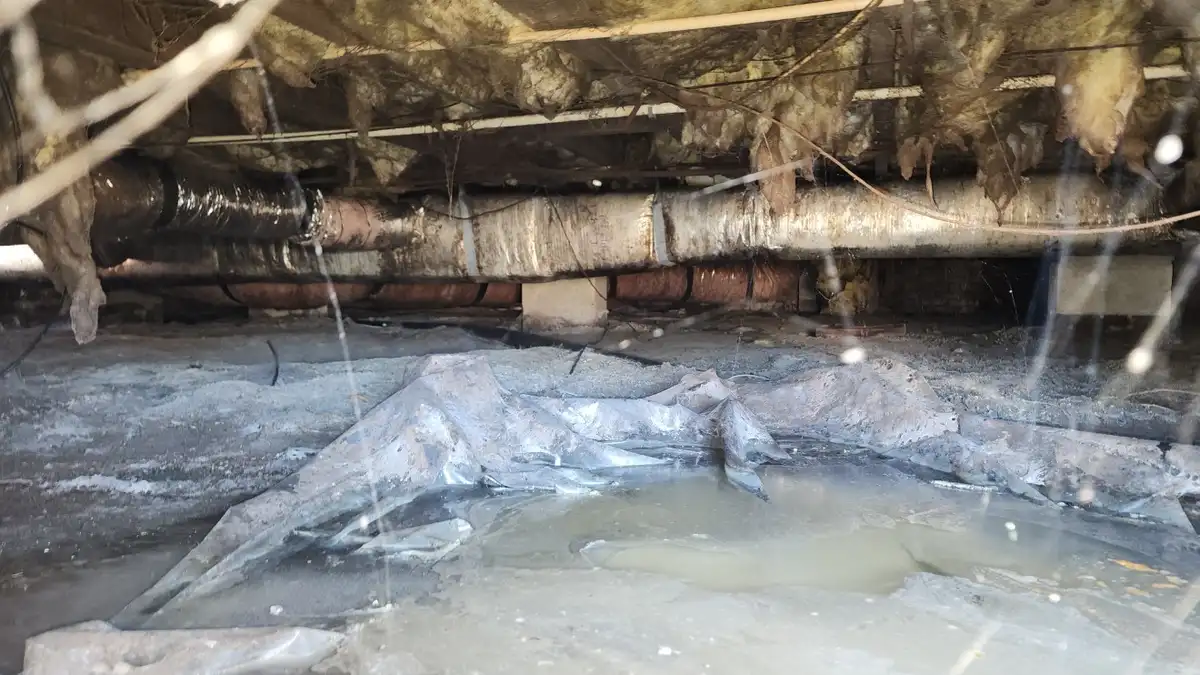
Key takeaway: Mold in your crawl space can contribute to allergy symptoms, respiratory problems, and chronic fatigue — even if you never go down there. In the Raleigh area, a combination of high summer humidity, clay-heavy soil, and older vented crawl space designs makes mold growth especially common. Controlling moisture at the source is the only lasting solution.
If you have been dealing with stuffy sinuses, unexplained headaches, or allergy symptoms that seem worse when you are home, the cause might not be what you expect. For thousands of homeowners across Raleigh, Cary, Apex, and the surrounding Wake County area, the problem is under their feet — in a crawl space they rarely think about.
Crawl space mold is one of the most common and most overlooked indoor air quality issues in the Triangle. And because of our local climate and the way many homes here were built, Piedmont North Carolina is one of the worst places in the country for this particular problem.
Here is what you need to know about crawl space mold health risks, why homes in our area are especially vulnerable, and what actually works to fix it.
How Crawl Space Mold Can Affect Your Health
Mold does not have to be visible in your living space to affect you. According to the EPA, mold produces allergens, irritants, and in some cases mycotoxins — substances that can cause health problems when inhaled or when they come in contact with skin.
Common symptoms that may be associated with crawl space mold exposure include:
- Persistent sneezing, congestion, or runny nose
- Itchy, watery, or red eyes
- Coughing or wheezing, especially at night or in the morning
- Headaches that improve when you leave the house
- Fatigue or brain fog
- Skin irritation or rashes
- Worsening asthma symptoms
For most healthy adults, these symptoms are annoying but manageable. The bigger concern is prolonged exposure. When you are breathing in mold spores regularly inside your own home, mild symptoms can become chronic problems. A 2004 review by the Institute of Medicine found sufficient evidence linking indoor mold exposure to upper respiratory tract symptoms, coughing, and wheezing — even in otherwise healthy people.
Children, older adults, and anyone with asthma, allergies, or a weakened immune system may be at higher risk. If someone in your household has been dealing with respiratory symptoms that do not respond to typical treatments, crawl space mold is worth investigating.
Why Your Crawl Space Air Becomes Your Indoor Air
Here is the part most homeowners do not realize: a significant portion of the air you breathe inside your home may originate in the crawl space. This happens because of something called the stack effect.
Warm air naturally rises. In your home, heated air moves upward and escapes through the attic, upper-story windows, and roof penetrations. As that air leaves, replacement air gets pulled in from the lowest point — your crawl space. It enters through gaps around plumbing penetrations, electrical wiring, HVAC ductwork, and the subfloor itself.
Building science estimates suggest that up to 40–50% of the air on your first floor may have passed through the crawl space. That means any mold spores, moisture, musty odors, or volatile organic compounds in your crawl space can be drawn into your living space, through your HVAC system, and into every room of your home.
This is why you can have a mold problem affecting your family’s health without ever seeing a speck of mold in your kitchen, bathroom, or bedroom. The source is hidden below, but the effects can show up all around you.
Leaky Ducts: A Second Pathway Into Your Home
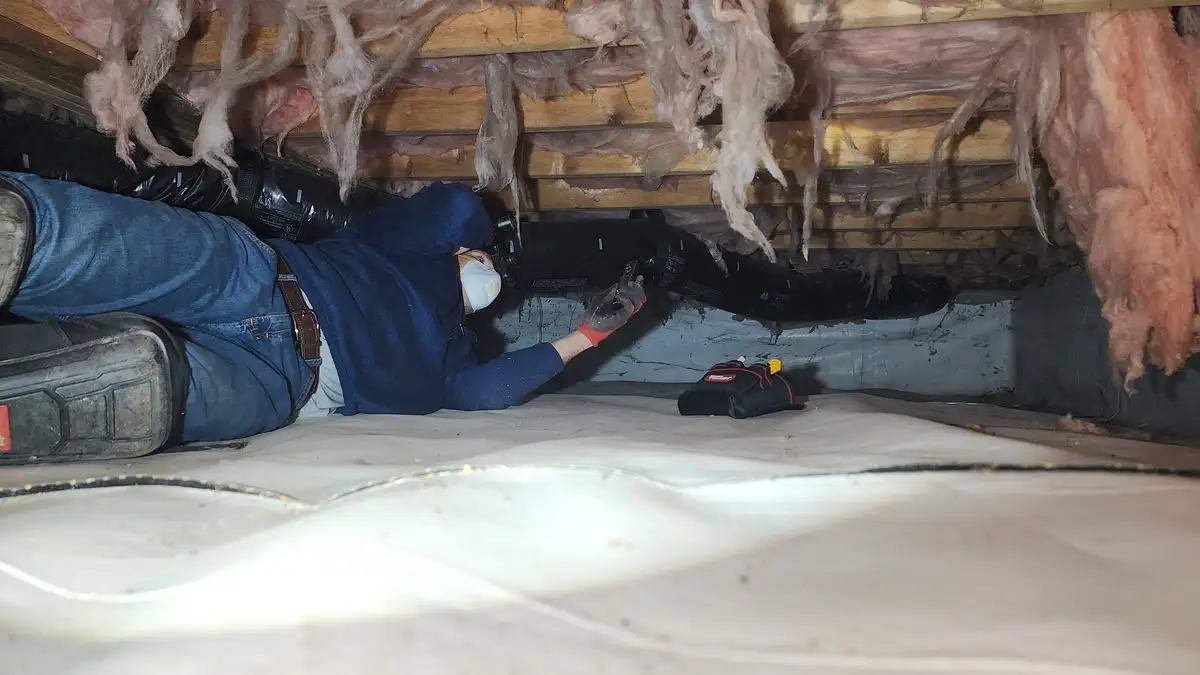
The stack effect is one way crawl space air reaches your living areas — but it’s not the only one. If your HVAC ductwork runs through the crawl space (as it does in many North Carolina homes), leaky ducts can pull contaminated crawl space air directly into the system and blow it throughout every room in your house.
This isn’t passive airflow. It’s mechanical. When your HVAC system runs, it creates pressure differences inside the ductwork. Small gaps at duct joints, boot connections, or damaged flex duct sections can draw in unfiltered air from the crawl space — air that may carry mold spores, excess moisture, dust, and other contaminants. That air mixes with your conditioned air and gets distributed through every supply register in the home.
A study published in the Journal of Occupational and Environmental Hygiene found that in roughly 1 in 5 homes studied, mold from the crawl space was transmitted into the living space — and the HVAC system was identified as one of the conduits for that transmission.
Why This Matters for Your Health
Even if your crawl space looks relatively dry, duct leaks can introduce enough moisture and mold spores to affect indoor air quality. You may not see visible mold upstairs, but airborne spore counts can still be elevated enough to trigger allergy symptoms, respiratory irritation, or aggravate asthma — especially in children and older adults.
What You Can Do About It
Test your ducts. A duct leakage test measures exactly how much air your ductwork is losing. A technician pressurizes the duct system to 25 pascals using a calibrated fan and manometer, then measures the airflow escaping through leaks (reported as CFM25). This tells you whether your ducts are reasonably tight or whether they’re pulling in a significant amount of crawl space air. Peak Energy offers duct leakage testing as part of their home performance services — it’s one of the most straightforward ways to find out if your ducts are part of the problem.
Seal the ducts. Once leaks are identified, sealing them with mastic or approved tape at joints, boots, and connections can significantly reduce the amount of unfiltered crawl space air entering your HVAC system.
Add whole-house air filtration. Even well-sealed ducts benefit from better filtration. A whole-house air purifier — like those from Aprilaire — installs directly into your HVAC system and filters all the air circulating through your home. Models with MERV 13 filters can capture particles down to 0.3 microns, which includes most mold spores (typically 2–10 microns in size). Higher-rated MERV 16 filters can capture 95% or more of particles in that range. This adds a layer of protection beyond duct sealing, catching any spores or allergens that do make it into the system.
These steps work best together: encapsulating the crawl space reduces the source of moisture and mold, sealing the ducts limits how much crawl space air enters the HVAC system, and whole-house filtration catches what gets through. It’s a layered approach — and for homes in the Triangle where humidity and crawl spaces are a given, each layer makes a real difference.
Why Raleigh and Wake County Homes Are Especially Vulnerable
Not every region has the same mold risk. The Raleigh-area Triangle sits in a near-perfect storm of conditions that make crawl space mold growth common if moisture is not actively managed.
High humidity. Piedmont North Carolina sees summer relative humidity that frequently exceeds 70%, with averages in the mid-to-upper 70s during peak months like July and August. When outdoor air at 85°F and high humidity enters a cooler crawl space, it can condense on surfaces like floor joists, ductwork, and subfloor sheathing. That condensation creates a persistent moisture film — exactly what mold needs.
Heavy rainfall. The Triangle receives roughly 46 inches of rain annually, with the heaviest stretches in spring and summer. All that water has to go somewhere. In neighborhoods built on the Piedmont’s characteristic red clay (Cecil and Appling soil series), the ground drains slowly. Water pools near foundations, saturates the soil, and wicks moisture up through exposed crawl space floors.
Vented crawl space design. Thousands of homes in Holly Springs, Apex, Cary, Fuquay-Varina, and Raleigh were built during the housing boom of the 1990s and 2000s with open, vented crawl spaces. At the time, the thinking was that vents would allow moisture to escape. We now know the opposite is true in humid climates — open vents invite warm, moisture-laden air directly into the crawl space, where it condenses and feeds mold growth. It is one of the most common problems we see in homes across Wake County.
Clay soil. Unlike sandy soil that drains quickly, the Piedmont red clay holds water like a sponge. After a heavy rain, the ground around your foundation can stay saturated for days. That moisture migrates through the soil and evaporates into your crawl space, keeping humidity levels high even without any plumbing leaks or standing water.
Signs Your Crawl Space May Have a Mold Problem
You do not need to crawl under your house to get a sense of whether mold might be an issue. Several indicators can show up in your living space long before you see anything in the crawl space itself.
Musty odors on the first floor. A persistent earthy or damp smell — especially near floor vents, closets, or interior stairwells — often points to mold or excessive moisture below. The smell tends to be strongest when the HVAC system kicks on, because the blower pushes crawl space air through the duct system.
Allergy symptoms that are worse at home. If your congestion, sneezing, or itchy eyes improve when you leave the house and come back when you return, your indoor air quality may be the culprit. Mold spores circulating through your HVAC system from the crawl space are a common cause.
Condensation on windows or ductwork. Visible moisture on the inside of windows or water droplets forming on exposed ductwork in the crawl space means relative humidity is too high. In a properly controlled crawl space, you should not see condensation.
Soft or warped hardwood floors. Excess moisture from below can cause hardwood flooring to cup, buckle, or feel spongy underfoot. If your floors have developed new creaks or uneven spots, moisture from the crawl space may be the cause.
Higher-than-expected energy bills. A wet crawl space can make your HVAC system work harder. Moisture-laden air is more difficult to cool, and a damp crawl space can undermine insulation performance. If your energy bills have crept up without a clear explanation, crawl space moisture is worth investigating.
What Actually Works to Fix Crawl Space Mold
Treating mold without addressing the moisture that caused it is a temporary fix at best. In the Raleigh-area climate, mold can return within months if the underlying moisture source is still present. Effective, lasting mold treatment in this region requires a moisture-first approach.
Step 1: Professional assessment. A thorough crawl space inspection should include humidity readings at multiple points, moisture content testing of wood framing, identification of moisture sources (groundwater, condensation, plumbing), and documentation of any existing mold growth. Visual inspection alone is not enough — a moisture meter and hygrometer provide the data you need to understand the severity of the problem.
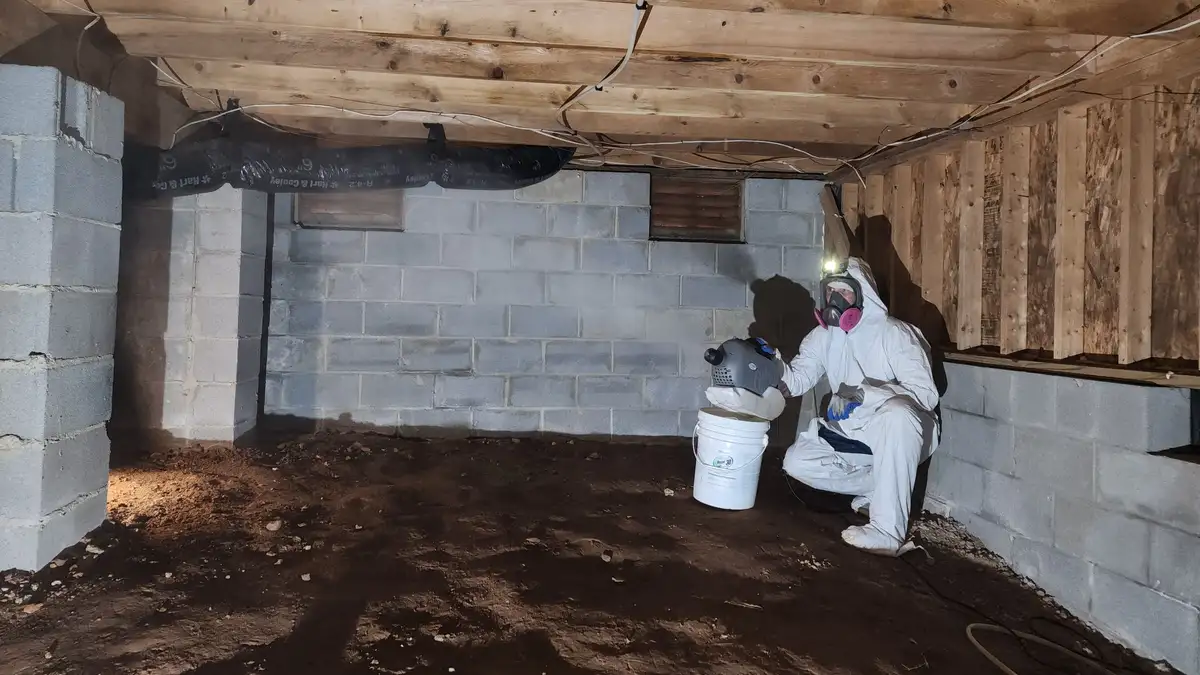
Step 2: Mold remediation. Once the source is identified, existing mold should be treated by a qualified professional. This typically involves HEPA vacuuming affected surfaces, applying antimicrobial treatment to framing and sheathing, and removing heavily damaged materials like saturated insulation. The goal is to eliminate active mold colonies before sealing the space.
Step 3: Moisture control. This is the most important step — and the one that prevents mold from coming back. For most Wake County homes, effective moisture control means:
- Sealing foundation vents to stop humid outdoor air from entering the crawl space
- Installing a vapor barrier over exposed soil to block ground moisture from evaporating into the space
- Adding a crawl space dehumidifier to maintain relative humidity below 55% year-round — critical during our humid summers when outdoor humidity regularly exceeds 70%
- Full crawl space encapsulation for comprehensive protection: a sealed vapor barrier on walls and floor, closed vents, air-sealed penetrations, and mechanical dehumidification
In our climate, a crawl space dehumidifier is not optional — it is essential. Even in an encapsulated crawl space, summer humidity in the Triangle can overwhelm passive moisture barriers. A properly sized dehumidifier removes moisture continuously and keeps conditions well below the threshold where mold can grow.
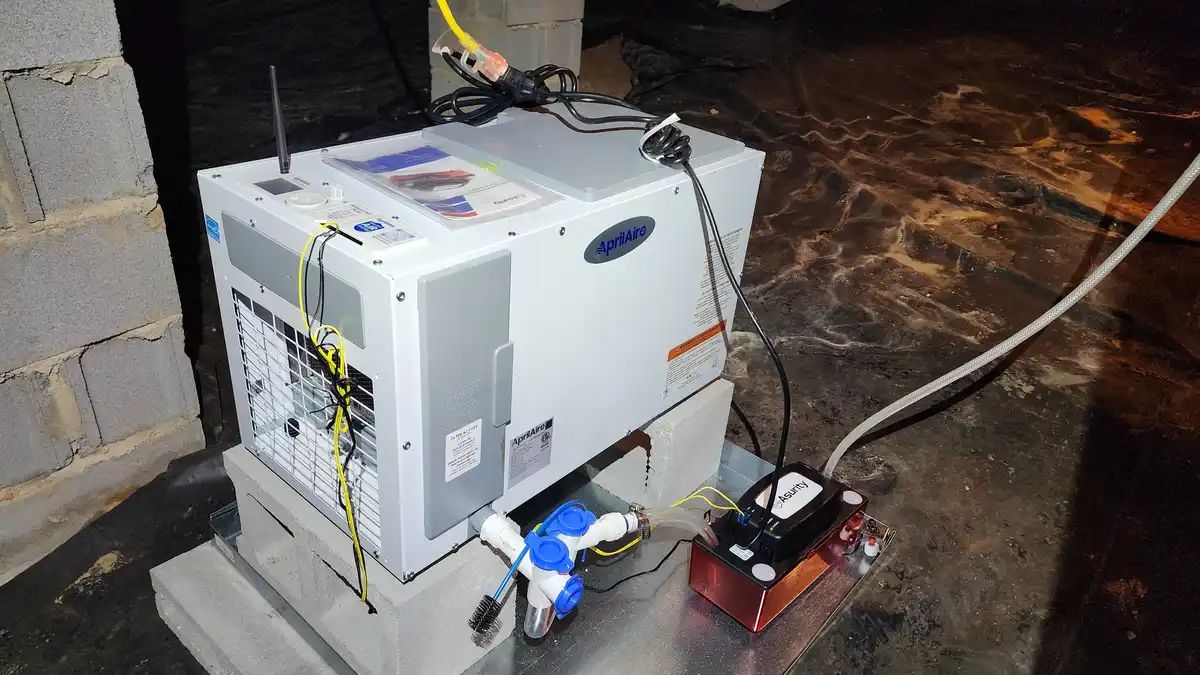
Typical costs in the Raleigh area: A professional crawl space dehumidifier, installed and configured, typically runs $3,000–$5,000 depending on the unit and crawl space size. Full encapsulation — which includes the vapor barrier, vent sealing, dehumidifier, and any necessary drainage — generally ranges from $5,000–$15,000 depending on the scope of work. Costs vary based on crawl space size, accessibility, and existing conditions, so a professional assessment is the best way to get an accurate estimate for your home.
When to Call a Professional
If you are noticing musty smells, unexplained allergy symptoms, or visible moisture in your crawl space, it is worth getting a professional opinion. Small moisture problems can turn into significant mold issues quickly in our climate — especially from May through October when humidity peaks.
A crawl space assessment should tell you exactly what is happening below your home: current humidity levels, whether mold is present, where moisture is coming from, and what it will take to fix it. No guesswork, no pressure — just a clear picture of the situation so you can make an informed decision.
Frequently Asked Questions
Can mold in my crawl space make me sick?
It can, yes. Mold spores from a crawl space can travel into your living space through the stack effect — warm air rising pulls crawl space air up through gaps in the subfloor. This may cause allergy symptoms, respiratory irritation, headaches, and fatigue, particularly for people with asthma or weakened immune systems. The EPA states that mold exposure can irritate the eyes, skin, nose, throat, and lungs.
How do I know if my crawl space has mold?
Common signs include a musty smell on the first floor (especially near vents), increased allergy symptoms when you are home, condensation on windows or ductwork, and warped or soft hardwood floors. A professional crawl space inspection with moisture readings is the most reliable way to confirm whether mold is present and how severe the problem is.
What causes mold to grow in crawl spaces in North Carolina?
The Piedmont region has a combination of factors that promote mold growth: summer humidity that frequently exceeds 70%, roughly 46 inches of annual rainfall, clay-heavy soil that holds moisture against foundations, and vented crawl space designs that pull humid outdoor air directly into the crawl space. The EPA recommends keeping indoor relative humidity below 60% to discourage mold growth, and wet materials should be dried within 24–48 hours to prevent mold from taking hold.
How much does crawl space mold treatment cost in the Raleigh area?
Costs vary depending on severity and crawl space size. Professional mold treatment combined with moisture control — such as a crawl space dehumidifier ($3,000–$5,000 installed) or full encapsulation (typically $5,000–$15,000 depending on scope) — is generally necessary to prevent mold from returning. A standalone mold treatment without addressing the underlying moisture problem is usually a temporary fix.
Will encapsulating my crawl space stop mold growth?
Encapsulation is one of the most effective approaches. It involves sealing the crawl space with a heavy-duty vapor barrier, closing foundation vents, and installing a dehumidifier to maintain humidity below 55%. In the humid Triangle climate, a dehumidifier is essential — encapsulation alone without mechanical dehumidification may not keep humidity low enough during summer months.