Key takeaway: A professionally installed crawl space dehumidifier in the Raleigh–Triangle area typically costs $3,000–$5,000, depending on whether the crawl space is already sealed or still vented. A Whole-House dehumidifier integrated with your HVAC runs $3,000–$6,000. Which one you need depends on where your humidity problem starts.
If you’re dealing with musty odors, warped floors, a crawl space that feels like a sauna every summer, or a house that feels muggy even when the AC is running — a dehumidifier is probably part of the solution. The trouble is that most online pricing guides use national averages that don’t reflect what things actually cost here in the Triangle, and very few explain the difference between the two main types of systems. This guide covers both, with real Raleigh-area pricing and honest advice on which one fits your situation.
What Triangle Homeowners Typically Pay
Here’s an honest breakdown of installed costs for both system types in the Raleigh metro:
Crawl Space Dehumidifiers
| Scenario | Typical Installed Cost |
|---|---|
| Professional install — encapsulated crawl space | $3,000–$4,000 |
| Professional install — vented crawl space (close vents, blocks, larger unit) | $3,000–$5,000 |
| Add a vapor barrier to a vented crawl space | ~$1 per sq ft |
| Full crawl space encapsulation + dehumidifier | $7,500–$15,000 |
Whole-House Dehumidifiers
| Scenario | Typical Installed Cost |
|---|---|
| Professional install — standard HVAC integration | $3,000–$5,000 |
| Professional install — complex or older HVAC system | $4,000–$6,000 |
These are Triangle Dehumidifiers’ actual installed costs in Wake County as of 2026. Every project is quoted after a free on-site inspection — crawl space size, height, access, and condition all affect the final number.
What Drives the Cost Up or Down
Crawl Space Size and Access
The most straightforward factor is square footage. Most dehumidifier pricing assumes a standard 1,000–1,500 sq ft crawl space. Larger homes — common in newer subdivisions in Wake Forest, Apex, Cary, and Morrisville — need higher-capacity units and more installation time.
Access matters just as much. Crawl spaces with low clearance (under 18 inches), multiple obstructions, or difficult entry points take longer to work in, which increases labor cost.
Vented vs. Encapsulated
A dehumidifier installed in an already-encapsulated, sealed crawl space only needs to manage residual moisture — straightforward job, more predictable cost.
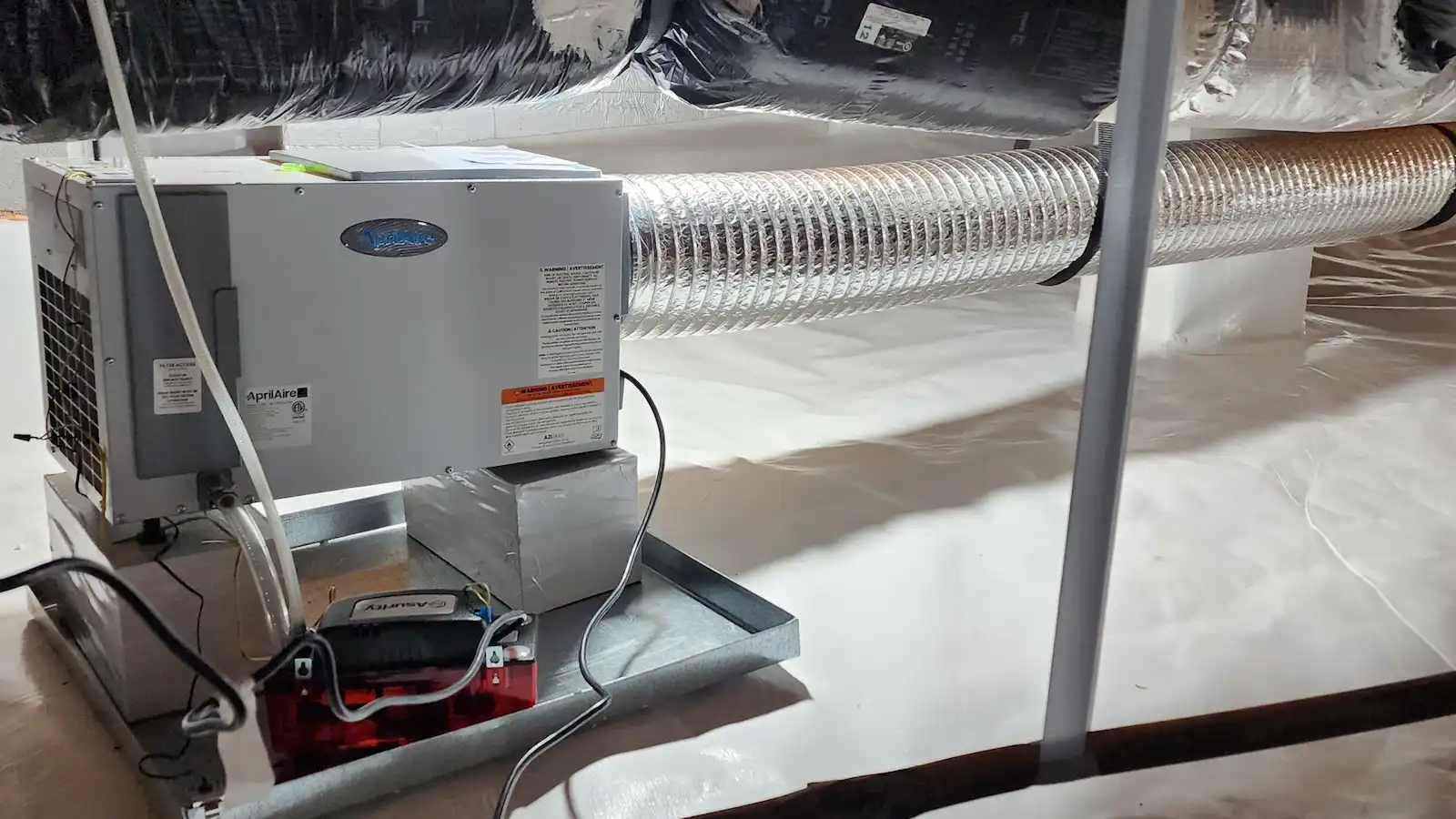
A vented crawl space is handled differently, but it’s still very much serviceable. When we install a unit in a vented crawl space, we typically close all the foundation vents and mount the dehumidifier on blocks to elevate it off the ground. Closing the vents is important: it stops the continuous supply of outdoor humid air and lets the dehumidifier actually do its job. Because the space isn’t encapsulated with a vapor barrier, moisture from the bare soil and walls is still a factor — which is why vented crawl space installs typically call for a larger capacity unit, usually a 100- or 130-pint model.
The result is a drier, managed crawl space without full encapsulation. For homeowners who want to address a moisture problem now and consider encapsulation down the road, this is a practical middle step.
Unit Capacity (Pints Per Day)
Crawl space dehumidifiers are rated in pints of water removed per day. For most Triangle homes:
- 80-pint units (AprilAire E80W): The right fit for most sealed, encapsulated crawl spaces — handles the residual moisture load efficiently without oversizing
- 100-pint units (AprilAire E100W): Appropriate for smaller vented crawl spaces or larger fully encapsulated crawl spaces with higher moisture demand
- 130-pint units (AprilAire E130W): Needed for larger vented spaces, taller crawl spaces, or high moisture loads — covers homes up to 7,200 sq ft
Bigger units cost more — both for the unit itself and the electrical setup, since higher-capacity units often require a dedicated 20-amp circuit.
The Units We Install: AprilAire WiFi Dehumidifiers
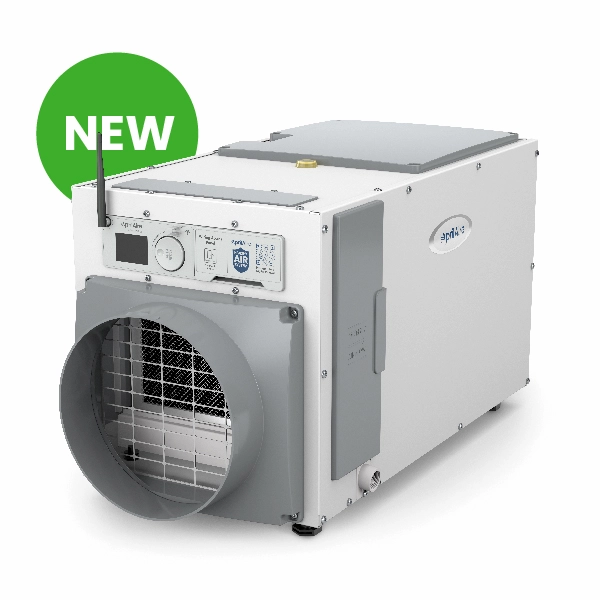
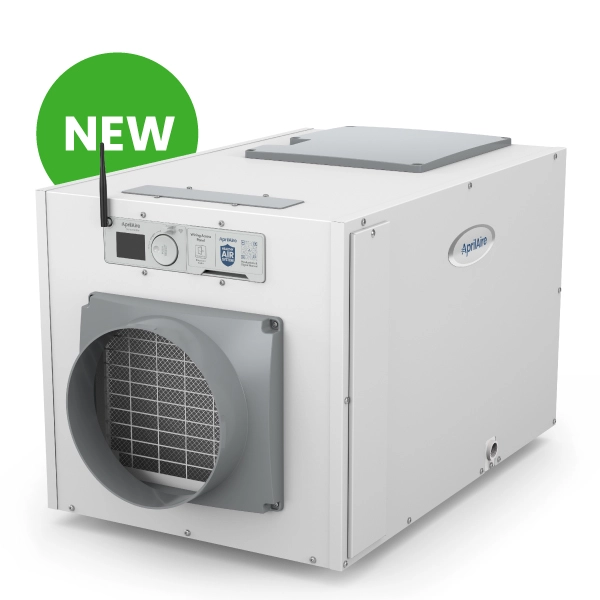
Triangle Dehumidifiers installs AprilAire’s professional-grade WiFi dehumidifier line — the E80W, E100W, and E130W models for crawl space and Whole-House applications. These aren’t the box-store units you’ll find at Home Depot. They’re built for the conditions that Raleigh area homes actually deal with.
A few things that set them apart:
- ENERGY STAR Most Efficient 2025. The E100W and E130W carry this designation — the top tier of energy efficiency certification. They cost less to run than comparable units.
- WiFi and app control. Connect to the AprilAire Healthy Air App (iOS and Android) via Bluetooth in about 3 minutes. From your phone, you can monitor humidity levels, adjust settings, receive alerts, and track performance — from anywhere.
- Corrosion-resistant aluminum coils. Built specifically to handle the humid, harsh conditions of crawl spaces. Standard units with copper or steel coils corrode faster in our climate.
- 5-year warranty. Longer than most competitors.
- Designed and assembled in the USA.
Yes, AprilAire units cost more than budget alternatives. The way we look at it: you’re solving a moisture problem that’s affecting your home’s structural wood, your air quality, and your energy bills. The unit that runs reliably for 10–12 years and lets you check on it from your phone is worth the difference.
Condensate Drainage
Water pulled from the air has to go somewhere. Most installations include a condensate pump that automatically drains collected water to an exterior location or a floor drain. If a pump line needs to be run 20+ feet or penetrate a foundation wall, that adds to the installation cost.
Do You Need Encapsulation First?
This is one of the most common questions we get — and the honest answer is that a dehumidifier can work in both encapsulated and vented crawl spaces. The approach is just different.
If your crawl space is already encapsulated (sealed liner on floor, walls, and piers; vents sealed), a properly sized dehumidifier handles the remaining moisture load. Straightforward install, predictable results.
If your crawl space is still vented, we close all the foundation vents as part of the installation and mount the dehumidifier on blocks. This is a fully viable approach — many Triangle homeowners go this route, especially when they want to address the moisture problem now without the full cost of encapsulation. Because there’s no liner blocking soil moisture, you may need a larger unit (100- or 130-pint) and the dehumidifier will run more. Some homeowners also choose to add a vapor barrier at around $1 per square foot, which reduces the moisture load on the unit and improves its efficiency and lifespan. That’s not encapsulation — it’s a ground cover that works alongside the dehumidifier.
If you have visible mold, wood rot, or significant moisture damage, we’ll have an honest conversation with you about whether full crawl space encapsulation makes more sense as a first step. A complete encapsulation with a dehumidifier included runs $7,500–$15,000 depending on crawl space size, condition, and drainage needs — a bigger investment, but one that addresses the problem at every level. For a deeper look at how those two solutions compare, see our post on crawl space encapsulation vs. dehumidifier.
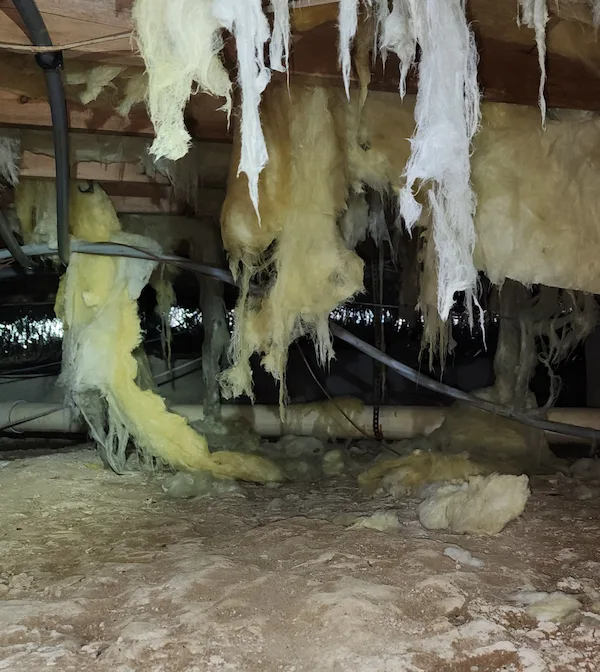
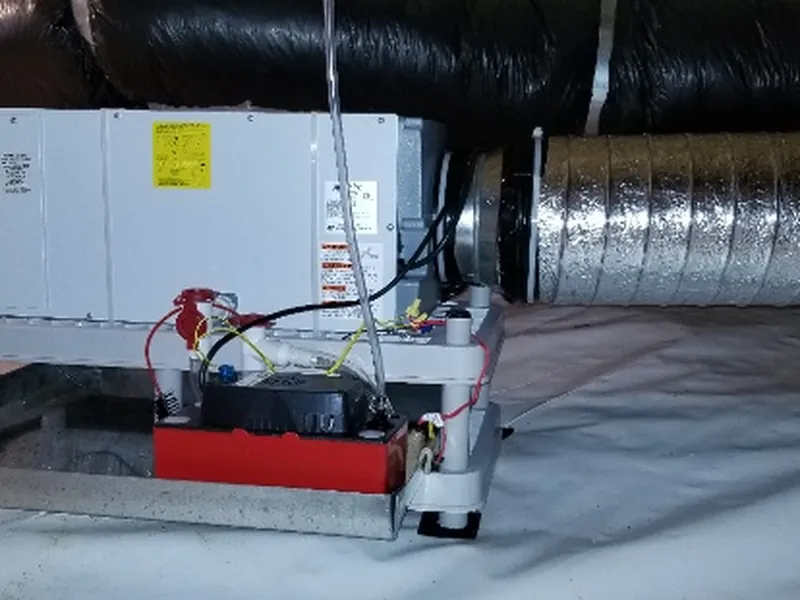
Whole-House Dehumidifiers: What They Cost and How They Work
A Whole-House dehumidifier is a different animal from a crawl space unit. Instead of sitting in the crawl space and managing moisture at the source, it integrates directly with your HVAC system — typically installed at the air handler — and conditions the air circulating through your living spaces.
The unit pulls return air through a refrigerant-based coil, extracts the moisture, and sends drier, conditioned air back into the home’s supply ductwork. Most systems are set to maintain a target humidity level (typically 45–55% RH) and run automatically, separate from or in coordination with your air conditioner.
We install AprilAire’s WiFi-enabled models here as well. The same app that lets you monitor your crawl space dehumidifier works with the Whole-House units — so if you have both systems, you’re managing your home’s humidity from one place on your phone.
What affects the installed cost:
- HVAC compatibility. Newer systems with accessible return-air plenum connections are straightforward installs. Older systems or homes with limited duct access require more work.
- Unit capacity. Whole-House units are sized by the square footage of the living space — not the crawl space. The E130W covers homes up to 7,200 sq ft; smaller homes may only need the E100W.
- Duct routing. If condensate drainage requires a long run or isn’t near an existing drain point, that adds time and materials to the job.
- Electrical. Most Whole-House units require a dedicated circuit. If one isn’t already present near the air handler, an electrician may need to be involved.
Crawl Space or Whole-House: Which Do You Need?
This is the question worth answering before you spend anything. The two systems solve different problems, and choosing the wrong one means the humidity issue persists even after installation.
| Symptom | More Likely Cause | Recommended Solution |
|---|---|---|
| Musty odor, especially near floors or lower level | Crawl space moisture | Crawl space dehumidifier (± encapsulation) |
| Mold or wood rot on floor joists, subfloor, or piers | Crawl space moisture | Crawl space dehumidifier + encapsulation |
| Mold or mildew on wall or ceiling surfaces | Whole-house humidity | Whole-House dehumidifier |
| Condensation on windows, walls, or cold surfaces | Whole-house humidity | Whole-House dehumidifier |
| Stuffy, muggy rooms even when AC is running | Whole-house humidity | Whole-House dehumidifier |
| High humidity readings on main floor (above 55% RH) | Whole-house humidity | Whole-House dehumidifier |
| Both crawl space moisture AND muggy living spaces | Both sources | Both systems |
The two systems are not mutually exclusive. In many Raleigh-area homes — particularly older homes in Garner, Knightdale, and southern Wake County with vented crawl spaces — we find both a structurally wet crawl space and a whole-house humidity issue. Addressing only one leaves the other unresolved.
What the Installation Process Looks Like
Whether you’re installing a crawl space unit, a Whole-House system, or both, the process at Triangle Dehumidifiers follows the same consistent sequence:
-
Free inspection. For a crawl space installation, we assess your humidity levels, square footage, access points, existing vapor barrier condition, and drainage options. For a Whole-House system, we evaluate your HVAC setup, living space square footage, and current indoor RH readings. This is where unit type, sizing, and project scope are determined — not guessed.
-
Recommendation and quote. You receive a written quote covering the unit, installation, drainage setup, and any prep work needed. No surprises.
-
Installation day. Crawl space installs: the unit is mounted on blocks to elevate it off the ground, positioned for optimal airflow coverage, and plugged into a dedicated electrical outlet in the crawl space. The condensate pump and drain line are run to a suitable discharge point. For vented crawl spaces, foundation vents are closed as part of the installation. Whole-House installs: the unit is integrated with the air handler, connected to the return-air plenum, and wired to a dedicated circuit.
-
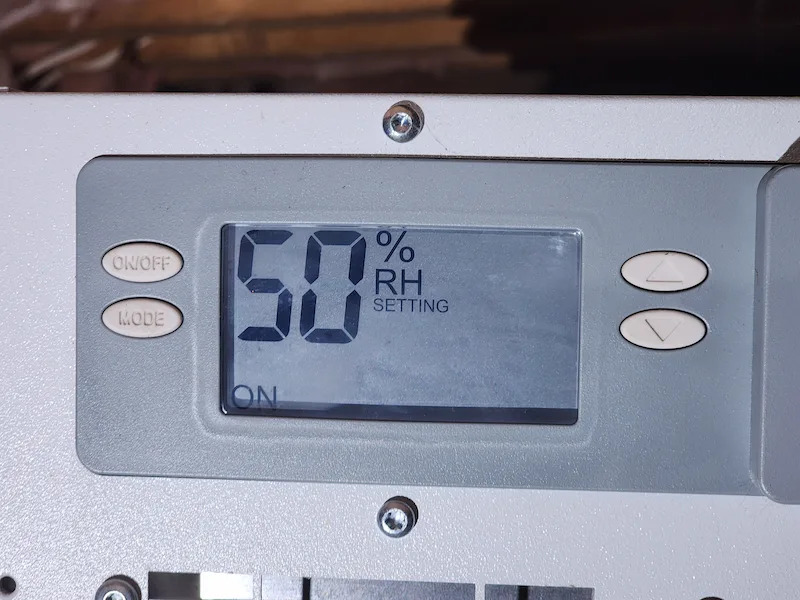
Commissioning and calibration. Every unit is set to your home’s specific target — typically 45–50% RH — and tested before we leave. We verify the system is pulling moisture and draining correctly.
-
Walk-through. We show you how to read the display, clean the filter (typically every 3–6 months for crawl space units; annually for Whole-House), and what to watch for between inspections.
Why Raleigh-Area Homes Face a Harder Humidity Challenge
Homes in the Triangle sit in IECC climate zone 4A — a mixed-humid zone where summers are long and wet and winters are mild enough that the crawl space never fully dries out. Unlike drier regions where a basic vapor barrier might be sufficient, Raleigh homes need active moisture management for most of the year.
The Piedmont’s Cecil and Appling clay soils hold moisture effectively, meaning groundwater sits closer to the surface and pushes soil gas up through unprotected crawl space floors. Combine that with Raleigh’s average of 43–50 inches of rainfall annually and a summer outdoor RH that rarely drops below 65%, and you have conditions that make passive solutions — basic poly sheeting, open vents — inadequate for most homes. You can read more about why Raleigh homes have humidity problems and what makes our climate particularly challenging.
This is why Triangle Dehumidifiers recommends units rated for the actual humidity load, not the national “average” used by most sizing guides. A unit appropriate for a Denver or Phoenix climate will be undersized here. If you’re not sure whether your current setup is working, the signs are usually obvious — our post on 5 signs your home has a humidity problem covers the most common ones.
Frequently Asked Questions
How much does it cost to install a crawl space dehumidifier in Raleigh, NC?
Triangle Dehumidifiers’ installed pricing runs $3,000–$4,000 for a crawl space that’s already encapsulated, and $3,000–$5,000 for a vented crawl space where we close the foundation vents as part of the job. If you want to add a vapor barrier to a vented crawl space, that’s approximately $1 per square foot on top of the dehumidifier installation. The best way to get a firm number is a free on-site inspection — crawl space size, height, and access all affect the final quote.
How much does a Whole-House dehumidifier cost installed in Raleigh, NC?
Triangle Dehumidifiers installs Whole-House systems at $3,000–$5,000 for a standard HVAC integration, and $4,000–$6,000 for more complex or older systems that require additional ductwork or electrical setup. All pricing is confirmed after a free assessment.
Do I need a crawl space dehumidifier, a Whole-House dehumidifier, or both?
It depends on where your humidity problem is coming from. Musty odors, mold on floor joists, or structural moisture issues point to a crawl space problem — a crawl space dehumidifier (and often encapsulation) addresses that directly. If your living spaces feel muggy, you have condensation on windows, or your whole house reads above 55% RH even with the AC running, a Whole-House system is the right fit. Some homes need both, particularly older homes in the Triangle with vented crawl spaces and undersized HVAC systems.
Do I need crawl space encapsulation before installing a dehumidifier?
No — a dehumidifier can work in both encapsulated and vented crawl spaces. For a vented space, we close all foundation vents and elevate the unit on blocks, using a 100- or 130-pint AprilAire to handle the higher moisture load from the soil. Adding a vapor barrier (~$1/sq ft) reduces that load further and extends the unit’s life. Full encapsulation ($7,500–$15,000 with dehumidifier) is the right call when there’s visible mold, wood rot, or ongoing water intrusion that needs to be solved at the source.
How long does a crawl space dehumidifier last?
A quality crawl space dehumidifier typically lasts 7–10 years with regular maintenance — filter cleaning every 3–6 months and an annual inspection. Units in vented or extremely wet crawl spaces tend toward the lower end of that range.
What size dehumidifier do I need for my crawl space?
Triangle Dehumidifiers installs the AprilAire E80W (80 pint/day), E100W (100 pint/day), and E130W (130 pint/day). The E80W is the right fit for most sealed, encapsulated crawl spaces. The E100W suits smaller vented spaces or larger encapsulated ones. The E130W is for larger vented spaces, taller crawl spaces, or high moisture loads. Crawl space square footage, ceiling height, and whether the space is sealed or vented all factor in — confirmed during a free inspection.
Can I install a crawl space dehumidifier myself?
You can, but professional installation ensures correct sizing, proper condensate drainage, and optimal unit placement. An improperly installed or undersized unit won’t maintain the humidity levels your home needs and may void the manufacturer’s warranty.
Stop Guessing. Get a Free Inspection and an Exact Quote.
Here’s what we know after inspecting homes across Wake County: moisture problems don’t fix themselves. The crawl space that’s at 75% humidity today will be growing mold on your floor joists within a season or two. The house that feels muggy every summer is putting extra strain on your HVAC and making your family less comfortable than they should be.
The good news is that this is a completely solvable problem. A properly installed AprilAire dehumidifier — sized for your specific crawl space or home, set to your target humidity, and monitored from your phone — handles it automatically. You stop thinking about it.
We offer free inspections throughout the Triangle. We’ll measure your crawl space, check your current humidity levels, look at your existing setup, and give you a written quote for exactly what we’d recommend — crawl space unit, Whole-House, or both. No upsells, no scare tactics. Just a clear answer.
Most homeowners who call us are surprised by two things: how straightforward the fix is, and how much better their home feels afterward.
Call or text us today at (919) 867-0580 — or request your free inspection online. We serve Raleigh, Cary, Apex, Holly Springs, Fuquay-Varina, Garner, Wake Forest, Knightdale, Morrisville, Durham, and Chapel Hill.