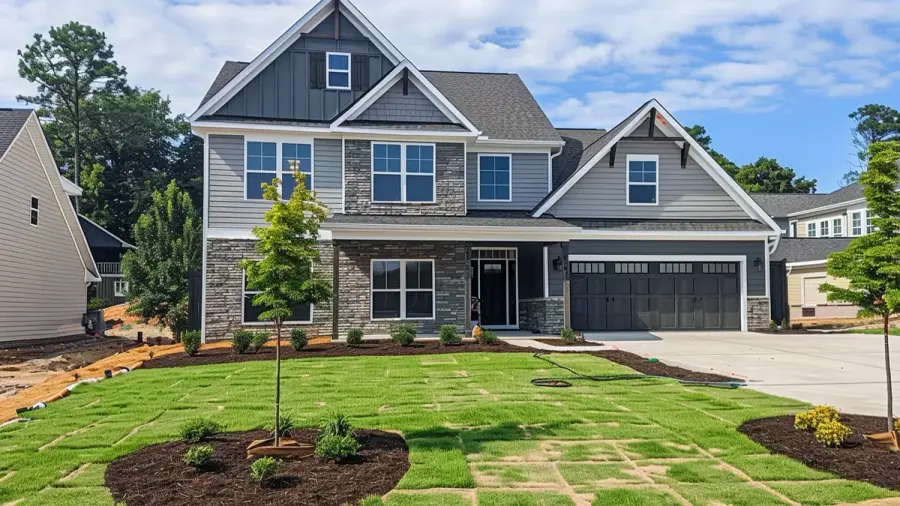
You just moved into a brand-new home in the Raleigh area. Everything is clean, modern, and under warranty. So why does the air feel damp, the windows fog up, and the AC never seems to dry things out?
Why New Homes Have Humidity Problems
Modern homes are built tight. That is the whole point of current building codes — seal every gap, insulate every cavity, and minimize energy loss. But all that air-sealing comes with a trade-off: moisture has nowhere to go.
Older homes leaked air constantly. That was terrible for energy bills, but it did allow moisture to escape on its own. New construction in Raleigh does not have that luxury — the building envelope holds everything in, including water vapor from cooking, showering, and breathing.
On top of that, new construction materials release a surprising amount of moisture as they cure and dry out. Building science research shows that a typical new home can release an average of 21 pints of moisture per day from construction-related sources alone during the first year.
Framing lumber off-gasses roughly 423 pints of water as it dries to equilibrium. Concrete foundations and slabs contribute even more — nearly 5,000 pints of moisture released as the concrete cures.
All of that moisture is trapped inside your sealed, energy-efficient home. Your AC was not designed to handle it.
The HVAC Sizing Problem
Here is something most new homeowners do not realize: your air conditioner’s primary job is cooling, not dehumidifying. Moisture removal is a side effect, not the main function. And in new construction, that side effect often falls short.
Many new homes in the Raleigh-Durham market have oversized HVAC systems. An oversized unit cools the air quickly, satisfies the thermostat, and shuts off — a pattern called short cycling. Meaningful moisture removal requires longer run times and sustained airflow across a cold evaporator coil, so when the compressor shuts off after just a few minutes, humidity stays behind.
Even properly sized systems struggle in our climate. As homes become more energy-efficient, the cooling load shrinks — but the moisture load does not. The result is an HVAC system that handles temperature just fine but leaves indoor humidity well above the 30 to 50 percent range the EPA recommends.
What the Research Says
Raleigh’s average outdoor humidity sits around 70 percent year-round, with summer months regularly reaching the upper 70s. That makes the Triangle one of the more challenging humidity environments in the country for residential buildings.
Wake County remains one of the fastest-growing counties in the state, with thousands of new homes built each year across Raleigh, Cary, Apex, Holly Springs, and Fuquay-Varina. That is a lot of tightly sealed houses being handed over to homeowners who may not understand why their indoor air feels clammy.
The EPA is clear on this: indoor relative humidity should stay below 60 percent to prevent mold growth, and ideally between 30 and 50 percent. Relative humidity above 60 percent creates conditions where mold, mildew, and dust mites thrive. In a tight new home during a Raleigh summer, hitting 65 to 75 percent indoors is common without dedicated dehumidification.
Building science experts note that efficient new homes have reduced their cooling loads but not their moisture loads. The typical residential system devotes roughly 75 percent of its capacity to temperature and only 25 percent to moisture removal. In a humid climate like ours, that ratio is not enough.
Signs Your New Home Has a Humidity Problem
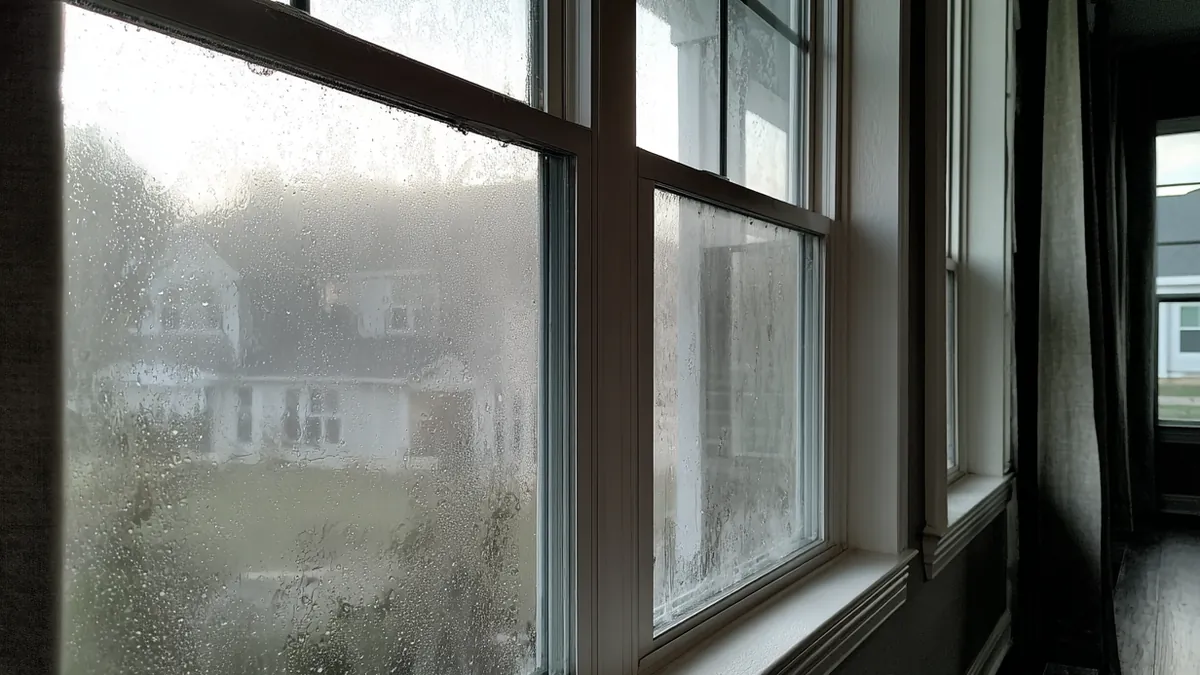
If any of these sound familiar, your home likely has more moisture than your HVAC system can handle on its own:
- Condensation on windows, especially in the morning
- A musty or damp smell in closets, the laundry room, or the crawl space
- The air feels sticky or clammy even when the AC is running
- Your thermostat reads 72 degrees but the house does not feel comfortable
- Hardwood floors are cupping or warping
- Mold or mildew forming in bathrooms or around baseboards
- Allergy symptoms that seem worse indoors than outside
- Your AC runs frequently but never seems to dry out the air
Seeing these signs in your new home? We measure indoor relative humidity and identify moisture sources across Raleigh and Wake County — no pressure, no sales pitch.
What Actually Fixes It
Running the AC colder is not the answer — you will waste energy and still have humid air. Portable dehumidifiers can help a single room, but they are loud, require constant emptying, and do not solve the whole-house problem.
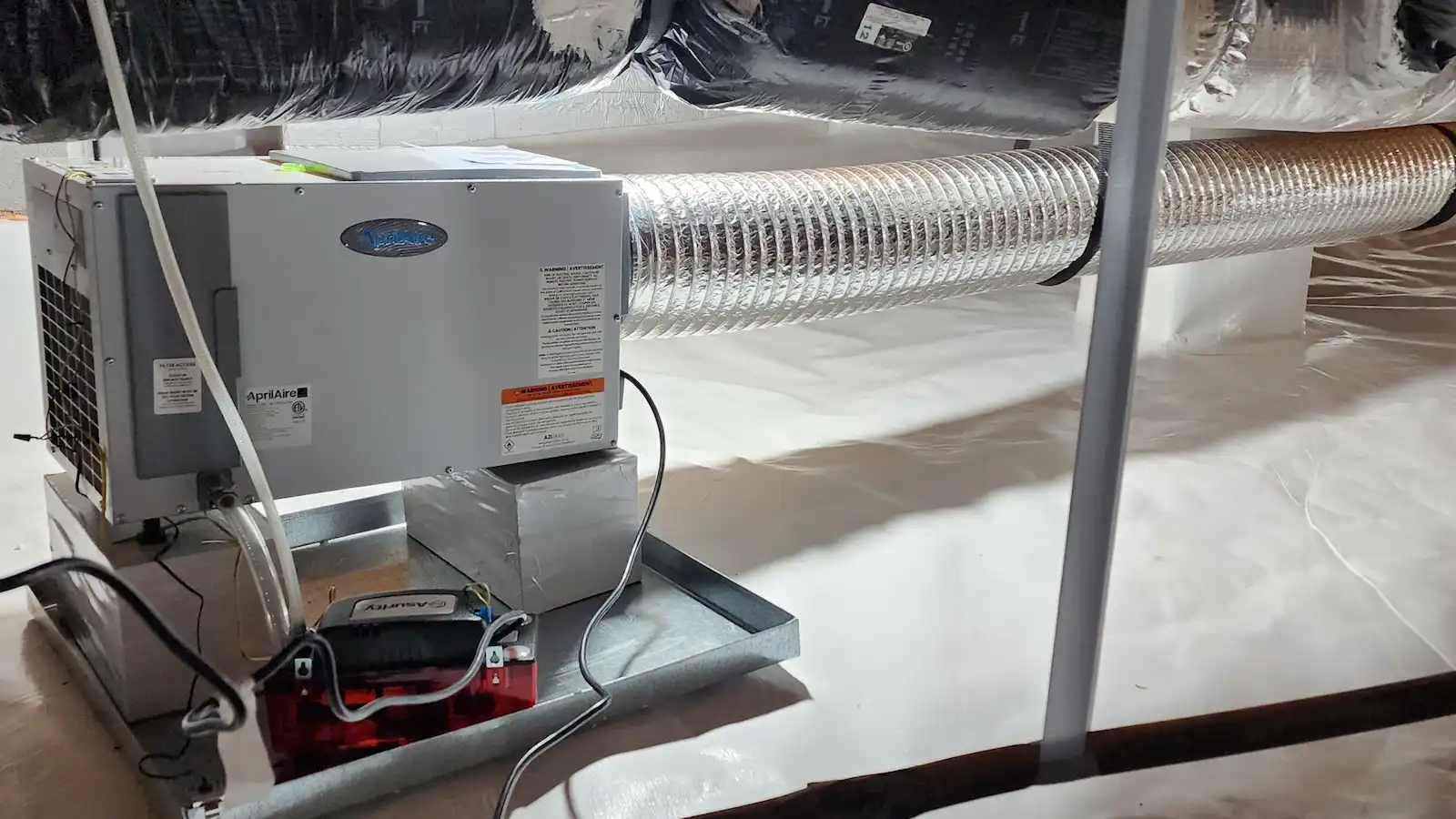
The most effective solution for new construction humidity in the Raleigh area is a Whole-House dehumidifier installed directly into your HVAC ductwork. These units work independently of your AC, pulling moisture out of the air whether the system is actively cooling or not. They drain automatically and keep your entire home between 45 and 55 percent relative humidity without overcooling.
If your home has a vented or encapsulated crawl space, that is often the single biggest source of moisture entering the living space. A crawl space dehumidifier paired with proper vapor barriers and sealing can eliminate the problem at its source.
In many cases, the right approach is both — address the crawl space and control Whole-House humidity through the duct system. The result is lower energy bills, better air quality, and a home that actually feels comfortable at 72 degrees.
Serving New Raleigh-Area Homeowners
We work with homeowners across Raleigh, Cary, Apex, Holly Springs, and Fuquay-Varina who are dealing with humidity in homes less than five years old. It is one of the most common calls we get — and one of the most straightforward problems to fix.
If your new home feels damp despite a working HVAC system, the issue is a moisture load your AC was never designed to handle alone. We can measure your indoor humidity, inspect your crawl space, and recommend the right solution. Check our full service area to confirm we cover your neighborhood.
Request a Free Humidity Inspection
We will measure your indoor relative humidity, check your crawl space, and give you a straight answer — no pressure, no sales pitch.
Serving Raleigh, Holly Springs, Cary, Apex, Fuquay-Varina, and Wake County.