
In Raleigh’s humid climate, moisture problems often go unnoticed until real damage is underway. If your home shows any of the signs below, humidity may already be affecting your structure, insulation, or indoor air quality.
Here are five warning signs — and what to do about each one.
1. Musty Odors That Won’t Go Away
If your home smells musty — especially near interior closets, hallways, or lower levels — that’s a strong indicator of elevated moisture. The smell comes from mold and mildew colonies that form when relative humidity (RH) stays above 60%.
What to check: Open your crawl space access door and take a breath. If the smell is stronger down there, your crawl space is likely the source. Persistent odors often point to conditions that lead to crawl space mold growth.
2. Condensation on Windows
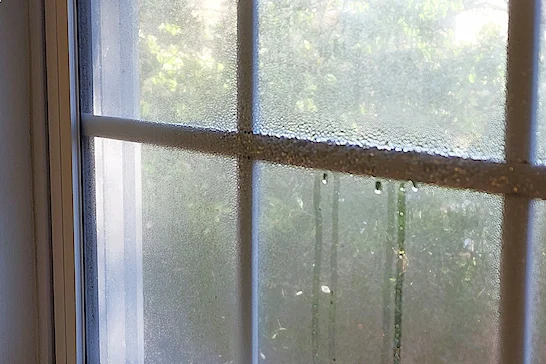
Water droplets forming on the inside of your windows mean indoor air holds more moisture than it can handle at the glass surface temperature. In summer, this typically shows up on windows near bathrooms or kitchens — but if you’re seeing it throughout the house, the problem is bigger than ventilation.
What to check: Measure your indoor RH with an inexpensive hygrometer from any hardware store. Anything consistently above 55% warrants investigation.
3. Warped or Buckling Hardwood Floors
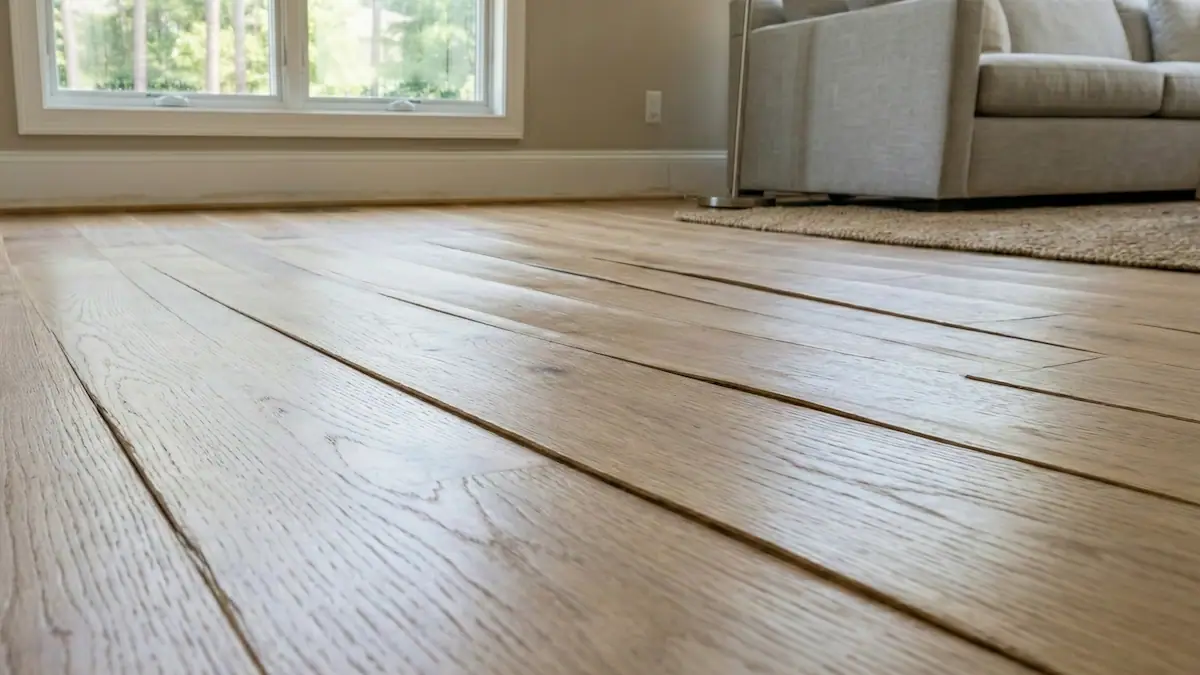
Wood absorbs moisture from the air. When crawl space humidity is high, that moisture migrates upward through subflooring and into your hardwood. Over time, boards cup, buckle, or develop gaps between planks.
What to check: Look at your floors from a low angle. If boards are cupping (edges higher than center), moisture is coming from below — almost certainly the crawl space.
Concerned your crawl space may be causing these issues? We measure crawl space relative humidity (RH) and inspect for moisture sources across Raleigh and Wake County.
4. Allergy Symptoms That Worsen Indoors
Dust mites and mold spores both thrive in humid environments. If your family’s allergy symptoms improve when you leave the house and return when you’re home, indoor air quality may be the issue — and humidity is usually the root cause.
What to check: Pay attention to whether symptoms are worse on humid days or in specific rooms. Bedrooms above crawl spaces are common problem areas. An ERV ventilation system can help improve air exchange in tightly sealed homes.
5. Mold on Crawl Space Framing or Joists
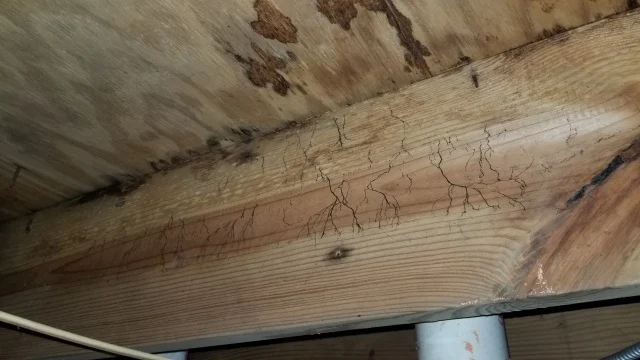
If you’ve ever looked into your crawl space and seen white, gray, or black discoloration on the wood framing, that’s surface mold — a direct result of sustained high humidity. Crawl Space mold doesn’t stay put. Due to the Stack Effect, mold spores are continuously pulled upward into your living areas through subflooring gaps, plumbing penetrations, and air leaks.
What to check: Grab a flashlight and inspect your crawl space joists and rim board. Look for dark staining, fuzzy growth, or a white powdery coating on wood surfaces. Any of these warrant a professional evaluation before conditions worsen.
What To Do About It
If you’re seeing two or more of these signs, your home likely needs active humidity control. For most Triangle-area homes, that means:
- Measuring crawl space RH to establish a baseline
- Installing a properly sized dehumidifier to maintain 45–50% RH
- Addressing moisture sources like open crawl space vents or missing vapor barriers
Homes with encapsulated crawl spaces still need monitoring — sealed spaces without dehumidification can trap moisture and create the same problems.
Schedule a Crawl Space Inspection in Raleigh
We'll measure your RH levels, identify moisture sources, and recommend the right fix — no pressure, no upsell.
Serving Raleigh, Holly Springs, Cary, Apex, Fuquay-Varina, and Wake County.