Table of Contents
Key takeaway: A crawl space dehumidifier manages moisture at the source — under the house. A whole-house dehumidifier manages humidity throughout your living area via your HVAC system. In Raleigh’s climate, most homes with vented or recently encapsulated crawl spaces need crawl space dehumidification first. Whole-house units address residual humidity problems that persist in the living area.
If your home feels sticky in the summer, you’ve probably started researching dehumidifiers. What you may not have expected is to find two completely different product categories — crawl space dehumidifiers and whole-house dehumidifiers — that solve related but distinct problems. Homeowners in Raleigh, Apex, and Holly Springs ask us which one they need almost every week. The honest answer depends on where your humidity is coming from.
Why Raleigh Homes Struggle with Humidity in the First Place
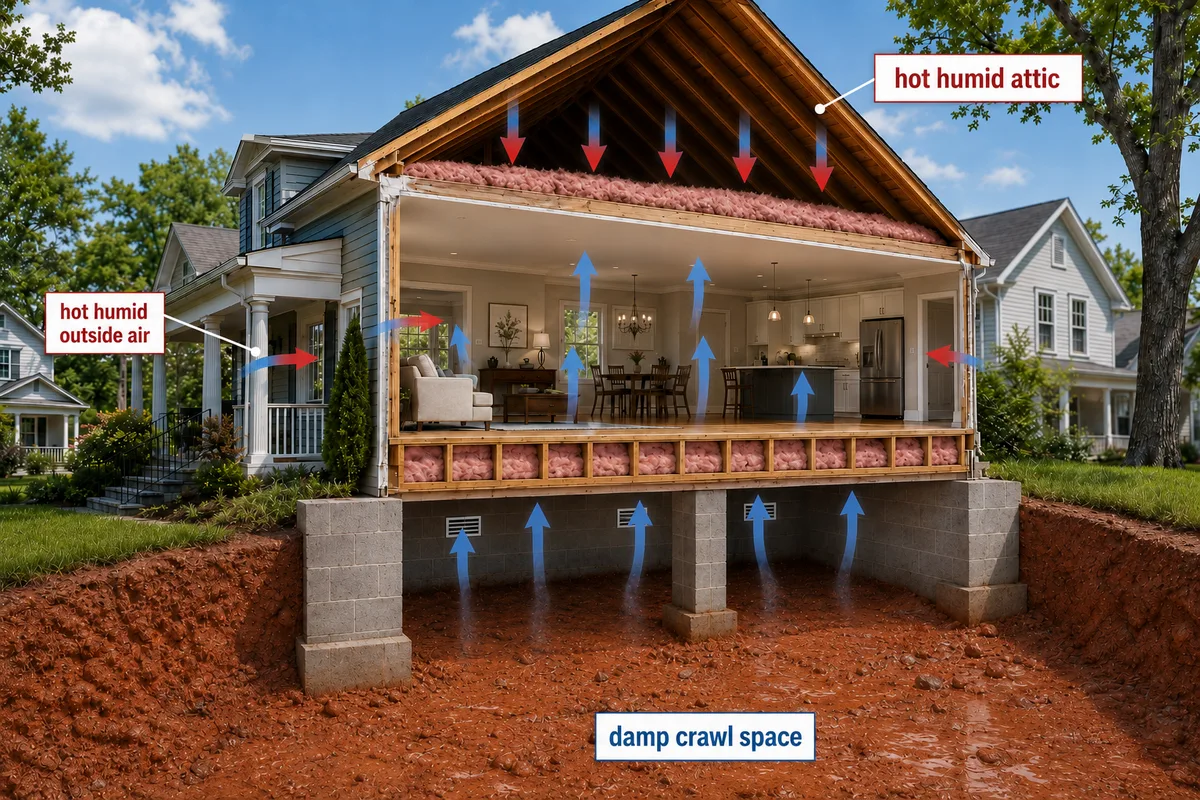
Before deciding on equipment, it helps to understand what’s driving the moisture in your home. The Triangle region sits in a humid subtropical climate zone where outdoor relative humidity stays above 70% from May through September. That’s not unusual for North Carolina — it’s the baseline.
The complication in Wake County is the soil. Piedmont red clay holds water the way a sponge does. After the spring rains that typically run through April and May, that clay beneath and around your foundation stays saturated for weeks. The moisture doesn’t stay in the soil — it migrates upward through vapor drive into your crawl space, then into your living area through the stack effect that pulls air from below.
Most homes in the Triangle were built with vented crawl spaces. The original logic was that outdoor ventilation would dry out any moisture that entered. That theory works in dry climates. In Raleigh’s summers, you’re venting 80% relative humidity outdoor air directly underneath your home, which makes the problem considerably worse.
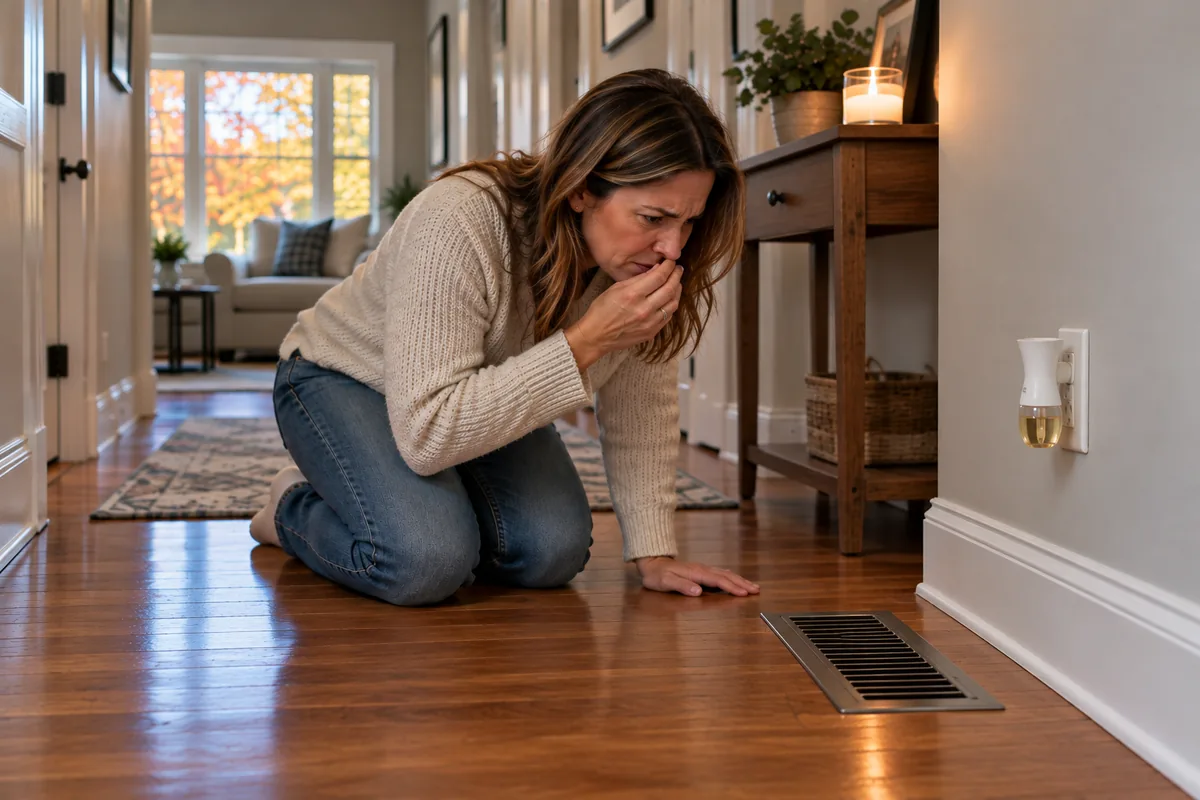
The result: crawl spaces in this region routinely sit at 80–90% relative humidity in summer without any moisture management. That’s the environment mold spores thrive in, and it’s the source of the musty odor, soft floors, and excess indoor humidity that homeowners experience upstairs. You can read more about why Raleigh homes have humidity problems and what makes our climate particularly challenging.
What a Crawl Space Dehumidifier Does
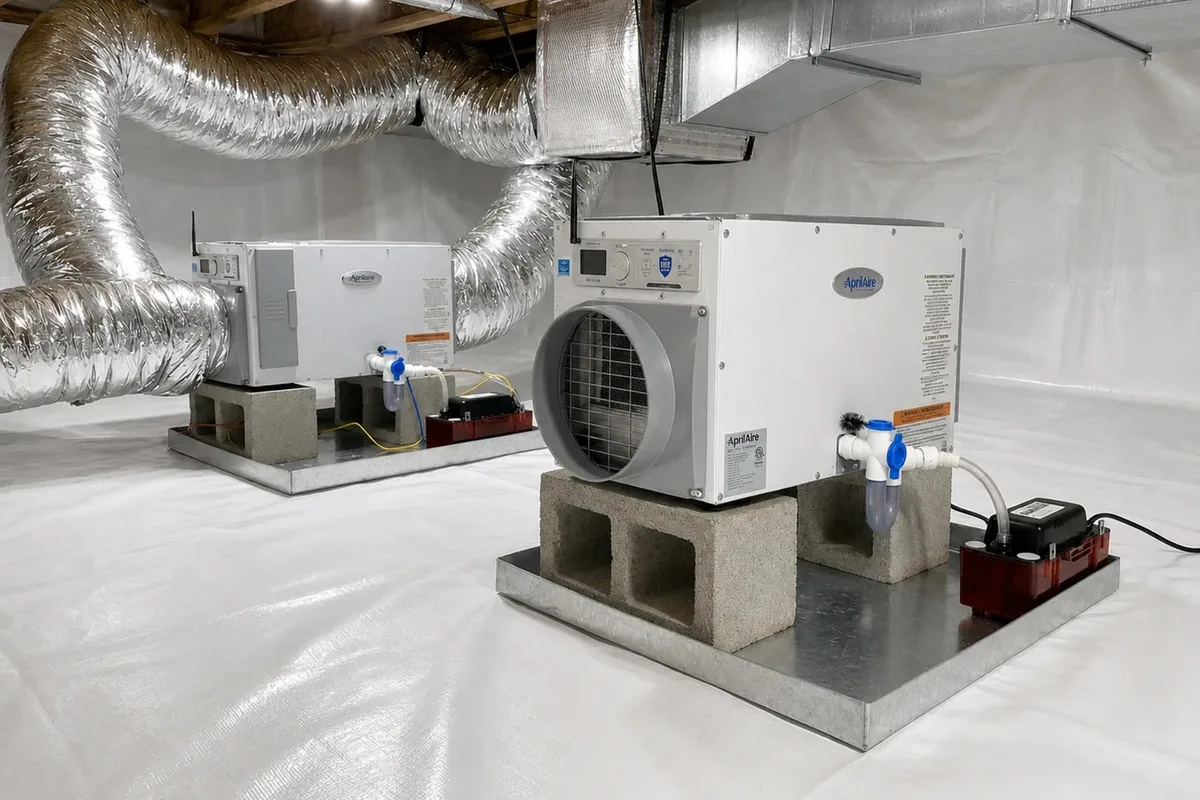
A crawl space dehumidifier is a purpose-built unit designed to operate continuously in the low-clearance, high-humidity environment under your home. Unlike portable home dehumidifiers, these units are rated to function at temperatures as low as 40°F, drain continuously through a condensate line (so you never empty a tank), and run efficiently enough for 24/7 operation.
The units we primarily install in Wake County homes are the AprilAire E70W (70 pints per day) and E100W (100 pints per day). Both are ENERGY STAR certified, WiFi-enabled, and built with corrosion-resistant aluminum coils for long-term crawl space use. Sizing between the two depends on crawl space square footage, the current vapor barrier, and how much moisture is entering.
When a crawl space dehumidifier is paired with a proper vapor barrier (a minimum 6-mil polyethylene liner per NC Residential Code, though we recommend 12- to 20-mil for longevity), it creates a controlled environment under your home. In most cases, the crawl space humidity drops from 80–90% down to 50–60% within days of installation. Homeowners often notice the indoor air feeling less heavy within a week.
When a crawl space dehumidifier is the right call:
- You’ve noticed musty odors in the home, particularly in the spring or after rain
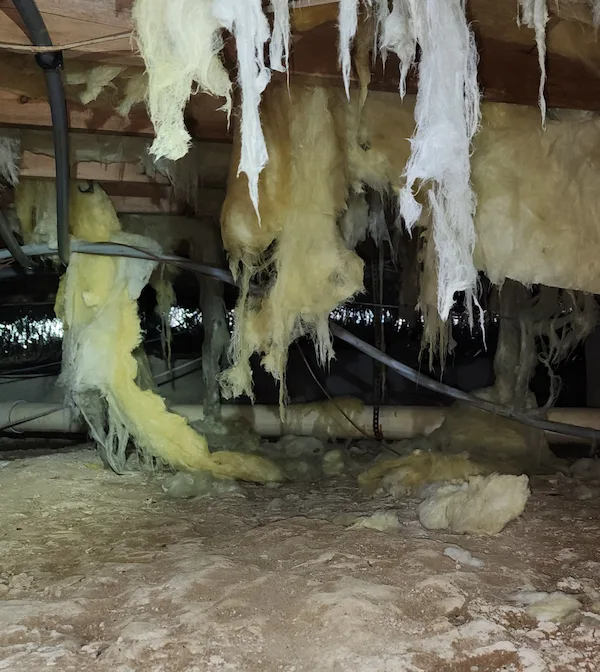
- Your crawl space has a dirt floor or a compromised vapor barrier
- You’ve seen condensation on ductwork, floor joists, or the underside of the subfloor
- Your home was built before 2012 with a vented crawl space (common across Holly Springs and Fuquay-Varina)
- A home inspector or HVAC technician has flagged crawl space moisture
What a Whole-House Dehumidifier Does
A whole-house dehumidifier — sometimes called a ducted or central dehumidifier — integrates with your HVAC system and conditions air throughout the entire home. The unit is typically installed in the mechanical room, attic, or alongside the air handler. It pulls return air from the living space, removes moisture, and returns dry air back into the ductwork.
The advantage is whole-home coverage without managing individual units in multiple rooms. You set a target humidity level (typically 45–55% relative humidity for comfort and mold prevention) and the system maintains it automatically. Like a crawl space dehumidifier, these units drain continuously — no buckets to empty.
Whole-house units from AprilAire can handle larger homes and higher moisture loads. These are the right tool when humidity problems exist in the living area independent of — or in addition to — the crawl space.
When a whole-house dehumidifier is the right call:
- Living area humidity stays above 55–60% even with air conditioning running
- You have condensation on windows or walls inside the living space
- Upper floors or rooms without direct crawl space exposure still feel humid
- You’ve already addressed crawl space moisture and the living area problem persists
- Your home has an encapsulated, conditioned crawl space but the HVAC system isn’t dehumidifying adequately in shoulder seasons (spring and fall when the AC isn’t running)
How to Decide: A Practical Framework
Here’s the way we think through this with homeowners:
Start with the source. If moisture is entering through the crawl space — which it almost always is in a vented foundation home in Wake County — address that first. A whole-house dehumidifier won’t solve a crawl space moisture problem. It will work hard to manage the symptoms while the root cause continues unaddressed.
Check the living area. If crawl space moisture is controlled (or you have an encapsulated crawl space with a working dehumidifier) and your living area still runs humid, a whole-house unit is the next step. This is especially common in two-story homes where upstairs rooms don’t benefit as much from crawl space improvements.
Consider the shoulder seasons. In Raleigh, spring (March through May) and fall (September through November) bring high outdoor humidity without the sustained heat that triggers air conditioning to run. Your AC removes moisture as a byproduct of cooling, but when it’s not running — but it’s still humid — you have no dehumidification. Whole-house units fill this gap.
Think about what you’re protecting. Hardwood floors, cabinetry, and structural wood members are moisture-sensitive. Crawl space dehumidification protects the structure. Whole-house dehumidification protects finishes and comfort upstairs. Both matter, but if budget is a constraint, the crawl space comes first.
| Factor | Crawl Space Dehumidifier | Whole-House Dehumidifier |
|---|---|---|
| Target location | Crawl space only | Entire living area |
| Installation | Standalone, crawl space | HVAC-integrated |
| Typical cost installed | $3,000–$5,000 | $4,500–$7,000 |
| Best for | Moisture source control | Whole-home comfort |
| Requires HVAC integration | No | Yes |
| Seasonal relevance | Spring/summer critical | Year-round, esp. shoulder seasons |
Do Some Homes Need Both?
Yes — and it’s more common in Wake County than you might expect. A home with a vented or recently encapsulated crawl space often needs a crawl space dehumidifier to manage ground moisture, while a second floor with persistent humidity problems benefits from a whole-house unit. These systems work independently and don’t conflict.
We’ve installed both in the same home in Holly Springs and Apex on cases where the crawl space was the primary moisture driver but the homeowner also wanted to maintain consistent 50% relative humidity throughout the living area year-round. The combination gives full coverage.
For a deeper look at how dehumidifiers compare to full crawl space encapsulation, see our post on crawl space encapsulation vs. dehumidifier.
What About ERVs?
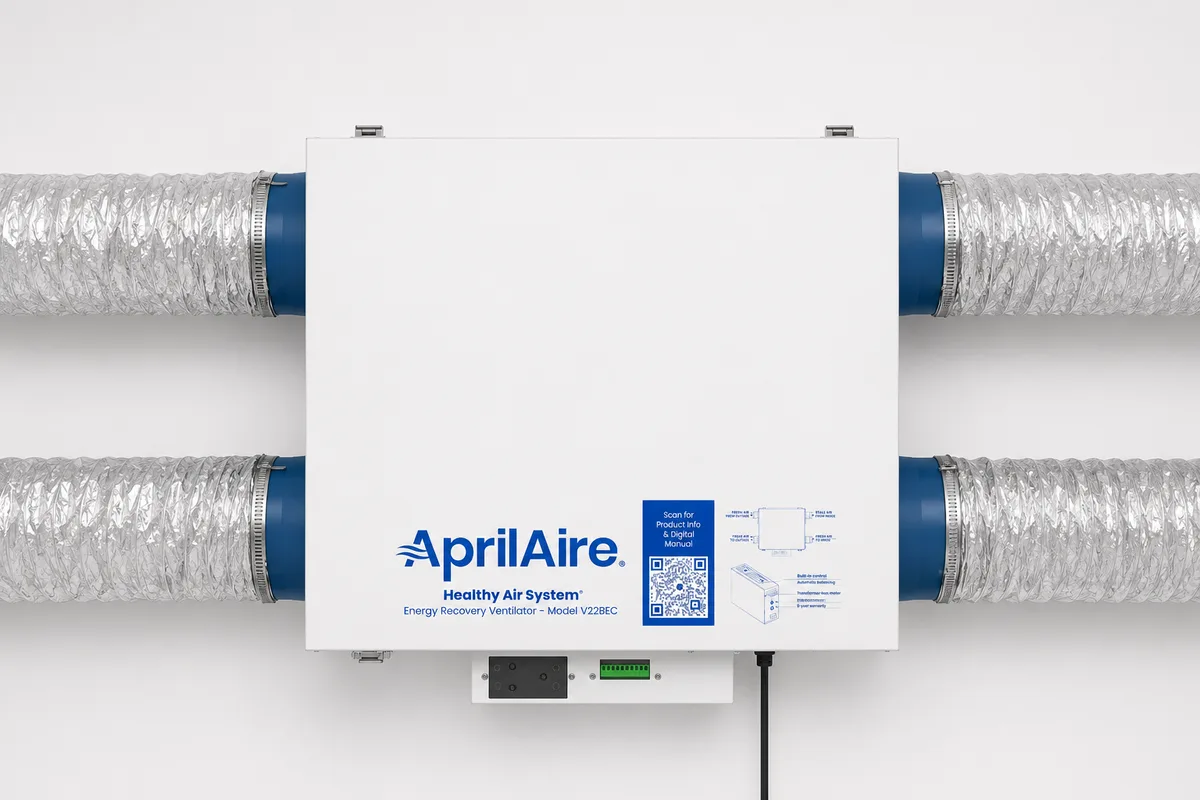
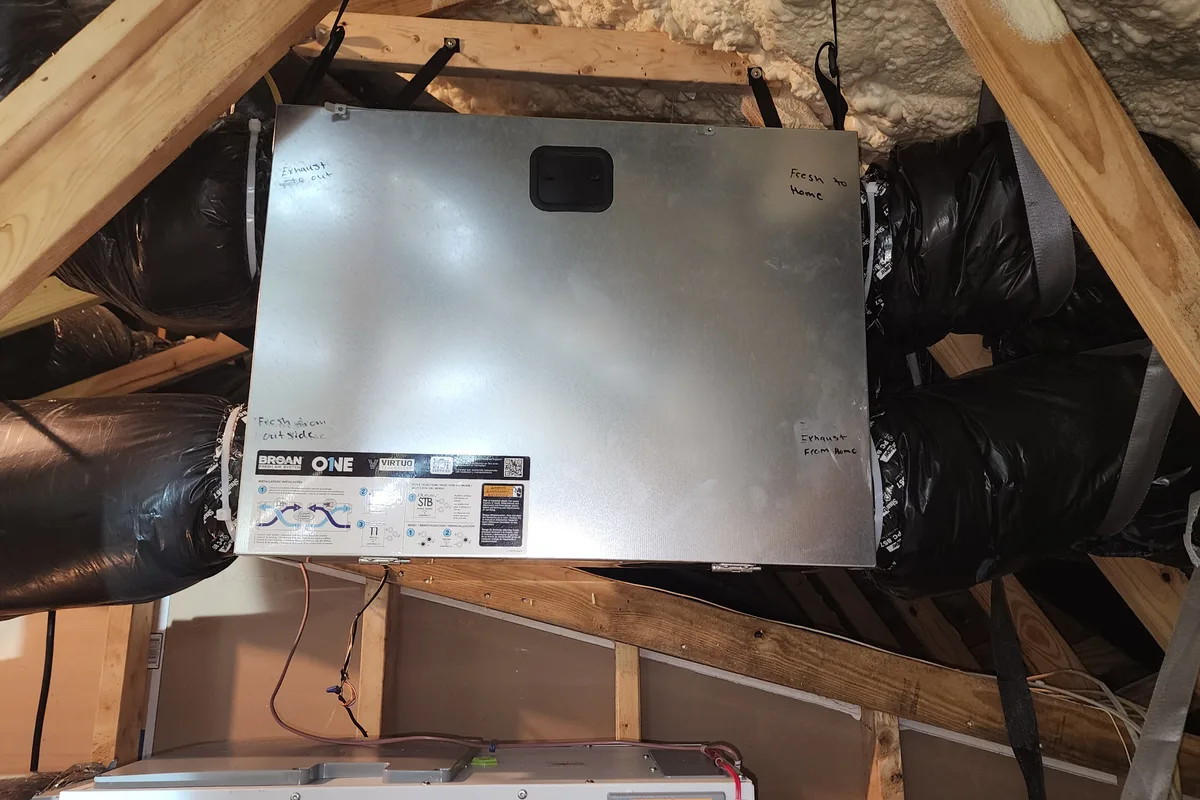
If indoor air quality is a concern alongside humidity, an energy recovery ventilator (ERV) is worth discussing. An ERV brings fresh outdoor air into the home while transferring humidity from the incoming air to the exhaust stream — maintaining fresh air without spiking indoor moisture. This is different from dehumidification, which removes moisture from indoor air that’s already recirculating.
ERVs make the most sense in tightly sealed homes where fresh air exchange is limited. If your home has had significant air sealing work done — or if you’re building new — an ERV paired with either dehumidifier type addresses both moisture and ventilation. We install and service ERV systems throughout the Triangle area for exactly this scenario.
Frequently Asked Questions
What is the difference between a whole-house dehumidifier and a crawl space dehumidifier?
A crawl space dehumidifier is a standalone unit installed in the crawl space to manage moisture at the source. A whole-house dehumidifier connects to your HVAC ductwork and controls humidity throughout your entire living area. Both solve different parts of the same moisture problem — one addresses what’s happening below the home, the other addresses what’s happening inside it.
Can I use a regular portable dehumidifier in my crawl space?
Standard portable dehumidifiers are not designed for crawl space conditions. They lack the low-temperature operating range, proper drainage options, and continuous-duty efficiency needed for that environment. A portable unit running in a crawl space will struggle to keep up, consume excessive electricity, and likely fail prematurely. Purpose-built crawl space dehumidifiers are designed for exactly this application.
How much does a whole-house dehumidifier cost installed in Raleigh, NC?
Whole-house dehumidifier installation in the Raleigh area typically runs $4,500–$7,000 installed, including the unit and HVAC integration. Crawl space dehumidifier installation starts at $3,000, with the range running $3,000–$5,000 depending on whether the crawl space is already encapsulated and what preparatory work is needed. These are estimates — actual cost varies by home size and existing conditions.
Do I need both a crawl space dehumidifier and a whole-house dehumidifier?
Some homes do benefit from both. If your crawl space is the primary moisture source, addressing it first with a dedicated crawl space unit often resolves indoor humidity as well. If living area humidity persists after crawl space moisture is controlled, adding a whole-house unit is the next step. We can assess your specific situation during a free inspection.
What humidity level should I maintain in my home?
Most homes and building scientists recommend keeping indoor relative humidity between 40–60%, with 50% as a comfortable target. Below 40% can dry out wood and cause discomfort; above 60% creates conditions where mold can develop and structural materials degrade over time. In Raleigh’s summers, maintaining 50% without mechanical dehumidification is essentially impossible.
Have Humidity Questions? We Can Help.
If you’re not sure which system your Raleigh, Apex, Cary, or Holly Springs home needs, a free inspection takes the guesswork out of it. We’ll assess your crawl space conditions, measure existing humidity levels, and recommend the most practical solution for your situation — without overselling equipment you don’t need.
Call us at (919) 867-0580 or request your free inspection online.