Crawl Space Mold Removal & Treatment in Raleigh, NC
Mold is a symptom of a moisture problem. We correct the humidity source first — then perform surface mold remediation to remove existing growth and prevent recurrence.Mold risk increases when crawl space Relative Humidity (RH) stays above ~65% for extended periods. We provide professional crawl space mold treatment using EPA-registered antimicrobial products selected for crawl space applications.
EPA-registered products. Fully insured.
Moisture Correction Comes First
Treating mold without correcting the moisture source is temporary — growth will return as long as crawl space RH remains above ~65% for extended periods.Most crawl space mold returns because humidity was never corrected. We address both the mold and the moisture source — targeting ~50% RH to reduce the conditions that support regrowth.
Evaporation through unprotected soil raises crawl space RH continuously
Open crawl space vents allow high-humidity air to enter freely
Leaks or condensation on cold pipes add direct moisture to the space
Inadequate vapor barrier coverage dramatically increases moisture load
Our Mold Removal & Treatment Process
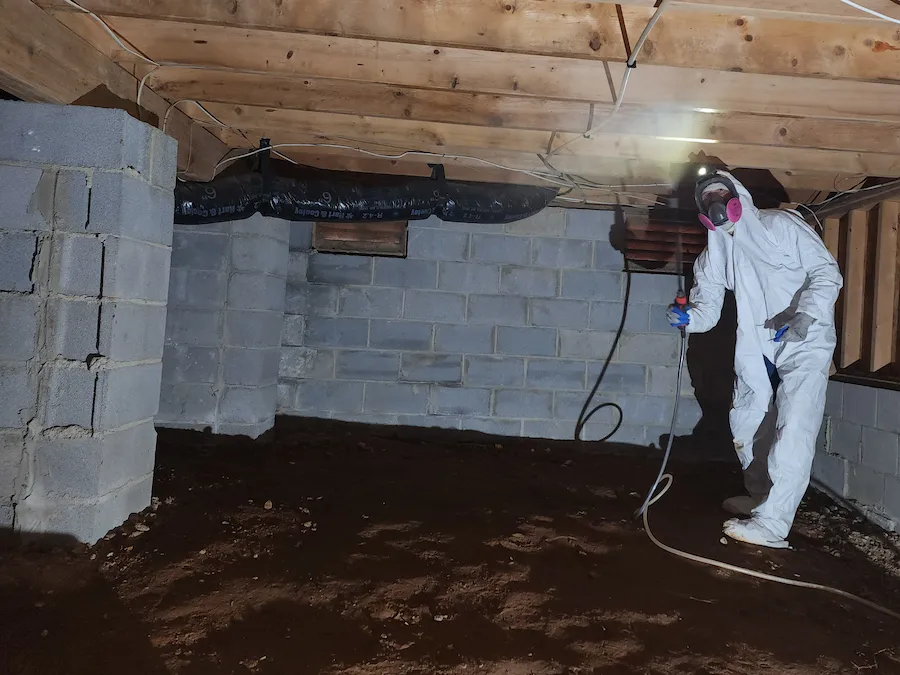
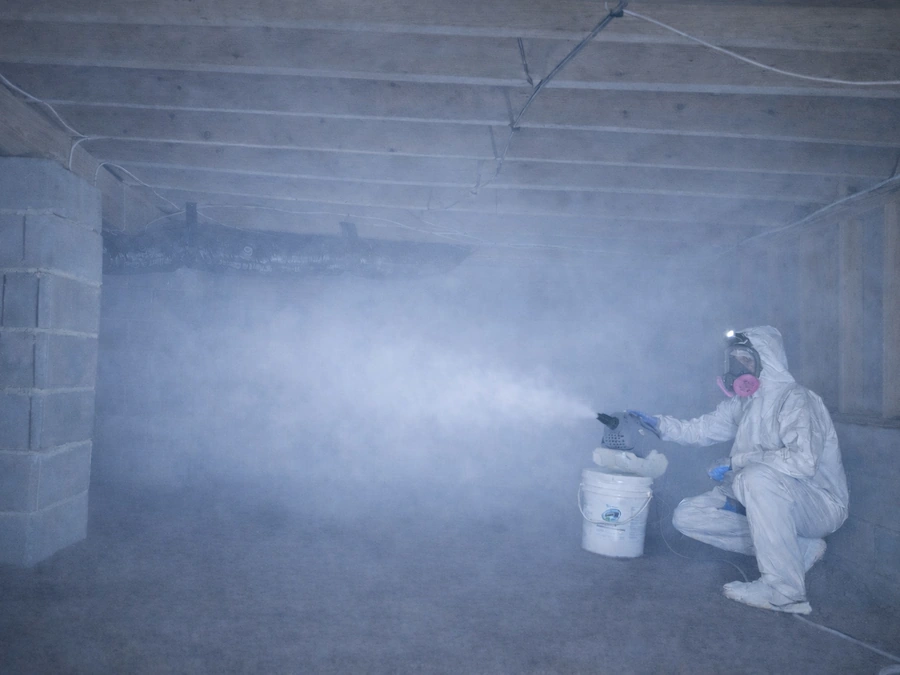
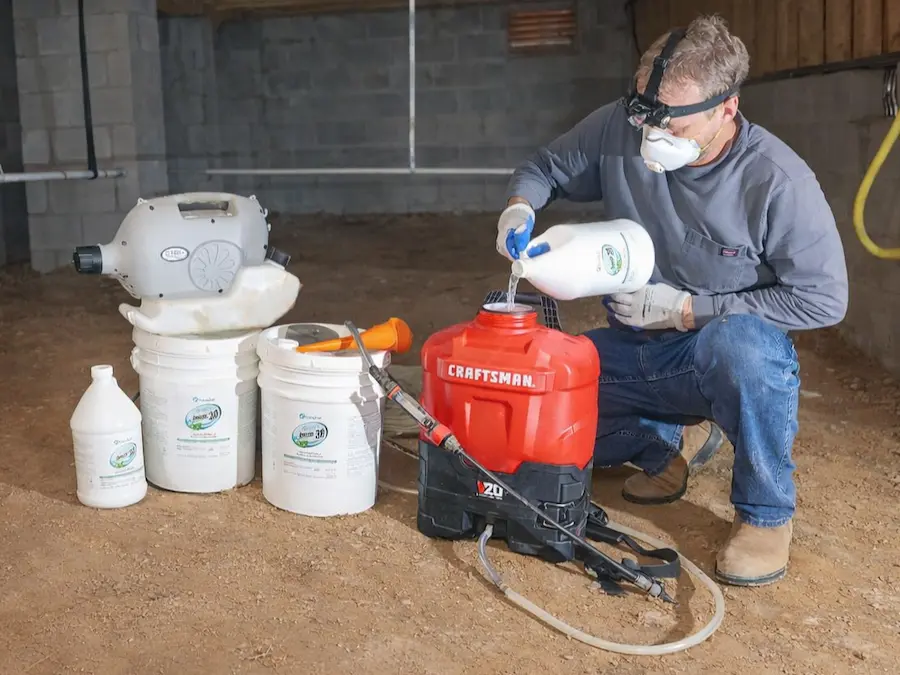
After moisture sources are identified, surface mold on crawl space framing is treated with EPA-registered antimicrobial solutions applied directly to affected wood surfaces.We apply treatment by targeted surface cleaning or controlled fogging to reach framing areas within the crawl space.
Moisture Source Evaluation
Identify and document humidity drivers — ground moisture, air entry points, plumbing, and condensation sources.
Surface Preparation
Prepare affected areas for treatment — targeted surface cleaning where practical before product application.
Antimicrobial Application
EPA-registered products applied to affected surfaces using targeted application or controlled fogging as appropriate — no bleach-based approach.
Post-Treatment Documentation
Treated areas photographed and documented — providing a baseline record for future reference.
Humidity Control Plan
We recommend a dehumidification and vapor barrier strategy to keep crawl space RH stable at ~50% and reduce the conditions that support regrowth.
EPA-Registered Mold Treatment Products
We use EPA-registered antimicrobial products selected for crawl space applications, with application methods designed to minimize disruption.We use EPA-registered products including Benefect Botanical Decon 30 and Concrobium Mold Control, both commonly used in professional restoration settings.
What We Do — and What We Don't Do
We provide crawl space surface treatment and humidity correction. We do not provide mold clearance testing or medical advice.We do not:
- Perform full structural tear-out remediation
- Treat mold inside living areas
- Clean HVAC duct systems
- Provide mold clearance testing or air quality certification
If we observe conditions outside our scope — structural concerns or living-area contamination — we document what we see and limit our work to crawl space moisture control and surface treatment within the crawl space.
Surface Mold vs. Structural Wood Rot
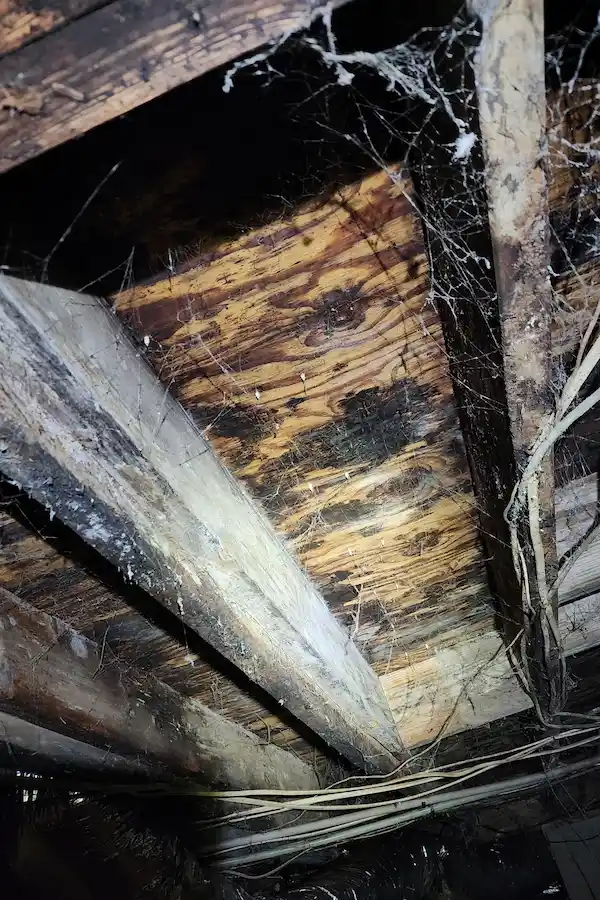
Surface mold treated at early stages leaves wood structurally intact — the goal is to halt active growth and eliminate the conditions that allowed it to develop.Surface mold — typically appearing as white, gray, or black discoloration on wood framing — is different from wood rot, which involves structural degradation of the wood fiber itself. Treatment performed before mold penetrates deep into the wood grain typically does not compromise structural integrity.
Signs that structural assessment may be needed:
Soft, spongy, or crumbling wood when pressed
Fungal growth with a shelf-like or 3D structure
Sagging floors above the crawl space
Visible separation or cracking along the wood grain
Mold Prevention Requires Both Treatment + Humidity Control
The most effective long-term approach is treating existing growth and controlling humidity so it doesn't return.Crawl Space mold is rarely solved by treatment alone, and humidity control alone doesn't remove existing growth. We combine surface treatment with a humidity control plan designed to keep crawl space RH stable — typically 45–50% RH after corrective work — reducing the conditions that support regrowth.
For vented crawl spaces see our professional crawl space dehumidifier installation in Raleigh. For sealed systems see our encapsulated crawl space dehumidifier installation page.
Frequently Asked Questions
What causes mold to grow in crawl spaces in Raleigh, NC?
Crawl Space mold is caused by sustained high Relative Humidity (RH) — typically above 60% for extended periods. In Raleigh and Wake County, the primary drivers are ground moisture evaporating through unprotected soil, humid exterior air entering through open vents, inadequate vapor barrier coverage, and plumbing condensation or leaks. Mold grows on wood framing and subfloor materials when moisture conditions are not controlled.
Can crawl space mold spread into living areas?
Yes. The Stack Effect pulls crawl space air upward into the living space through subfloor gaps, plumbing penetrations, and HVAC pathways. Mold spores, musty odors, and elevated humidity from an uncontrolled crawl space can enter and affect the air quality in your home. Correcting crawl space humidity at the source is the most effective way to prevent this.
Does bleach kill crawl space mold?
Bleach is not recommended for crawl space mold treatment on wood framing. Bleach does not penetrate porous wood surfaces effectively and can leave behind moisture that promotes regrowth. We use EPA-registered antimicrobial products — including Benefect Botanical Decon 30 and Concrobium Mold Control — which are selected specifically for crawl space wood applications and professional restoration workflows.
Will mold come back after crawl space treatment?
Mold will return if the underlying humidity is not corrected. Surface treatment removes existing growth, but if crawl space RH continues to exceed 60%, conditions for regrowth remain. The most effective long-term approach is combining treatment with a dehumidification strategy that maintains crawl space RH at 45–50% year-round.
How much does crawl space mold treatment cost in Raleigh, NC?
Crawl Space mold treatment cost varies based on the size of the affected area, accessibility, and whether moisture correction equipment is needed. An in-person inspection is the best way to determine accurate scope and pricing for your specific crawl space.
Related Reading
Stop Crawl Space Mold at the Source — Not Just the Surface
Serving Raleigh and Wake County, including Cary, Apex, Holly Springs, and Fuquay-Varina.
Schedule Crawl Space Mold Inspection EPA-registered botanical products available.