Table of Contents
The short answer: no, you do not have to encapsulate first
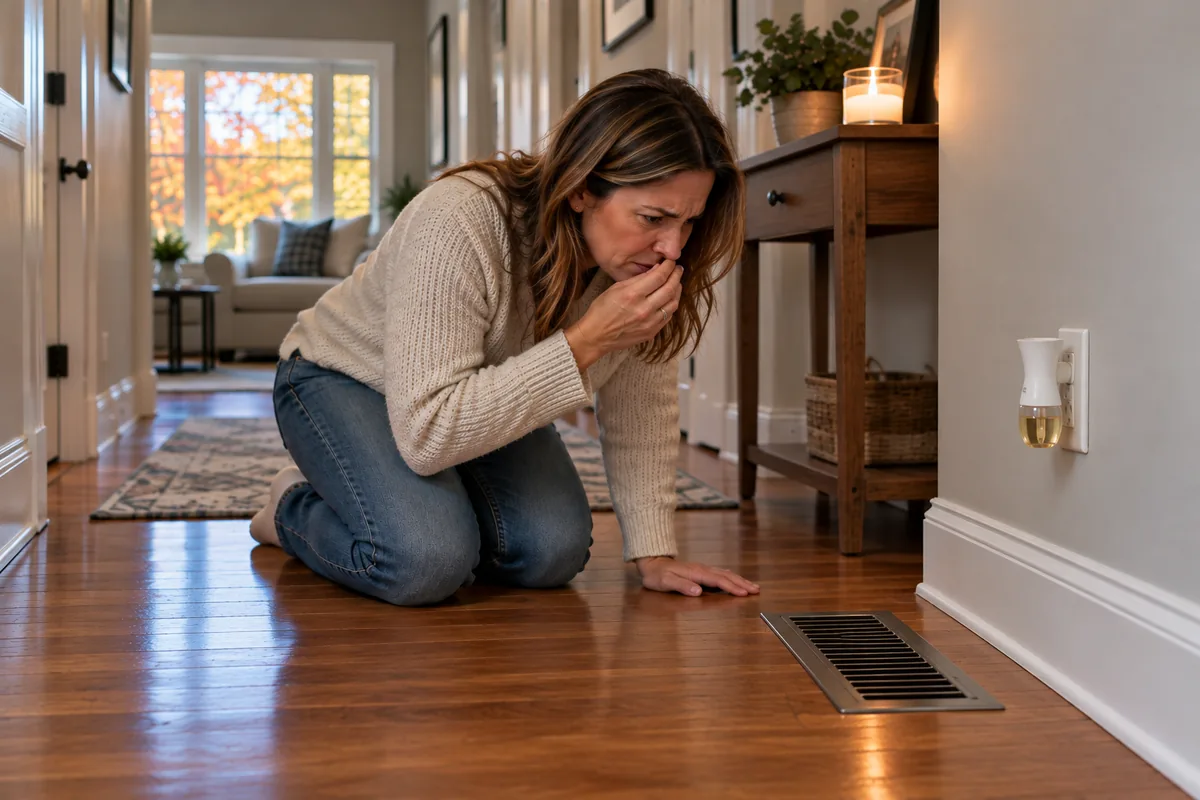
By mid-June in the Triangle, vented crawl spaces are already pulling in outdoor air at 75–85% relative humidity. If you have been smelling mildew when the AC kicks on, the crawl space is almost certainly the source. A common question Triangle Dehumidifiers, LLC hears before every inspection: “Do I have to encapsulate before you can install a dehumidifier?”
The answer is no. A properly sized crawl space dehumidifier will control humidity in a vented crawl space without encapsulation. The two are not the same job, and one is not a prerequisite for the other.
That said, there are situations where encapsulation should come first — or where doing both together makes more sense than a dehumidifier alone. This post explains how to think through that decision.
How a dehumidifier works in a vented crawl space
A crawl space dehumidifier pulls humid air across refrigerated coils, drips the moisture out as condensate, and sends drier air back into the space. In a sealed crawl space, that job is fairly easy. The air is contained and the amount of moisture the unit has to deal with stays predictable.
A vented crawl space is a different story. The dehumidifier is chasing a moving target because the foundation vents let outdoor air drift in all day long. On a July afternoon in Cary or Apex with outdoor humidity sitting at 85%, the unit simply runs longer to keep up. That is not the dehumidifier struggling. It is just what it takes to control an open space.
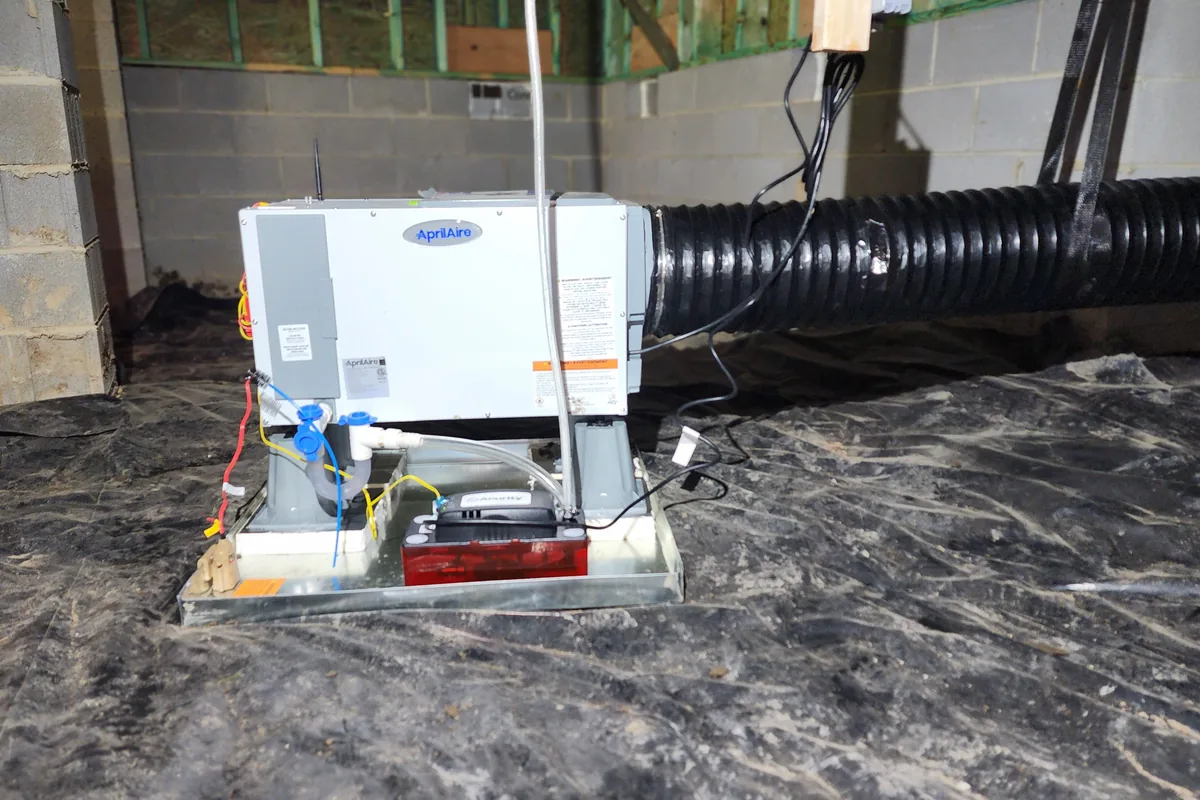
So before we ever set the unit, we cut down how much moisture is coming at it in the first place. In a vented crawl space, Triangle Dehumidifiers lays a vapor barrier across 100% of the ground to stop moisture from evaporating up out of the soil, and we close the foundation vents to keep as much humid outdoor air out as possible. Then we install a unit sized for the work. We use the AprilAire E100W and E130W in most vented crawl spaces. Those are 100-pint and 130-pint units, and they are built to handle the heavier moisture loads we see in vented crawl spaces around Wake County. The E80W does a great job in an encapsulated space, but it is usually too small for a vented one.
Why encapsulation makes the dehumidifier work better
Encapsulation does not replace a dehumidifier — it gives the dehumidifier a controlled environment to work in. When a crawl space is fully sealed with a vapor barrier and closed vents, the unit no longer has to fight an open system. It manages a fixed volume of air, and moisture infiltration through the liner is minimal.
The practical result: in an encapsulated crawl space, a dehumidifier runs less often, needs shorter run cycles, and reaches the target setpoint faster. Homeowners with both sometimes notice the unit clicking on briefly each day rather than running for several hours at a stretch.
Over the life of the equipment, that matters. But it is not a reason to delay addressing a real humidity problem. If your crawl space is running 75% RH in June, a dehumidifier installed now solves the problem today. Encapsulation is an upgrade you can add later.
When doing both at once makes more sense
Sometimes it makes sense to encapsulate right alongside a dehumidifier, or even before one. Here are the situations where doing both is the smarter call.
Standing water or active drainage issues. A dehumidifier cannot handle bulk water. If the crawl space pools after a hard rain or has a groundwater problem, drainage or a sump pump has to come first. The dehumidifier will never win against a source that keeps outpacing it.
Active mold on wood framing. If there is more than a little surface mold on the floor joists, it needs to be treated before the crawl space gets sealed. Closing mold up under a vapor barrier without treating it first just traps the problem down there.
Plans to use the space for storage or HVAC equipment. An open vented crawl space is no place for anything temperature-sensitive or stored long-term. If you want the space to do that kind of work, sealing it is the right starting point.
Major renovation already touching the crawl space. If a renovation already has the crawl space floor or walls opened up, it is far more efficient to handle the encapsulation and the dehumidifier in one trip.
Better indoor air quality. A good chunk of the air you breathe upstairs starts in the crawl space. When that space is sealed instead of vented, you are not pulling damp, musty, soil-laden air up into the home, and that means cleaner, healthier air in the living space.
Better year-round energy efficiency. An encapsulated crawl space with sealed and insulated foundation walls holds a steadier temperature in every season. It is more energy efficient year round than a vented crawl space with bare, uninsulated foundation walls, which leaks conditioned comfort and lets outdoor temperature swings work against your HVAC.
For a more detailed side-by-side comparison, Crawl Space Encapsulation vs. Dehumidifier: Which One Do You Actually Need? walks through the full decision framework.
When a dehumidifier without encapsulation is the right call
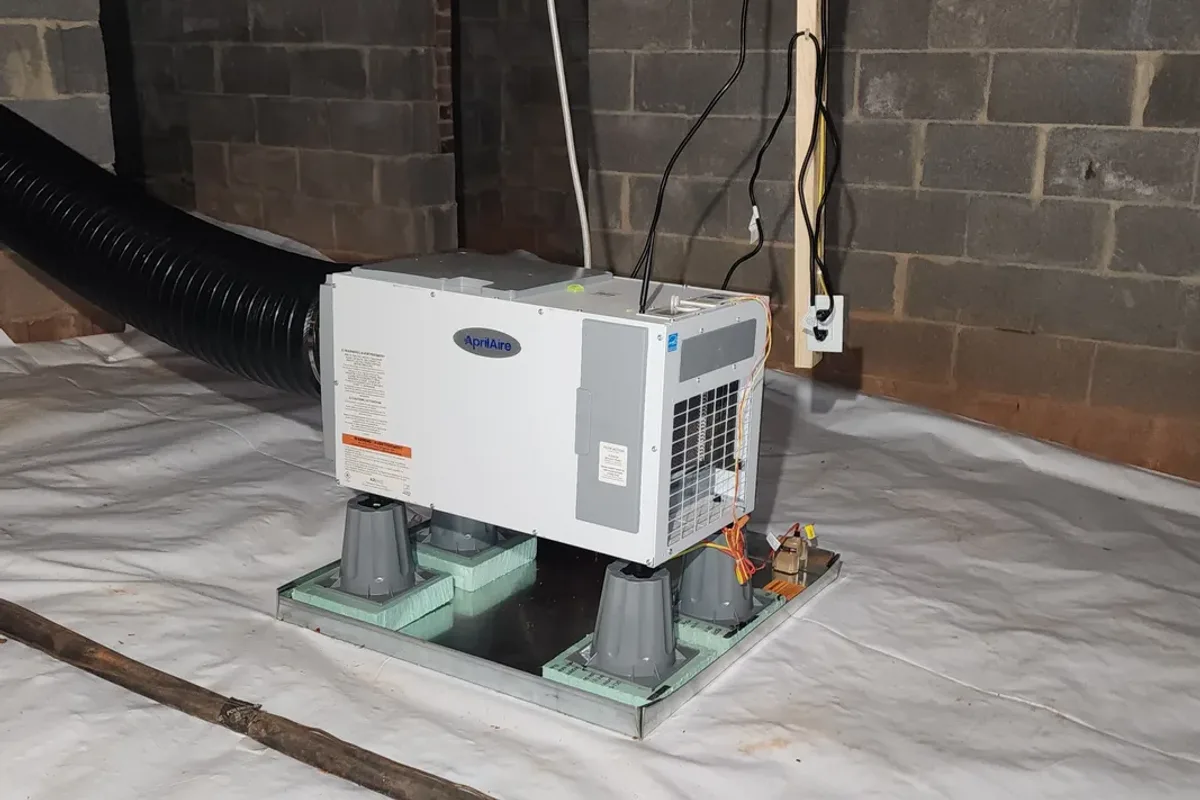
For most Triangle homeowners with a standard vented crawl space, a dehumidifier without encapsulation is a practical and effective solution — particularly in summer when the humidity problem is acute and the budget for full encapsulation is not there yet.
This approach fits when:
- The crawl space has no standing water or drainage problems
- There is no active mold — only elevated humidity and a musty odor
- There is already a basic ground cover or older vapor barrier in place
- Budget is a real constraint and you want to fix the humidity problem now
Triangle Dehumidifiers installs AprilAire E100W and E130W units in vented crawl spaces across Wake County — Raleigh, Cary, Apex, Holly Springs, Fuquay-Varina, and surrounding areas. A typical install in a vented crawl space runs an estimated $3,000–$5,000, depending on crawl space size, the unit required, and how far the condensate line needs to run. That compares to an estimated $7,500–$15,000 for full encapsulation plus dehumidifier.
A dehumidifier-only install is not a lesser option. It is the right option for a lot of homes in the Triangle.
Warning signs that should be addressed before any equipment
A few conditions should be resolved before a dehumidifier goes in — regardless of whether you plan to encapsulate or not:
- Standing water that does not drain within 24 hours after rain
- Widespread mold on floor joists (a few isolated spots are different from colonies covering large sections)
- Sagging or deteriorating floor joists that indicate long-term structural moisture damage
- A failed or absent sump system if the crawl is known to flood
If any of these are present during an inspection, Triangle Dehumidifiers will flag them before recommending equipment. A dehumidifier is not installed over unresolved drainage problems — that serves no one. See also: Signs Your Home Has a Humidity Problem for what to look for before calling.
Frequently Asked Questions
Can a crawl space dehumidifier work without encapsulation?
Yes. A properly sized crawl space dehumidifier will control humidity in a vented crawl space without encapsulation. The unit runs more often and works harder than it would in a sealed space, but it does the job. Triangle Dehumidifiers, LLC installs dehumidifiers in both vented and encapsulated crawl spaces across Wake County.
Is encapsulation required before installing a dehumidifier?
No — encapsulation is not required. Some contractors bundle the two because it simplifies their workflow, but Triangle Dehumidifiers will install a dehumidifier in a vented crawl space when that is the right fit for the homeowner's situation and budget.
When should I encapsulate before getting a dehumidifier?
Encapsulation makes sense first if the crawl space has standing water or an active drainage problem, has significant mold that needs remediation, or if you plan to use the crawl space for storage. In those cases, address the moisture source before adding a dehumidifier.
How much does a crawl space dehumidifier cost without encapsulation?
A crawl space dehumidifier installed in a vented crawl space in the Triangle typically runs an estimated $3,000–$5,000. The higher end applies to larger spaces, crawl spaces with challenging drainage routing, or when closing foundation vents as part of the install.
Ready to stop guessing about your crawl space humidity?
By mid-June in the Triangle, a vented crawl space is already working against you. The question is not whether to address it — it is whether to act now or wait until the damage shows up in your floors, your air quality, or your HVAC performance.
Triangle Dehumidifiers, LLC provides free crawl space inspections throughout Wake County and the Triangle. The inspection measures actual crawl space RH, checks for drainage issues, and produces a written quote — no upsells, no scare tactics. If a dehumidifier alone is the right call, that is what you get.
Call or text us at (919) 867-0580 — or request your inspection online. We serve Raleigh, Cary, Apex, Holly Springs, Fuquay-Varina, Garner, Wake Forest, Knightdale, Morrisville, Durham, and Chapel Hill.