Table of Contents
What Triangle NC Homes Are Actually Breathing
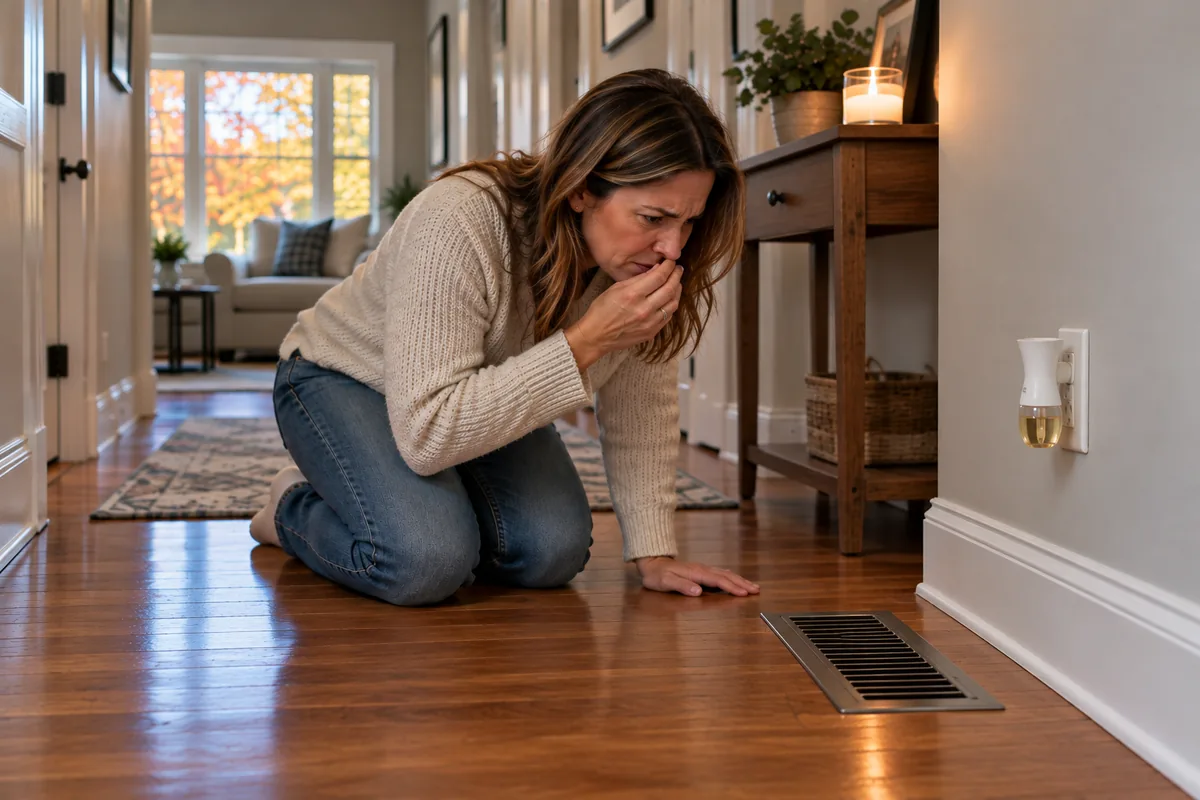
Most homeowners track outdoor air quality: pollen alerts, wildfire smoke, ozone days. Indoor air gets less attention, even though the EPA notes that indoor air can be two to five times more polluted than outdoor air. In a Triangle home that runs the AC from May through September, that same air recirculates through a sealed building envelope day after day.
Triangle Dehumidifiers, LLC in Holly Springs, NC installs ERVs (energy recovery ventilators), whole-house dehumidifiers, and whole-house filtration systems for Wake County homeowners who want to address indoor air quality at the system level. This post covers the main pollutants, why the Triangle’s climate makes them worse, and what actually helps.
The Pollutants That Matter Most
Carbon dioxide (CO2) builds up in any occupied space with limited fresh air exchange. ASHRAE Standard 62.2 sets minimum ventilation rates for residential buildings based on floor area and occupant count, which helps control CO2 and other occupant-generated contaminants. In a tight modern home with windows closed through summer, CO2 can rise measurably in occupied bedrooms overnight. Elevated levels are associated with fatigue, reduced cognitive clarity, and disrupted sleep.
Volatile organic compounds (VOCs) off-gas from building materials, furniture, flooring, adhesives, paints, and cleaning products. New construction in Holly Springs, Apex, Fuquay-Varina, and Cary can see elevated VOC concentrations in the first few years as materials cure.
Formaldehyde deserves its own mention as one of the most prevalent indoor VOCs. Pressed-wood products like particleboard, MDF, and engineered wood panels are typically manufactured with urea-formaldehyde adhesive resins, and laminate flooring is another common source. These materials begin off-gassing on day one and can continue for years, with concentrations highest in the first two to three years after installation. NC’s hot, humid summers make this worse: both heat and humidity accelerate emissions from formaldehyde-bearing materials. In a newly built home in Holly Springs, Apex, or Fuquay-Varina, where builder-grade pressed-wood cabinets and laminate flooring are standard, formaldehyde concentrations can run measurably elevated for the first season or two. Fresh-air ventilation through an ERV dilutes those concentrations directly. Holding indoor humidity at 45-50% also slows the off-gassing rate, which is one reason humidity control and ventilation work well together.
Particulate matter (PM2.5) refers to particles 2.5 microns or smaller, fine enough to bypass the nose and throat and enter the lower respiratory tract. Indoor sources include cooking, candles, gas appliances, and incense. Wildfire smoke events, increasingly common in the Southeast, spike outdoor PM2.5 that infiltrates homes. Standard 1-inch HVAC filters do not capture PM2.5 effectively. A higher-MERV whole-house filter is needed for meaningful particulate reduction.
Radon is a naturally occurring radioactive gas produced by the decay of uranium in soil and rock. It enters homes through crawl space floors, foundation cracks, sump pits, and penetrations around pipes, the same pathways that allow moisture into the building. The EPA recommends action at or above 4 pCi/L. Radon is odorless and colorless, and according to the EPA and the U.S. Surgeon General, it is the second leading cause of lung cancer in the United States after smoking. Testing is the only way to know a specific home’s level.
Why Humidity Makes IAQ Worse
NC’s humidity is not just a comfort issue. It compounds every other indoor air quality problem. Indoor relative humidity consistently above 55-60% accelerates VOC off-gassing from building materials, promotes dust mite populations, and creates the conditions mold needs to establish and spread. Mold in a crawl space or on an HVAC coil adds biological particles (spores and their byproducts) to the air circulating through the living space.
A whole-house dehumidifier integrated into the HVAC system maintains 45-50% RH throughout the home year-round. At that level, mold cannot establish on most materials, dust mite reproduction is suppressed, and many building materials off-gas at a reduced rate. Triangle Dehumidifiers installs AprilAire whole-house dehumidifiers at the air handler, sized for the home’s square footage and moisture load. Installed cost typically runs $4,500-$5,500 depending on HVAC complexity.
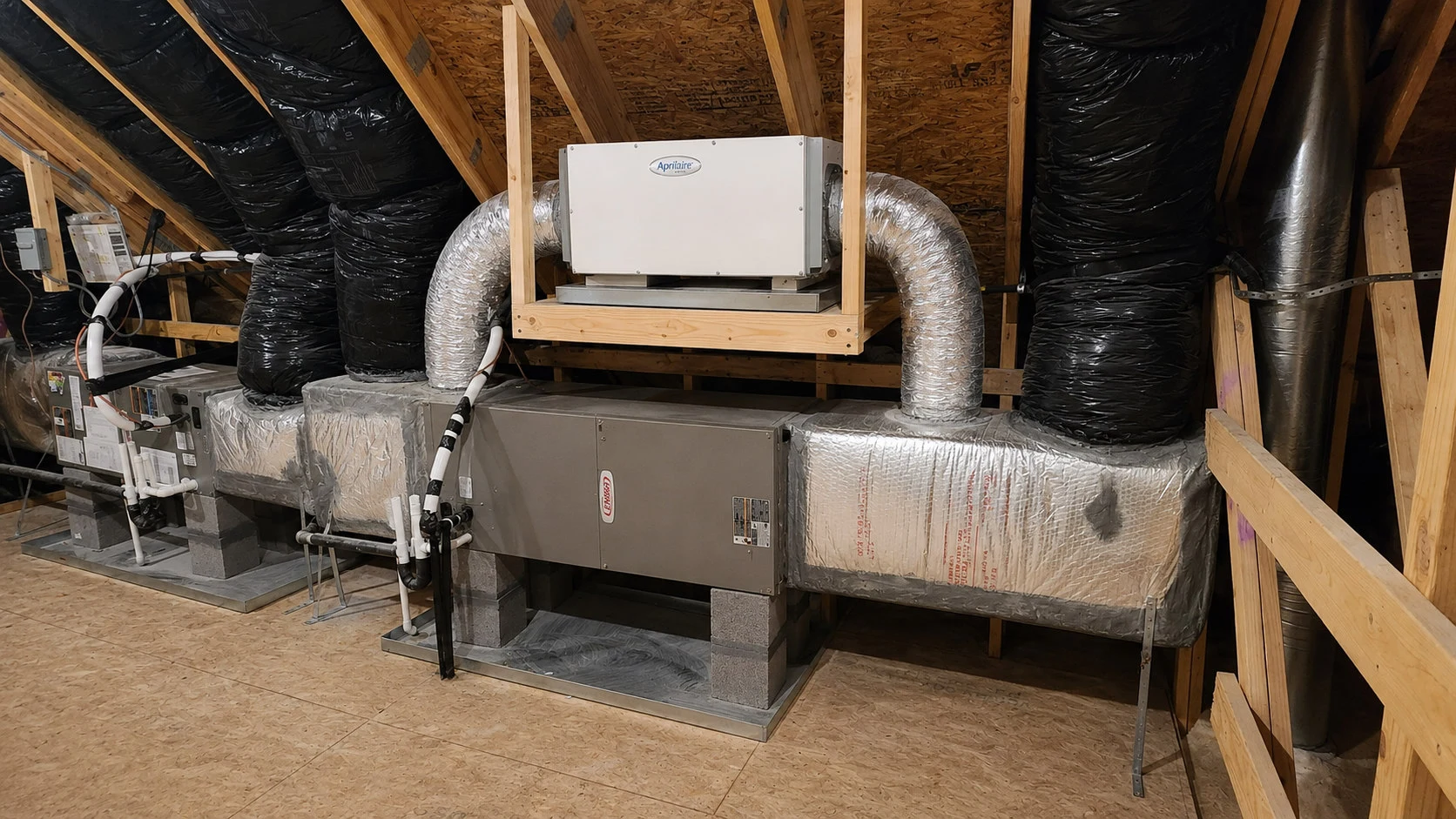
Whole-house air filtration addresses particulates at the system level. Triangle Dehumidifiers also installs AprilAire whole-house air filtration systems. These are higher-MERV filters installed in the return-air duct that capture PM2.5, pollen, pet dander, and mold spores that 1-inch filters miss. Unlike portable room purifiers, a whole-house filter processes all the air moving through the HVAC system, not just a single room.
What an ERV Does and Why NC Homes Need One
Newer homes in the Triangle, particularly those built since 2010 in Holly Springs, Fuquay-Varina, and western Wake County, are significantly tighter than homes from earlier decades. Tighter construction reduces heating and cooling load, but it also means less incidental fresh air exchange. CO2, VOCs, formaldehyde, and other indoor pollutants accumulate in buildings without a mechanical ventilation strategy.
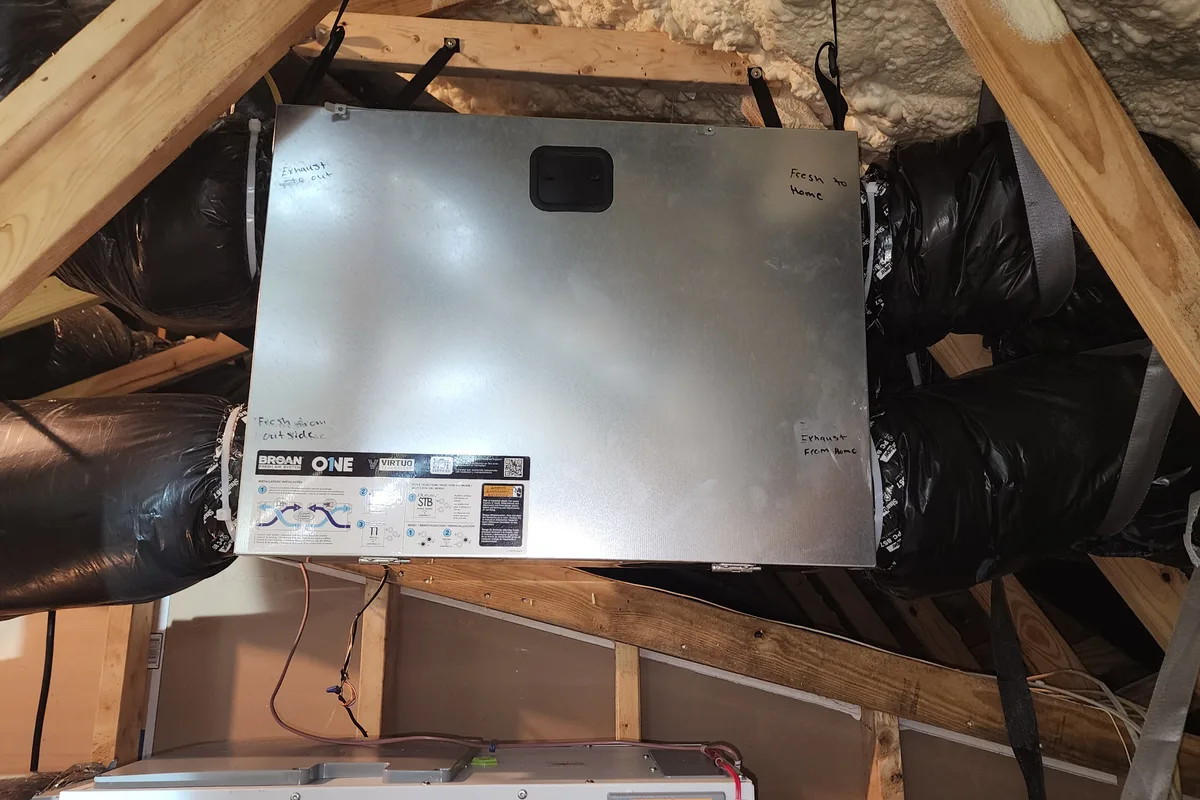
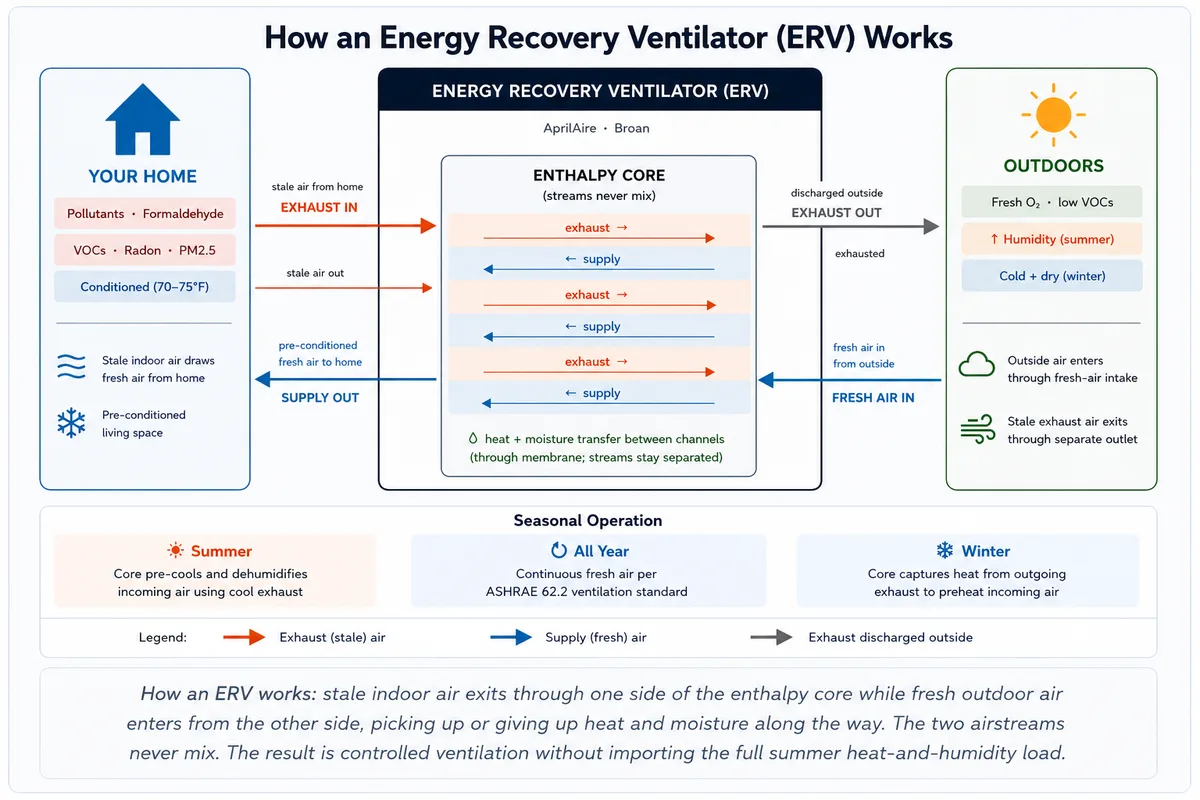
An energy recovery ventilator (ERV) provides a continuous, controlled exchange of stale indoor air for fresh outdoor air while recovering most of the energy from the conditioned air being exhausted. In summer, the ERV uses the cool indoor exhaust air to pre-cool the hot, humid outdoor air coming in and pull a modest amount of the moisture out of it, so fresh air arrives with less heat and humidity than an open window would bring. In winter, the warm indoor exhaust air preheats the cold incoming air before it reaches the living space.
The key distinction for humid climates: an ERV manages both heat and moisture in the exchange. An HRV (heat recovery ventilator) manages only heat. Per AprilAire’s product documentation, energy recovery ventilators are the preferred choice in regions with elevated humidity levels, including the Southeast, because the moisture transfer reduces the humidity load that fresh-air ventilation adds in summer. The reduction is partial, not total, which is why ventilation is paired with dehumidification in this region rather than replacing it. Broan’s residential ERV lineup also includes configurations suited for Southern climate applications.
Triangle Dehumidifiers installs both AprilAire and Broan ERVs, depending on the home’s ductwork layout and square footage. AprilAire’s residential ERV line includes the Model 8100 series, which can be integrated with the home’s forced-air system and sized per ASHRAE 62.2 ventilation targets. Broan’s AI Series ERVs offer flexible installation options and selectable airflow ranges that vary by model, including roughly 35–140 CFM and 35–150 CFM configurations. ERV installation in the Triangle typically runs $5,000-$7,000 depending on unit selection and duct accessibility.
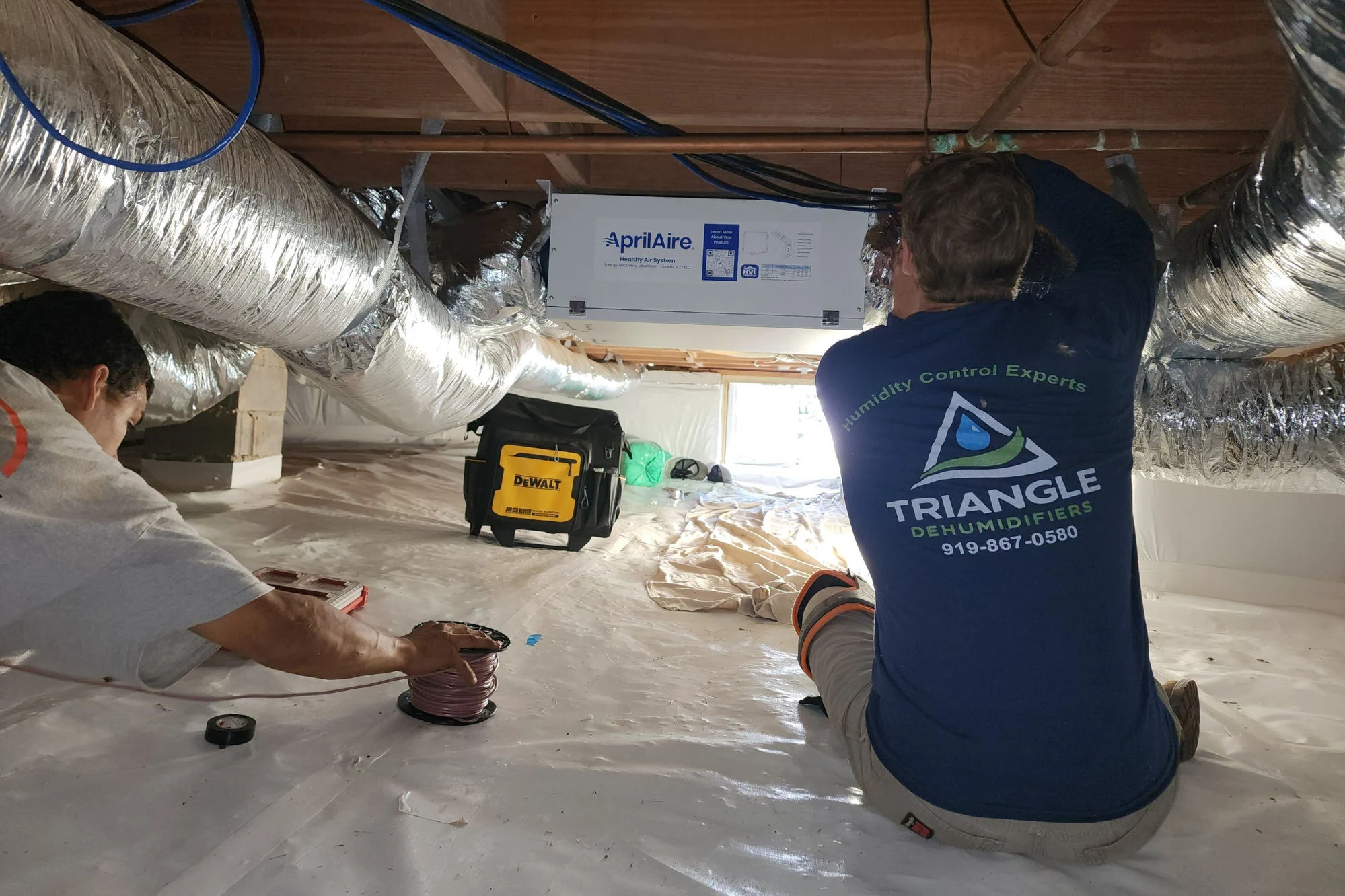
See our ERV installation service →
How to Monitor Your Home’s Air Quality
Understanding what’s in your air is useful context before deciding what equipment makes sense.
For CO2 monitoring, we recommend the Aranet4 Home.
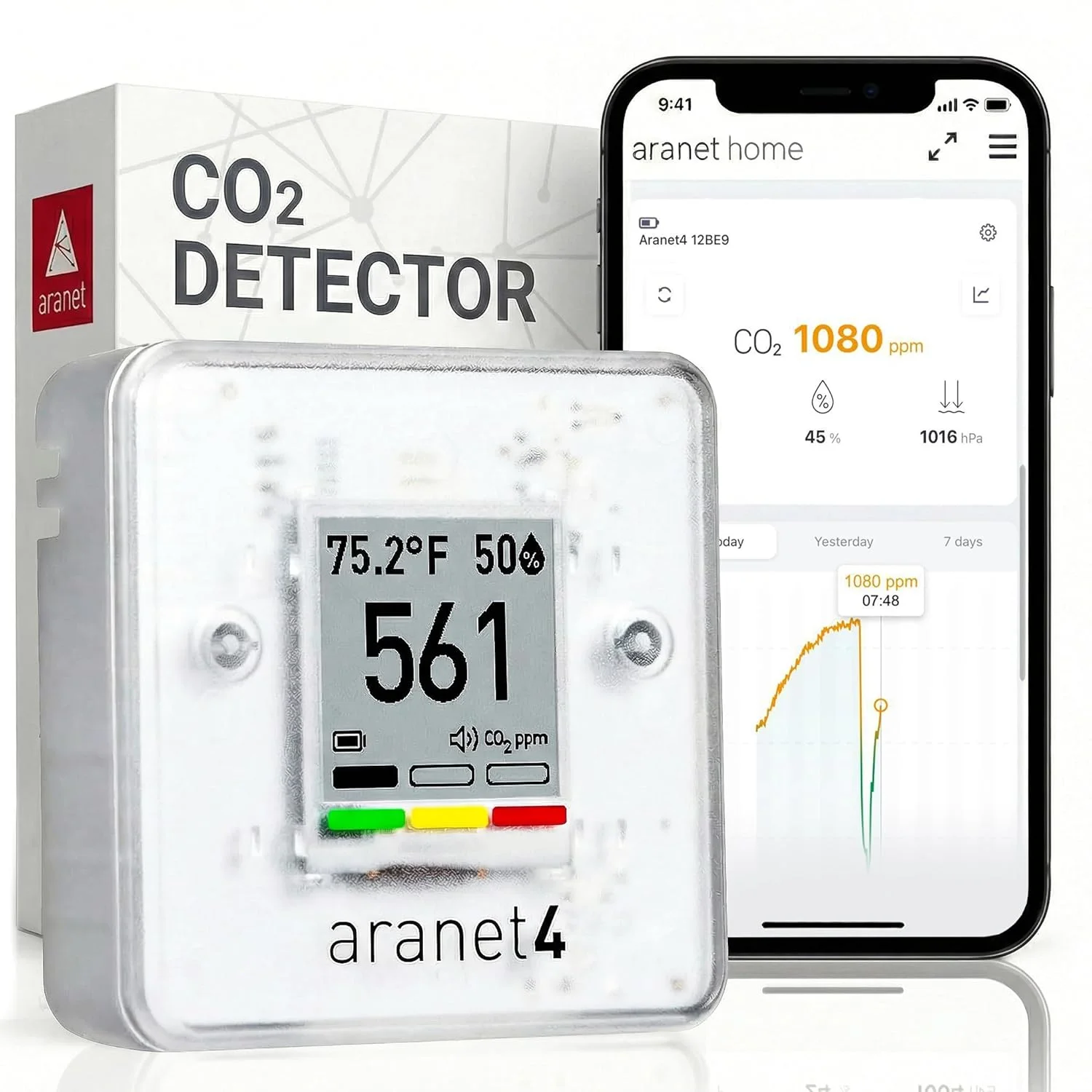
It uses a true NDIR (non-dispersive infrared) sensor, the same technology used in laboratory instruments, rather than the cheaper electrochemical sensors found in many consumer devices that estimate CO2 indirectly. That distinction matters for accuracy. Key specs:
- CO2 range: 0–9,999 ppm
- CO2 accuracy: ±(30 ppm + 3% of reading)
- Also measures: temperature (±0.3°C), relative humidity, atmospheric pressure
- Display: E-Ink (always-on, low power)
- Battery life: up to 4 years on 2 AA batteries
- Connectivity: Bluetooth to free Aranet Home app; stores up to 90 days of history
- Alerts: adjustable CO2 buzzer (default triggers at 1,400 ppm)
- No subscription required
Aranet’s published CO2 thresholds are a useful practical guide: 400–800 ppm indicates good ventilation, 800–1,200 ppm is moderately elevated, and above 1,200 ppm points to insufficient air exchange. For a tightly built Triangle home, putting one of these in a bedroom or home office overnight will quickly tell you whether CO2 is a problem worth solving with mechanical ventilation.
For radon monitoring, our top pick is the Ecosense RD200 RadonEye.
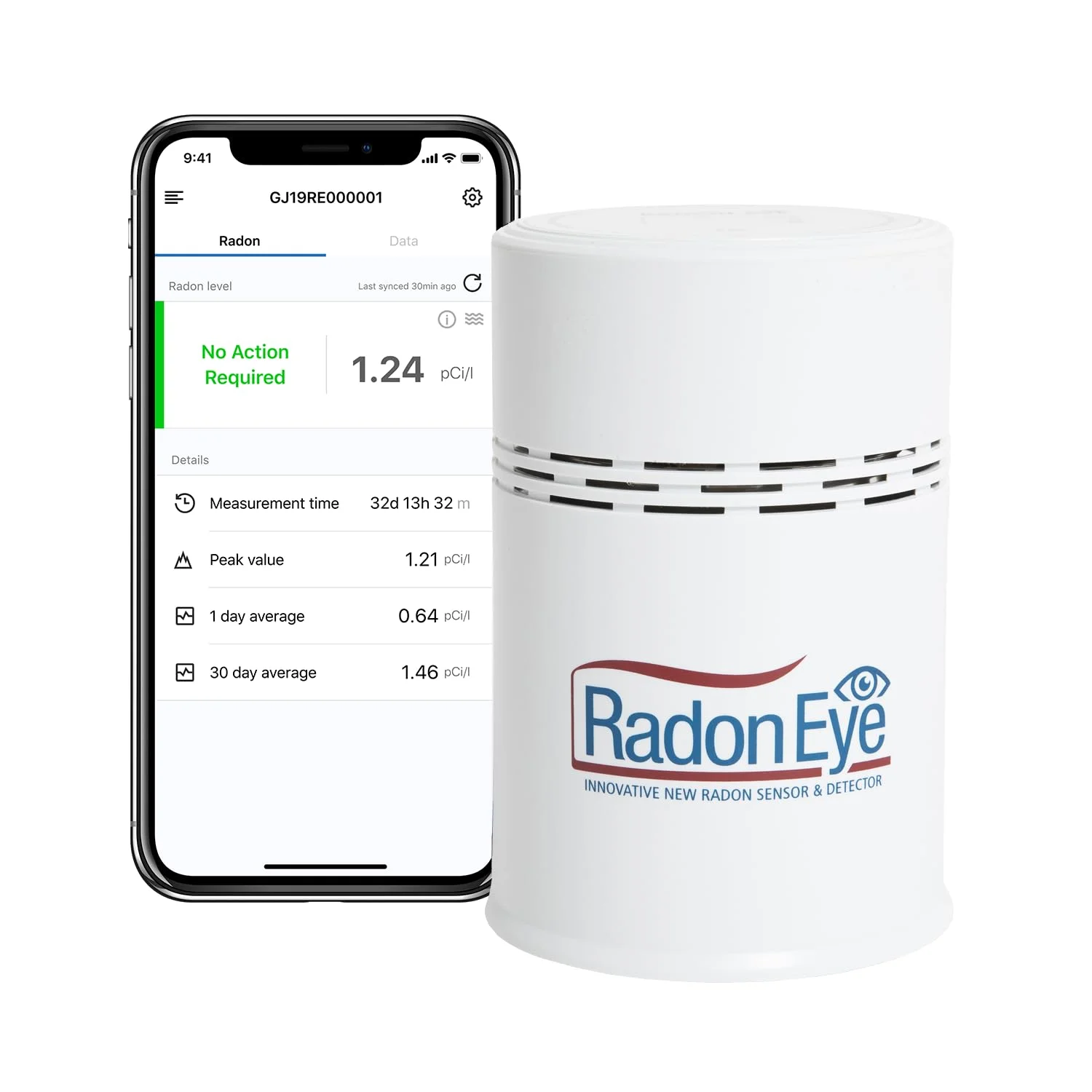
It uses a patented pulsed ionization chamber, a more sensitive and technically sophisticated method than what most consumer radon monitors use, and it is the only continuous monitor in its price category that updates every 10 minutes. That matters because radon levels in NC homes fluctuate throughout the day based on weather, barometric pressure, and ventilation. A passive charcoal kit or a device with a 24-hour average can easily miss a spike that a 10-minute update catches. Key specs:
- Sensor: Patented pulsed ionization chamber (U.S. Patents #10,132,936 and #11,169,281)
- Measurement range: 0.2–99.9 pCi/L
- Precision: <±10% at 10 pCi/L
- Sensitivity: 30 counts/hour per pCi/L, 15× more sensitive than the ANSI-AARST minimum standard for continuous monitors
- First reading: 10 minutes; reliable result within 1 hour
- Update interval: every 10 minutes on OLED display; 60-minute moving average logged in app
- Connectivity: Bluetooth + Wi-Fi for remote access via RadonEye app
- Power: Plug-in (12V adapter), which eliminates the accuracy drift that can affect battery-powered monitors as batteries weaken
- Integrated audio alarm: yes
- Coverage: up to 1,000 sq ft
- Third-party validated: University of Michigan Department of Nuclear Engineering and Radiological Sciences
- Service life: approximately 5 years
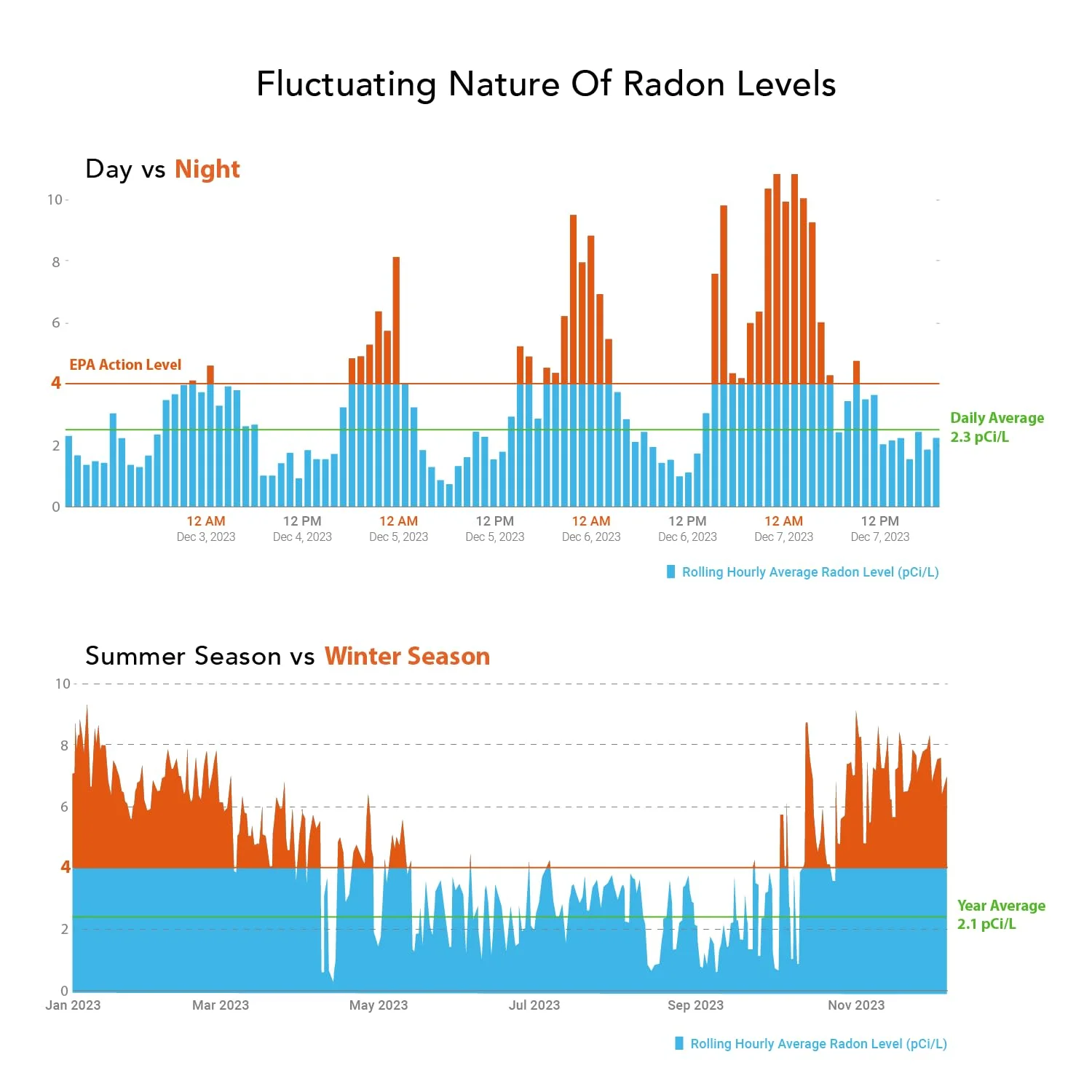
Place it at least 20 inches above the floor and away from windows, vents, and Wi-Fi routers. The app shows real-time readings, trend charts, and short and long-term averages you can reference when deciding whether to bring in a licensed NC radon mitigation contractor.
For homeowners who want radon monitoring combined with other IAQ sensors in one device, the Airthings View Plus covers radon alongside CO2, VOCs, PM2.5, humidity, temperature, and air pressure. It is a reasonable multi-parameter option, though for a dedicated, highest-sensitivity radon reading, the RadonEye RD200 is the better instrument.
For homeowners who want IAQ control tied directly into HVAC automation, AprilAire’s Wi-Fi IAQ thermostat lineup, including the 8920W, can be paired with the Healthy Air app to manage ventilation and other indoor air quality functions automatically.
If you get readings that concern you, like radon at or above 4 pCi/L or CO2 consistently above 1,000 ppm in occupied rooms, those are useful data points to bring into a conversation about ventilation options.
A Layered Approach for Triangle Homes
Good indoor air quality in a Wake County home typically comes from three things working together: controlling humidity, filtering particulates, and providing fresh air exchange. Each addresses a different part of the problem.
A whole-house dehumidifier keeps relative humidity in the range where mold, dust mites, and VOC off-gassing are suppressed. A whole-house AprilAire filter captures PM2.5, pollen, and biological particles at the HVAC level. An ERV brings in a controlled stream of fresh outdoor air while limiting the heat and humidity that come with it in summer.
For homes with a crawl space, which is most homes in the Triangle, addressing crawl space conditions is foundational to all of it. Mold, radon, and humidity problems on the first floor often trace directly to an uncontrolled crawl space below. A crawl space dehumidifier or full encapsulation reduces the pollutant load that migrates upstairs through the stack effect. See our post on crawl space mold health risks for more on how crawl space conditions affect the air in your living space.
Triangle Dehumidifiers can assess crawl space conditions and talk through options for ventilation and filtration during an inspection. If a whole-house dehumidifier, ERV, or filtration system makes sense for your home, we will size it correctly and install it to work with your existing HVAC.
Frequently Asked Questions
Does my crawl space affect the air quality upstairs?
Yes. In most Triangle homes, air from the crawl space migrates into the living space through floor penetrations, ductwork gaps, and openings around pipes. That process is called the stack effect. Mold spores, radon, soil gases, and humidity all travel this path. Encapsulating the crawl space and controlling humidity there directly improves what you breathe upstairs. For more on this connection, see our post on crawl space mold and health risks.
What is the difference between an ERV and an HRV?
An HRV (heat recovery ventilator) transfers only heat between the outgoing and incoming airstreams. An ERV (energy recovery ventilator) transfers both heat and moisture. In a humid climate like the Triangle, an ERV is the better choice: it pulls a small amount of the moisture out of incoming summer air, where an HRV pulls none, and it helps keep winter air from becoming excessively dry. It is not a substitute for a dehumidifier. AprilAire's ventilation documentation addresses this distinction directly and recommends ERVs for high-humidity regions.
What radon level is a concern in NC homes?
The EPA recommends action at 4 pCi/L or above. Radon levels vary significantly by location and even house-to-house on the same street, so the only way to know your home's level is to test. Short-term charcoal kits give a single snapshot, but because radon fluctuates throughout the day, a continuous monitor gives a more complete picture. The Ecosense RD200 RadonEye updates every 10 minutes and logs trend data through its app, which makes it easier to see patterns and decide whether mitigation is warranted. If your home tests at or above 4 pCi/L, a licensed NC radon mitigation contractor can typically reduce levels substantially.
What is a normal CO2 level in a home, and when should I be concerned?
Outdoor air is roughly 420 ppm CO2. A well-ventilated home typically runs 600–800 ppm. Above 1,000 ppm you may notice stuffiness, reduced focus, or fatigue, especially during sleep or extended time in a closed room. Above 1,500 ppm is a clear sign of inadequate ventilation that warrants action. The EPA does not set a residential CO2 limit, but ASHRAE 62.2 sets minimum ventilation rates for homes based on square footage and occupant count, which is designed to keep CO2 and other occupant-generated pollutants in check. In tightly built Triangle homes, CO2 routinely exceeds 1,000 ppm in occupied bedrooms overnight with no mechanical ventilation. It is one of the most common findings we see. An ERV is the most effective fix because it continuously dilutes indoor CO2 with a controlled stream of fresh outside air.
Why are CO2 levels higher at night?
People exhale CO2 continuously, roughly 200 mL per minute at rest. In a closed bedroom overnight, that CO2 accumulates because the room has little to no fresh air exchange. A 400 sq ft bedroom with two people and no ventilation can reach 1,500+ ppm by early morning. Tight modern construction makes this worse because there is minimal air leakage to dilute it naturally. An ERV running continuously prevents this by pulling fresh air in and exhausting stale air around the clock, even while you sleep.
Do I need an ERV if my house already feels drafty?
An older, leaky house gets more incidental fresh air than a tight new one, but random infiltration does not temper or filter what comes in. It just adds humidity and outdoor pollutants unpredictably. For a genuinely leaky home, air sealing and moisture control are usually higher priorities than an ERV. But if your home has been upgraded with insulation and air sealing, an ERV fills the ventilation gap that tightening creates. It is worth discussing the specific situation with a contractor who can assess your home's current air exchange rate.
What are the symptoms of poor indoor air quality?
The most common symptoms are persistent headaches, fatigue, or difficulty concentrating, especially when those symptoms improve once you leave the house. Others include worsening allergy or asthma symptoms indoors, eye or throat irritation, musty or chemical odors, and disrupted sleep. In NC homes, symptoms that track with seasonal changes (AC running continuously in summer, windows closed) often point to ventilation, humidity, or mold issues rather than outdoor allergens. Radon exposure does not produce short-term symptoms. Elevated radon is only detectable through testing.
What causes poor indoor air quality in a home?
The main sources are: inadequate fresh air ventilation (allowing CO2, VOCs, and formaldehyde to accumulate), high indoor humidity that supports mold growth and dust mite populations, radon migrating from the soil through the crawl space, off-gassing VOCs from building materials and furnishings, and combustion byproducts from gas appliances or fireplaces. In the Triangle, the combination of tight new construction and high seasonal humidity makes ventilation and moisture control the highest-priority factors for most homes. Crawl space air is also a direct contributor. It migrates into the living space through the stack effect and carries whatever is in the crawl space with it.
How do I test my home's air quality?
For most homeowners, four tests cover the highest-priority concerns:
- Radon: A short-term charcoal canister test kit ($15–30 at hardware stores) or a continuous monitor like the Ecosense RadonEye RD200. Place it in the lowest occupied level for accurate readings.
- CO2: The Aranet4 Home is the most reliable consumer-grade option (~$200). Place it in the bedroom you sleep in, since that is where CO2 accumulates most at night.
- Humidity: A digital hygrometer ($15–25) placed in the living space tells you whether your RH is consistently above 55%, the threshold where mold and dust mites become concerns.
- VOCs and PM2.5: Broad-spectrum IAQ monitors like the Airthings View Plus or Awair Omni measure total VOC load and fine particles simultaneously. They give relative trends rather than lab-precise measurements, but are useful for identifying problem rooms or events.
For mold specifically, a professional assessment is more reliable than consumer air tests. Call Triangle Dehumidifiers, LLC at (919) 867-0580 if you want a crawl space and moisture inspection alongside any of these results.
How does humidity affect indoor air quality?
High indoor humidity compounds almost every IAQ problem. Above 55–60% relative humidity, mold can establish on drywall, wood framing, insulation, and HVAC coils within days to weeks. Dust mite populations thrive above 50% RH and drop sharply below 45%. Both mold spores and dust mite allergens are significant triggers for allergy and asthma symptoms. Heat and humidity also accelerate off-gassing rates from VOC-bearing building materials, so a humid NC summer amplifies formaldehyde and chemical emissions from flooring, cabinets, and furniture. The target range for both comfort and IAQ is 45–50% RH year-round. In the Triangle, achieving that without a whole-house dehumidifier is difficult from May through September.
Is indoor air quality worse than outdoor air quality?
In most circumstances, yes, sometimes significantly. The EPA has noted that indoor air can be two to five times more polluted than outdoor air. The reason is accumulation: indoors, pollutants like CO2, formaldehyde, VOCs, radon, and combustion byproducts build up because they have nowhere to go. Outdoors, the same compounds disperse rapidly. NC homes run with windows closed for five to six months of the year due to heat and humidity, which gives pollutants more time to concentrate. The exception is during wildfire smoke events or high-ozone days, when outdoor air quality deteriorates enough that keeping windows closed and running a whole-house filter is the right call.
What MERV rating filter should I use for better air quality?
MERV 13 is the most effective rating most residential HVAC systems can handle without restricting airflow enough to cause problems. A MERV 13 filter captures PM2.5, pollen, mold spores, pet dander, and fine dust particles that pass through the MERV 8 filters that come standard in most builder-grade installs. MERV 16 and higher are used in hospital settings and create more airflow resistance than typical residential air handlers are designed for. Before upgrading filter MERV, check your air handler's rated maximum. Pushing air through a higher-restriction filter than the unit is designed for can reduce airflow and cause the system to work harder. A whole-house MERV 11–13 filter installed in the return-air duct treats all the air moving through the home, which is why it outperforms portable room air purifiers for whole-home particle control.
Want to Know What’s in Your Home’s Air?
An inspection from Triangle Dehumidifiers, LLC covers crawl space conditions, humidity levels, and a conversation about ventilation and filtration options for your specific home.
Triangle Dehumidifiers, LLC is a crawl space dehumidifier and moisture control company in Holly Springs, NC, serving Wake County and the broader Triangle region.
Call or text us at (919) 867-0580, or request an inspection online. We serve Raleigh, Cary, Apex, Holly Springs, Fuquay-Varina, Garner, Wake Forest, Knightdale, Morrisville, Durham, and Chapel Hill.