Table of Contents
When Crawl Space Mold Actually Needs a Professional
Not every trace of crawl space mold requires a treatment crew. A small, isolated patch on one joist, caught early and paired with a fix for whatever is keeping the crawl space humid, is sometimes something a homeowner can handle. Mold that covers multiple joists or the subfloor, keeps coming back after cleaning, or shows up alongside a musty smell in the living space is past that point.
If you noticed a musty smell back in May or June and haven’t done anything about it yet, that mold has had two more months of 70–90% relative humidity crawl space air to work with. By late July, in the Triangle, that’s usually enough time for a small patch to become a bigger one.
How Small Is Small Enough to Handle Yourself
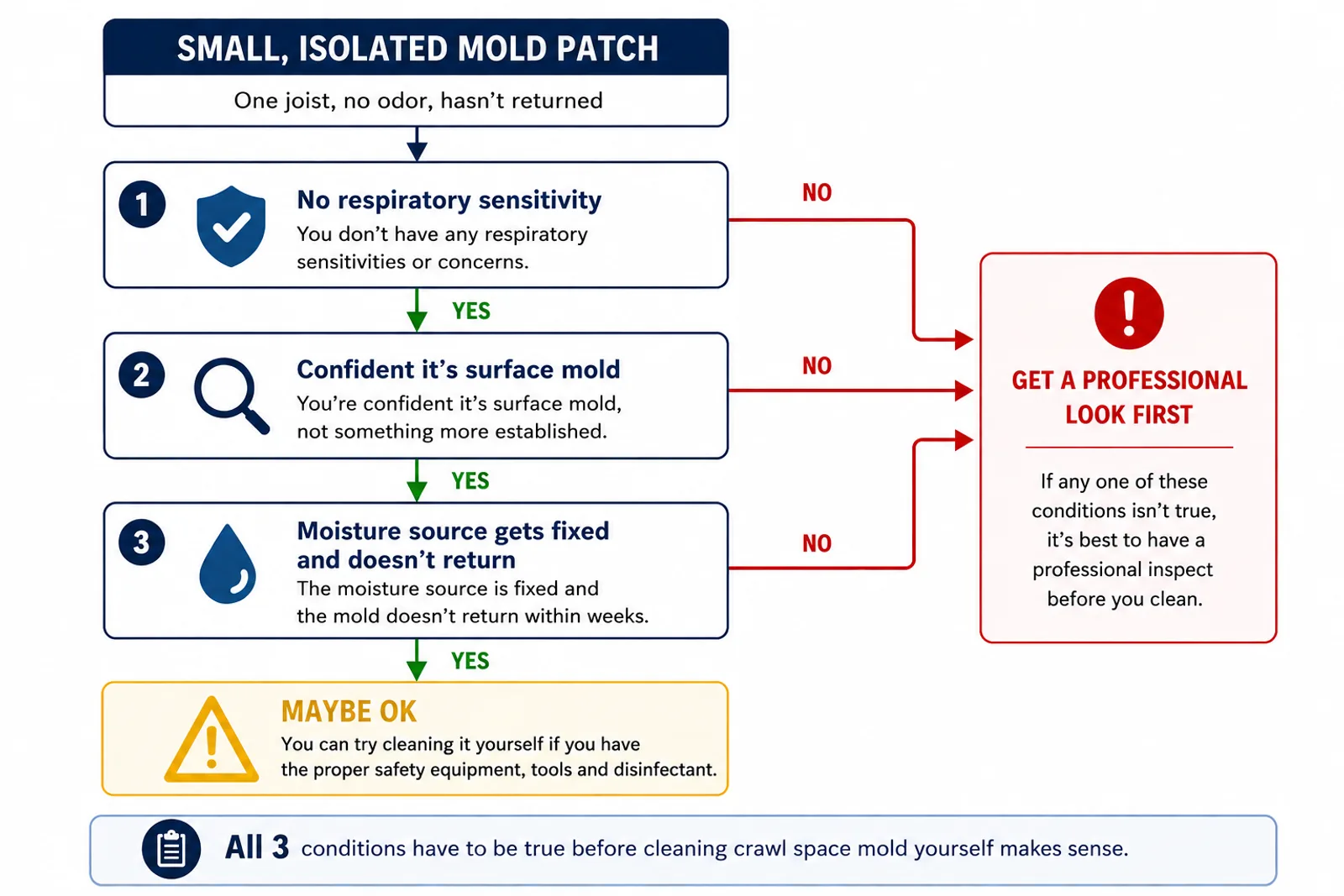
There’s a real range here, and Triangle Dehumidifiers won’t pretend every spot of crawl space mold needs a professional treatment visit. A homeowner can reasonably clean mold that’s confined to a single joist or a small section of subfloor, isn’t accompanied by a musty smell upstairs, and hasn’t come back after a previous cleaning. If you do it yourself, wear at least an N95 respirator, gloves, and eye protection, and dampen the area before you scrub it. Dry-scraping or brushing dry mold aerosolizes spores, which is exactly what you don’t want to be breathing in a tight crawl space.
That still comes with three conditions. First, no one in the household has a respiratory sensitivity or concern. Second, you’re confident it’s surface mold and not something more established. Third, whatever is keeping the crawl space humid gets fixed and the mold doesn’t come back within a few weeks. If any one of those isn’t true, it’s worth having a professional look at it before you’re under the house scrubbing.
Signs the Mold Has Moved Past DIY
- Mold covering more than a joist or two, or visible on the subfloor itself
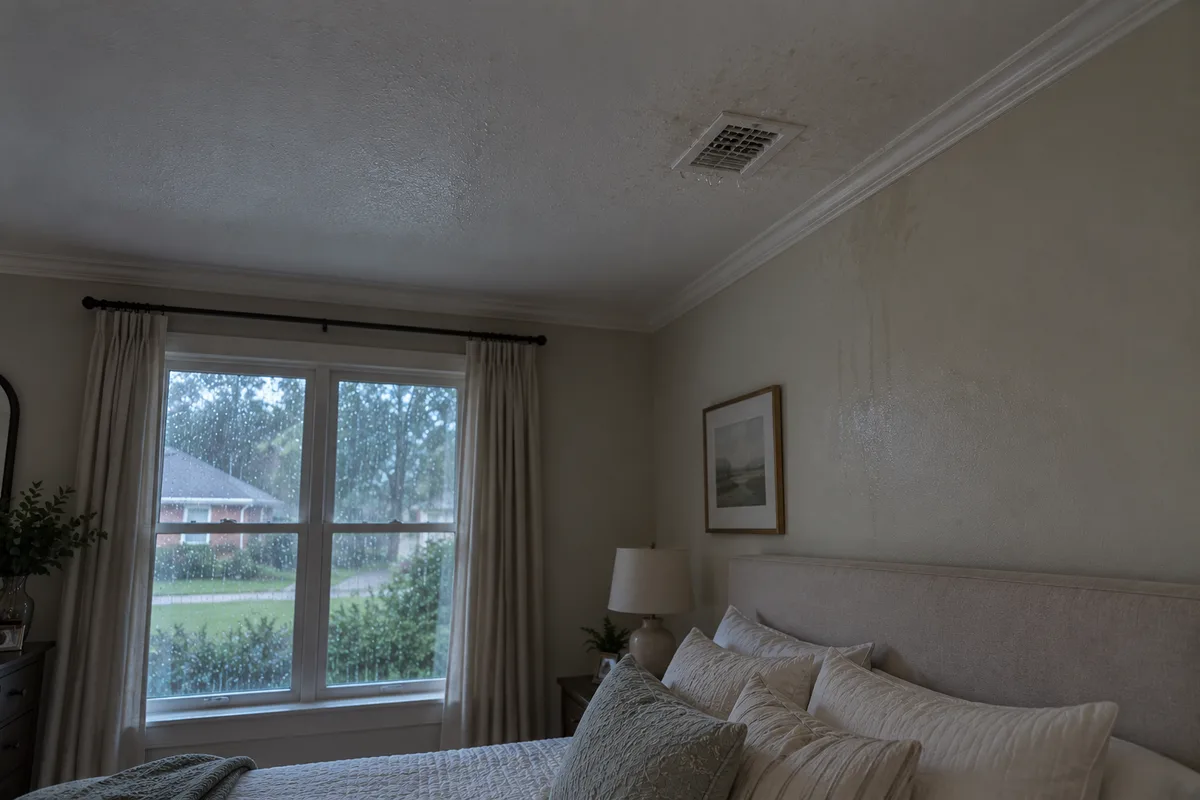
- A musty odor in the house, especially when the HVAC system runs
- Mold that returns within a few months of a previous cleaning
- Mold visible from more than one section of the crawl space
- Allergy or sinus symptoms in the household that improve when away from home
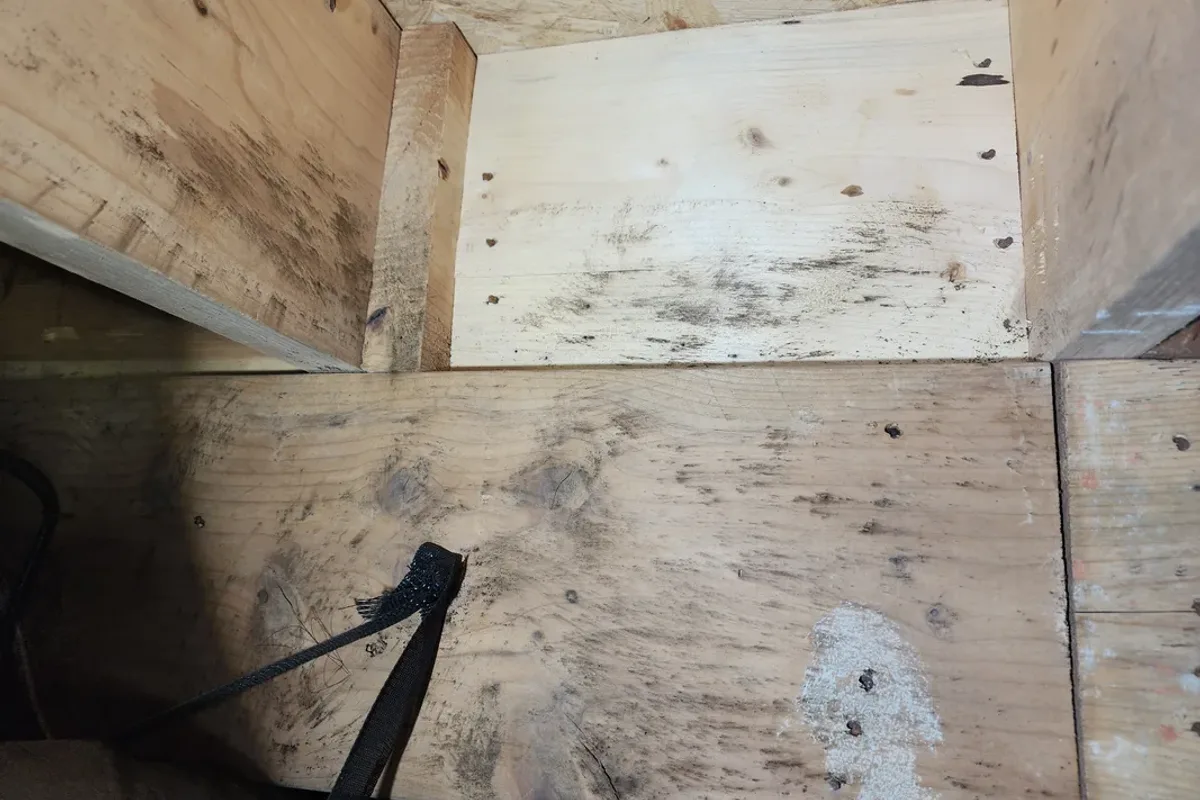
If two or more of these apply, a crawl space inspection gives you an actual answer instead of a guess.
Why Fixing the Humidity Has to Happen First
Treating mold without correcting the humidity behind it is a temporary fix. Mold spores are present in the air of almost every crawl space. What decides whether they take hold again is whether the space stays above roughly 60% relative humidity for weeks at a time, and a vented Triangle crawl space typically runs 70–90% relative humidity from May through September, well past that threshold.
That’s why Triangle Dehumidifiers starts every mold job by evaluating what’s driving the moisture, ground moisture, air entry points, plumbing, or condensation, before any surface work begins, and finishes it with a humidity control plan so the same conditions don’t just grow the mold back. In most cases that plan means a properly sized crawl space dehumidifier, an AprilAire E80W, E100W, or E130W depending on the crawl space’s size and whether it’s vented or already sealed, holding the space at 45–50% RH year-round. Our post on what actually causes crawl space mold in the Triangle covers the humidity mechanics in more detail if you want the full picture.
What Professional Crawl Space Mold Treatment Involves
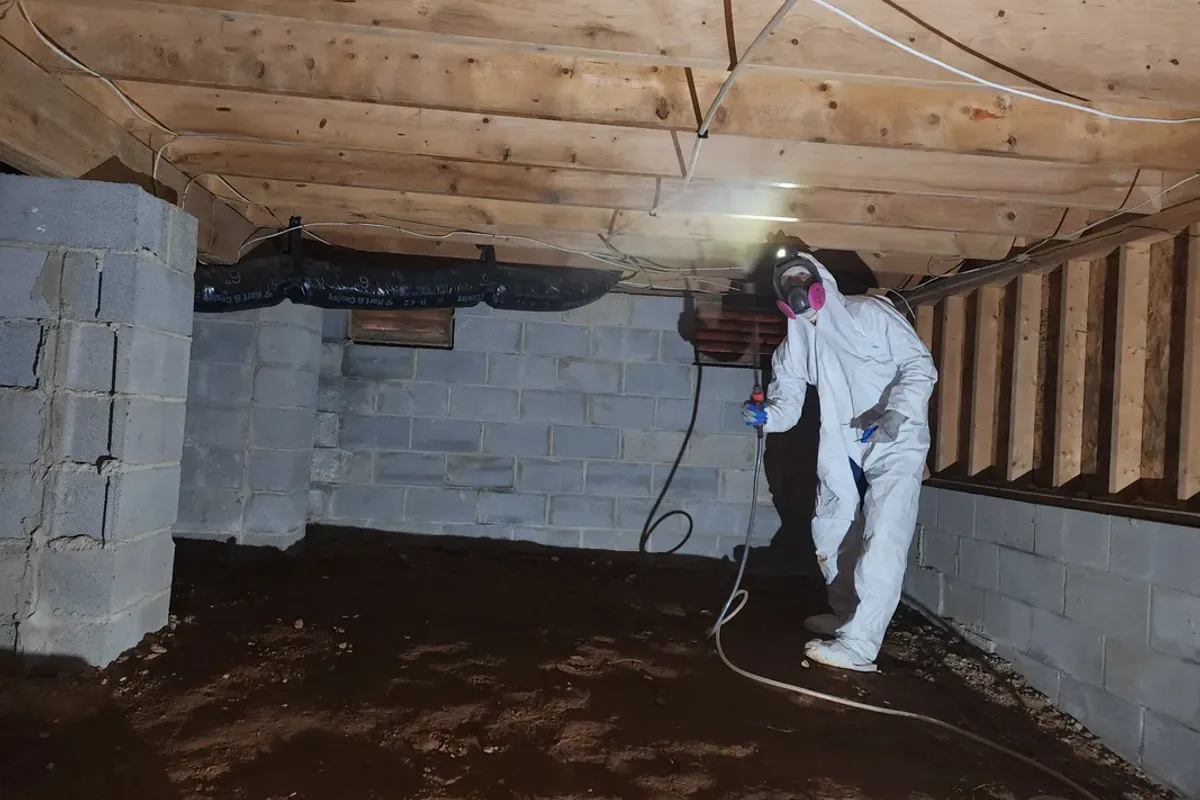
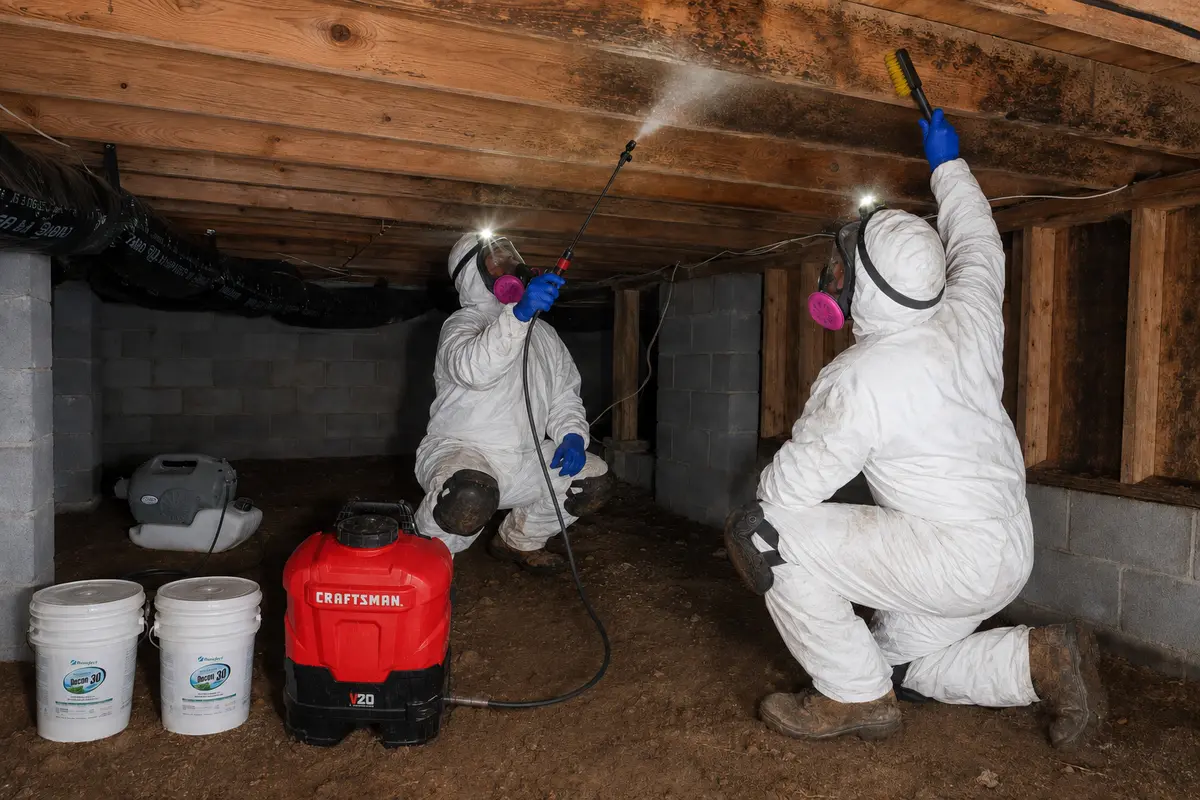
A professional crawl space mold treatment starts with an inspection to confirm how far the mold has spread and where the moisture is coming from. From there, affected surfaces are treated with EPA-registered antimicrobial products made for crawl space applications, including Benefect Botanical Decon 30 and Concrobium Mold Control.
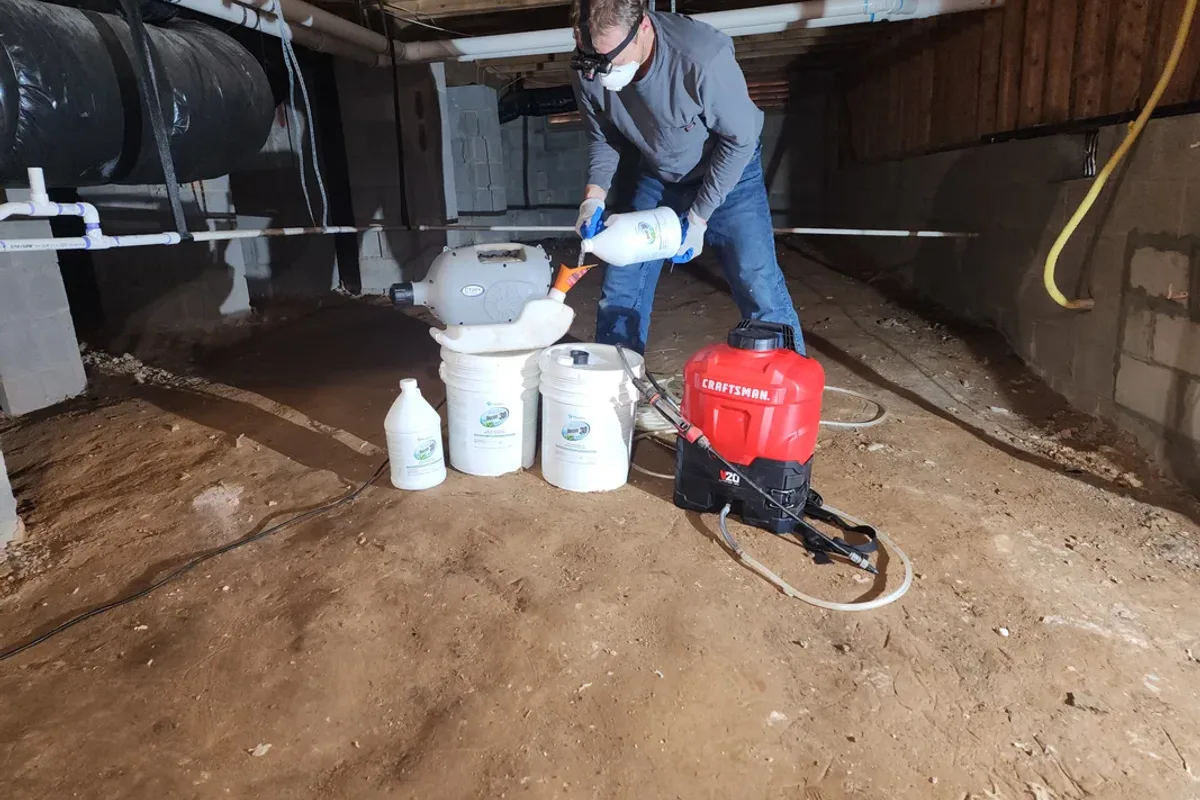
Once treatment is done, Triangle Dehumidifiers recommends a humidity control plan, usually a dehumidifier install, sometimes paired with vapor barrier or vent sealing, so the space doesn’t just recreate the conditions that grew the mold in the first place.
For mold that covers multiple joists or the subfloor, a properly sized dehumidifier with the vents closed and the ground fully covered is often enough on its own to keep it from coming back. Triangle Dehumidifiers will still walk through whether full crawl space encapsulation, lining the walls with foil-faced foam board in addition to closing the vents, makes more sense for your specific crawl space, particularly if there’s been repeated water intrusion through the walls or any wood rot alongside the mold. It’s not a requirement for every job, just an option worth discussing when the moisture problem goes beyond what closing vents and covering the ground can handle.
Crawl space mold treatment typically runs an estimated $1,500–$4,000, depending on how much square footage is affected and how established the mold is. That’s a separate line item from the humidity fix. A vented crawl space dehumidifier install runs an estimated $3,000–$5,000, one for an already-sealed crawl space runs an estimated $3,000–$4,000, and full encapsulation with a dehumidifier included runs an estimated $7,500–$15,000. Doing more than one of these at once is common when a homeowner has waited until mold is visible before calling.
Treatment without the humidity fix, or a dehumidifier without addressing existing mold, both leave part of the problem in place. Triangle Dehumidifiers, LLC in Holly Springs, NC handles both pieces so the fix actually holds.
When Health Symptoms Change the Timeline
Household allergy symptoms, congestion, or a persistent musty odor that’s noticeable from inside the living space are reasons to move faster, regardless of how much mold is visible from the access door. Mold you can smell from upstairs is usually more extensive than what’s visible from a quick look with a flashlight. If anyone in the house has ongoing respiratory symptoms, that’s a conversation for a physician, and a crawl space inspection can rule mold in or out as a contributing factor. Our post on crawl space mold health risks goes into more detail on how mold spores travel from the crawl space into the air upstairs and what symptoms tend to show up.
Frequently Asked Questions
Can I clean crawl space mold myself?
For a small patch, under a few square feet, on a single joist, with no musty odor and no history of coming back, some homeowners clean it themselves with a stiff brush and an appropriate cleaner, wearing at least an N95 respirator, gloves, and eye protection, and dampening the area first to avoid spreading spores. That only holds if the humidity source gets fixed at the same time and no one in the household has a respiratory sensitivity. If the mold covers multiple joists, the subfloor, or keeps returning after cleaning, it has moved past a DIY job.
How much does professional crawl space mold treatment cost in the Triangle?
Crawl space mold treatment typically runs an estimated $1,500 to $4,000, depending on the severity of the mold and the square footage affected. That's separate from fixing the humidity source that caused it, which is usually a crawl space dehumidifier costing an estimated $3,000 to $5,000 installed.
Will crawl space mold come back after treatment?
It will if the humidity that caused it isn't corrected. Surface treatment kills existing mold and inhibits regrowth, but mold spores are always present in the air. Without a dehumidifier or encapsulation holding the crawl space around 45 to 50% relative humidity, new growth has the same conditions that caused the first problem.
How do I know if crawl space mold is affecting my health?
Common signs include a musty odor noticeable inside the house, especially when the HVAC runs, along with allergy-like symptoms such as congestion, coughing, or sinus irritation that ease up when you're away from home for a few days. These aren't a diagnosis. Anyone with ongoing respiratory symptoms should talk to a physician, and a crawl space inspection can confirm whether mold is present and how extensive it is.
Not Sure If It’s DIY or Not? Get an Inspection.
Guessing at the size of a mold problem from a flashlight and an access door is how small jobs turn into big ones. An inspection tells you exactly how far it’s spread, what’s causing the humidity, and what it actually takes to fix.
Triangle Dehumidifiers provides crawl space inspections throughout Wake County and the Triangle. Call or text us at (919) 867-0580 or request your inspection online. We serve Raleigh, Cary, Apex, Holly Springs, Fuquay-Varina, Garner, Wake Forest, Knightdale, Morrisville, Durham, and Chapel Hill.