Table of Contents
How Long a Crawl Space Dehumidifier Actually Lasts
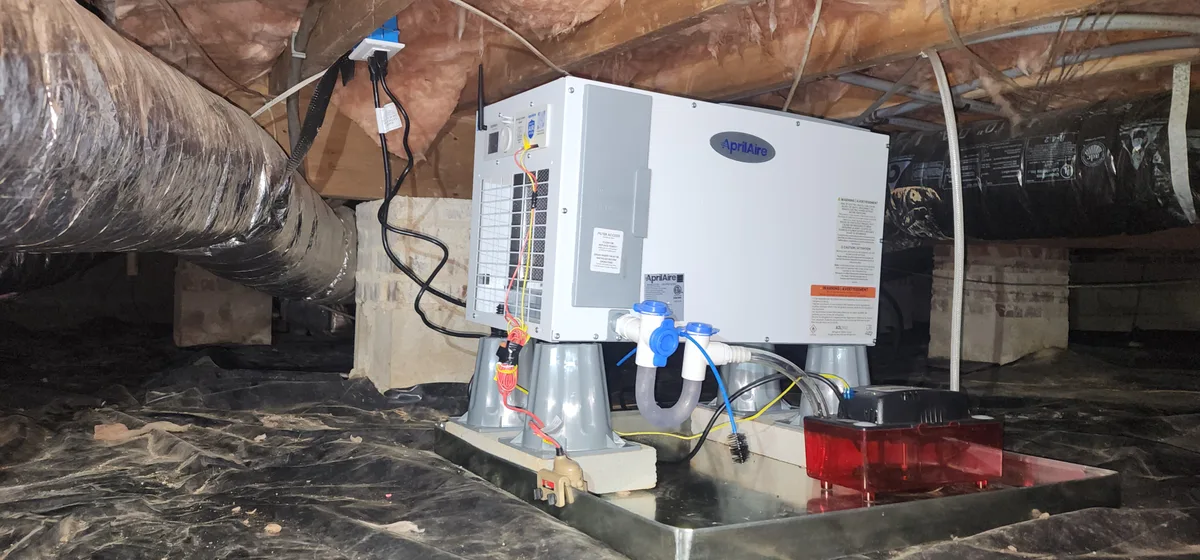
A well-maintained AprilAire crawl space dehumidifier runs 10 to 12 years in a Triangle home. That’s longer than most homeowners expect, and it assumes the unit was sized correctly for the space and gets basic upkeep. Skip the maintenance, and that number drops closer to 5 to 8 years, sometimes much less.
The difference between year 12 and year 6 is mostly about how hard the unit has to work, and the single biggest thing pushing it toward year 6 is neglect. A crawl space dehumidifier in the Triangle already runs harder than one in a basement up north: between May and September, outdoor relative humidity here sits at 70 to 90%, and a vented crawl space pulls that air straight in. When the filter and drain go unchecked on top of that, the unit is fighting with one hand tied behind its back, and it wears out fast.
What Actually Shortens a Dehumidifier’s Life Here
Three things decide whether a unit reaches year 12 or dies at year 6: maintenance, sizing, and whether the crawl space is vented or sealed. In the field, maintenance is the one that fails units the most often, and it’s the one the homeowner controls.
Skipped maintenance is the number one killer, by a wide margin. Nearly every early failure Triangle Dehumidifiers pulls out of a Triangle crawl space traces back to a filter or a drain line nobody touched. Two things do the damage:
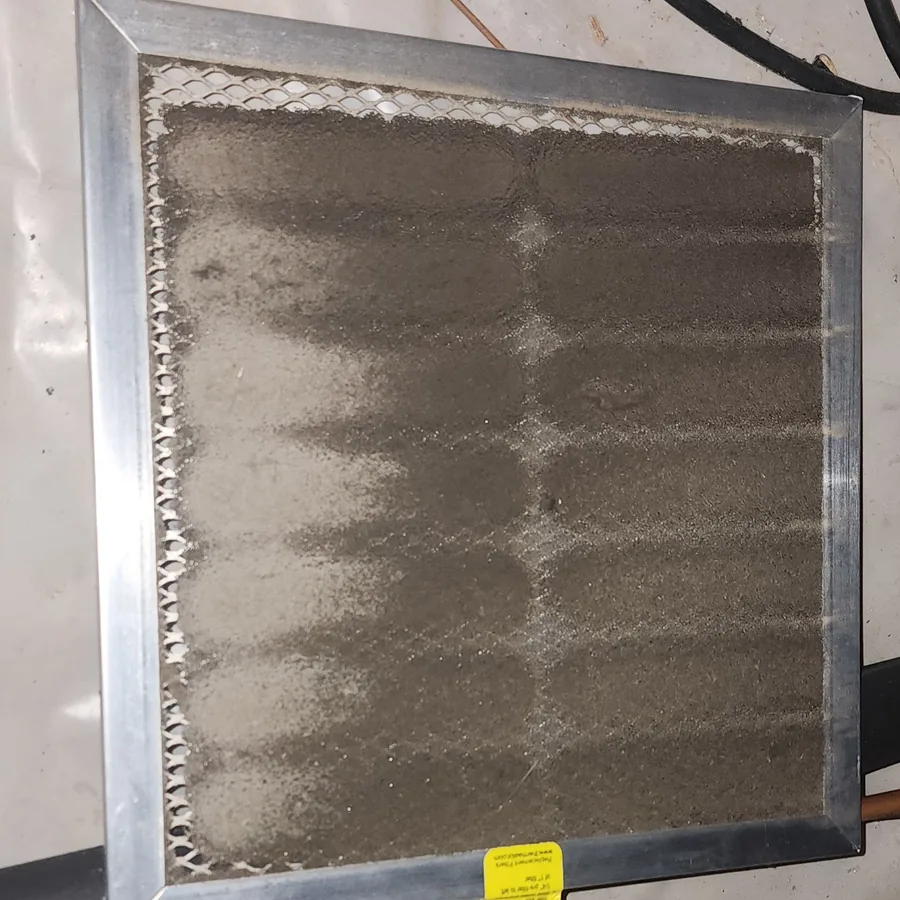
- A clogged air filter starves the unit of airflow. The filter sits in front of the coil, and once it packs with crawl space dust it chokes off the air the unit can pull across that coil. Less airflow means less moisture removed, so the unit runs longer and longer chasing its setpoint, and it runs hotter while it does it. Restricted airflow also lets the coil get too cold and ice over, which drops capacity to almost nothing. All that extra runtime and heat wears the compressor out years ahead of schedule.
- A clogged condensate drain line backs water up into the unit. Every pint the dehumidifier removes has to drain somewhere. When the line or pump clogs, that water backs up into the base pan and cabinet, where it rusts metal components and grows mold and slime. Many units have a safety float that shuts the whole thing off when water backs up, so it stops drying the crawl space entirely until someone clears the line.
Undersizing makes everything worse. A dehumidifier that’s too small for the moisture load never catches up. It runs almost continuously instead of cycling on and off, and that constant runtime wears the compressor and coil faster. It’s a real problem, but even a perfectly sized unit dies early if the filter and drain are ignored. Our sizing guide walks through how square footage, vented versus sealed, and moisture load determine whether a home needs an 80-pint, 100-pint, or 130-pint AprilAire unit.
A vented crawl space piles on the load. Foundation vents let humid outdoor air in continuously, so a unit in a vented space works harder, and its filter loads up with dust faster, than one in an encapsulated crawl space with the vents closed and a vapor barrier down. It’s still a legitimate way to control moisture, and our post on installing a dehumidifier without encapsulation covers that setup, but it means more frequent filter changes, not fewer.
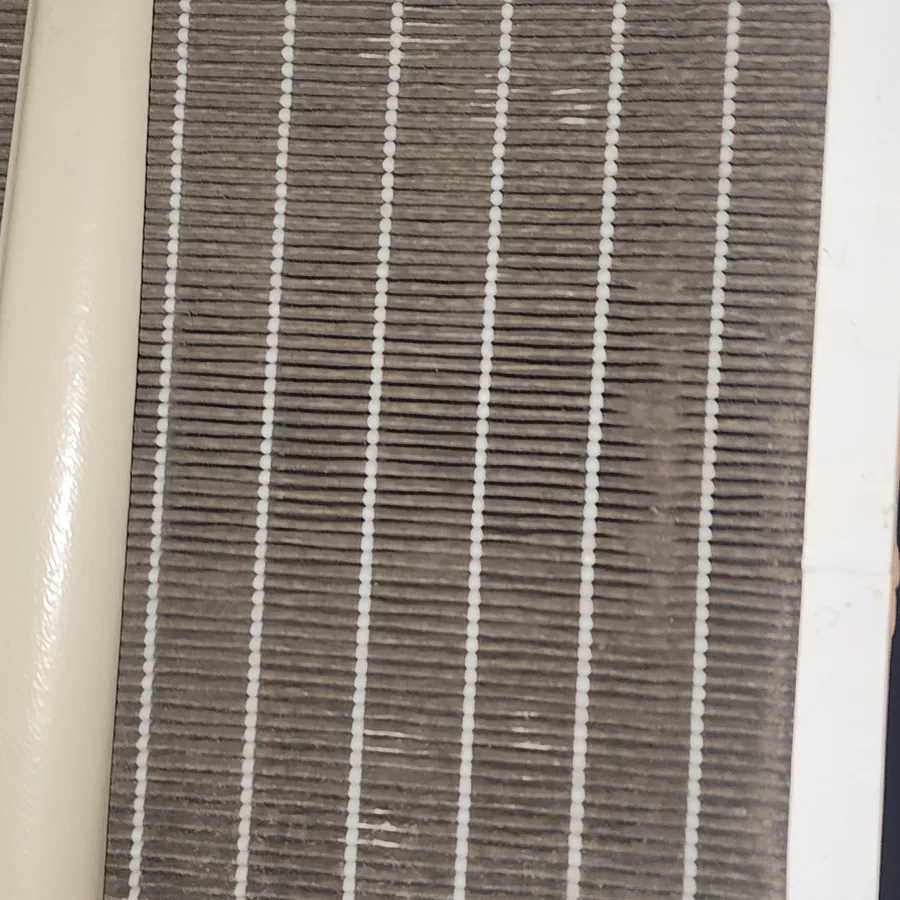
What a Neglected Filter Actually Looks Like
This isn’t a worst-case we went looking for. Both of these filters came out of one crawl space dehumidifier during an inspection in Cary, NC, where the unit had quit working entirely. Long before it died, a filter in this shape was choking off airflow, forcing the unit to run nonstop, ice up, and quietly wear out its compressor.
What Routine Maintenance Actually Looks Like
The good news is that preventing all of this is simple, and most of it is a five-minute job you can do yourself. There’s no monthly service contract required.
- Check the filter every 60 to 90 days. Rinse or replace it as soon as it looks gray or matted, sooner in a vented crawl space where more dust moves through. This one habit prevents most early failures.
- Confirm the condensate line is actually draining. Standing water in the base pan, or a musty smell right at the unit, usually means the line or pump is clogged. Clean the trap and gravity line or condensate pump. If TD installed your dehumidifier with an EZ Clean clear view trap, this is no problem. Adding a treatment tablet to the trap is a good idea.
- Have the coil and drain professionally inspected once a year. This is where Triangle Dehumidifiers catches early wear, refrigerant issues, or a pump about to fail, before it takes the whole unit down.
- Keep the humidistat setpoint around 50% RH (typically 50 to 55%). Chasing a lower number just makes the unit run more than it needs to without meaningfully improving crawl space conditions.
So you really have two options, and both work. Put the filter and the drain on your own calendar and stay on top of them, or let us handle it. Triangle Dehumidifiers offers crawl space dehumidifier maintenance across Wake County: we change the filter, flush and check the condensate line, inspect the coil, and confirm the unit is holding humidity the way it should. If you’d rather not think about it, that’s what we’re here for. And if you’re putting in a new unit, we can set you up with an AprilAire model with WiFi monitoring that alerts you if it ever stops keeping up.
Signs Your Unit Is Nearing the End
A dehumidifier rarely fails all at once. It usually gives warning signs for weeks or months first.
- It runs constantly and never seems to hit its setpoint, even though it used to cycle normally.
- You notice ice building up on the coil instead of clear condensation.
- Water is pooling in the base pan or on the crawl space floor near the unit.
- The compressor sounds noticeably louder or rougher than it used to.
- Crawl space humidity is creeping back up above 55 to 60% RH despite the unit running.
Any one of these on its own might be a simple fix. Two or more together, especially on a unit past year 8 or 9, usually points toward a bigger problem.
Repair or Replace?
Age and the type of failure both matter here. A drain pump, control board, or capacitor failing on a unit under 6 or 7 years old is almost always worth repairing. Those are relatively inexpensive parts on an otherwise sound unit.
Past year 10, a failing compressor or a refrigerant leak changes the math. Compressor replacement on an older unit often runs close to what a new AprilAire dehumidifier costs installed, without the benefit of a fresh warranty. At that point, replacing the unit is usually the better use of the money. Installed cost for a new crawl space dehumidifier typically runs an estimated $3,000 to $4,000 in an already-encapsulated crawl space, or $3,000 to $5,000 in a vented crawl space where vents need to be closed and a larger unit is needed to handle the added moisture load. See our full dehumidifier cost breakdown for what drives those numbers.
Frequently Asked Questions
How long do AprilAire crawl space dehumidifiers last?
An AprilAire E80W, E100W, or E130W typically runs 10 to 12 years in a Triangle crawl space with regular filter changes and an annual coil and drain check. Units that are poorly maintained or undersized often need replacement closer to the 5 to 8 year mark.
Does a crawl space dehumidifier need regular maintenance?
Yes, and it is the single most important thing you can do to make it last. Check the filter every 60 to 90 days and rinse or replace it when it is visibly dirty, and have the condensate drain line and coil inspected once a year. You can do the filter yourself, or Triangle Dehumidifiers can handle the whole maintenance visit for you.
What shortens a crawl space dehumidifier's lifespan the most?
Skipped maintenance, not age. A dirty air filter is the biggest culprit: it chokes airflow across the coil, which lowers the unit's moisture removal, makes it run longer and hotter, and can ice the coil over, all of which wear the compressor out years early. A clogged condensate drain line is next, backing water up into the unit and causing rust and mold. Undersizing and a vented, unsealed crawl space add to the load, but a well-maintained unit outlasts a neglected one every time.
Is it worth repairing an old crawl space dehumidifier or replacing it?
If the unit is under 6 to 7 years old and the issue is a part like a drain pump or control board, repair usually makes sense. Past the 10-year mark, a failing compressor or refrigerant leak typically costs close to what a new unit runs, so replacement is usually the better use of the money.
Filter Caked Like the Ones Above? Get an Inspection.
If your crawl space dehumidifier is running constantly, icing up, or just doesn’t feel like it’s keeping up the way it used to, and you can’t remember the last filter change, it’s worth having someone look before you decide which way to go.
Triangle Dehumidifiers provides crawl space inspections and dehumidifier maintenance throughout Wake County and the Triangle. We’ll check your current unit, measure crawl space humidity, and give you a straight answer on whether a cleanup, a repair, or a new install makes the most sense, along with a written quote either way.
Call or text us at (919) 867-0580. Or request your inspection online. We serve Raleigh, Cary, Apex, Holly Springs, Fuquay-Varina, Garner, Wake Forest, Knightdale, Morrisville, Durham, and Chapel Hill.