Table of Contents
How to Test Indoor Air Quality at Home
By late October in the Triangle, the windows are shut and the heat has come on. That is when air quality problems that stayed hidden all summer start to show up. A basic test of indoor air quality takes four checks: relative humidity, carbon dioxide, radon, and the condition of the crawl space under the house.
You can do most of this yourself. A hygrometer reads humidity, an NDIR carbon dioxide monitor shows whether the house is getting enough fresh air, a radon test kit covers radon, and a second hygrometer in the crawl space shows what is coming up through the floor. The one test to skip is a store-bought mold kit, for reasons covered below.
Heating season is a good time to run most of these checks. When it is cold outside, the house acts like a chimney. Warm air leaves through the upper floors and attic, and replacement air is pulled in from the lowest part of the house, which in most Wake County homes means the crawl space. The indoor air quality guide for NC homes covers the pollutants in detail. This post covers how to measure them.
What to Measure and What You Need
| What to check | Tool | Number to compare against |
|---|---|---|
| Humidity in the living space | Hygrometer | Below 60% RH, ideally 30–50% (the EPA’s recommended range). Track down anything that stays above 55% |
| Carbon dioxide | NDIR CO2 monitor | Consistently above about 1,000 ppm in a bedroom suggests low fresh air |
| Radon | Test kit or continuous radon monitor | 4 pCi/L is the EPA action level |
| Fine particles (PM2.5), optional | Particle monitor | No single home standard. Watch for spikes and how fast they clear |
| Crawl space humidity | Hygrometer or data logger | 45–55% RH target, with mold risk rising when it stays above 60% |
| Mold | Your eyes and nose | Skip the test kit. See below |
Start With Relative Humidity
Humidity is the cheapest reading to take and the one that explains the most. The EPA recommends keeping indoor relative humidity below 60%, ideally between 30% and 50%, and notes that the key to mold control is moisture control. We treat 55% as the line worth investigating. If a room holds above 55% for days at a time, something is adding moisture faster than the house can get rid of it. A basic digital hygrometer in the living room, another in the bedroom, and a third in the crawl space gives you a first picture.
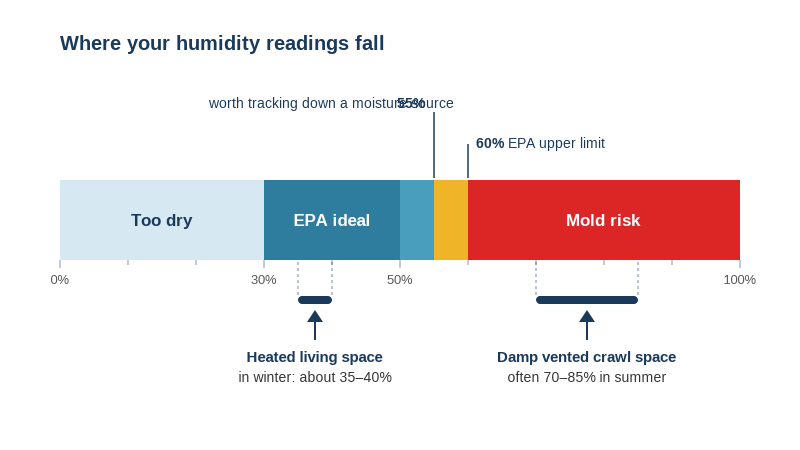
A good reading upstairs does not mean the crawl space is dry, so measure both.
Summer is when a Triangle crawl space takes on moisture. Fall is often when you notice it, because once the heat comes on, the stack effect pulls that crawl space air up into the house. A vented crawl space can sit at 70–85% RH through July and August, and the wood and insulation stay damp well after the weather turns. If the living space reads under 55% but the crawl space is still high in October, the moisture problem is below the floor, not in the rooms.
Winter readings in the living space usually go the other way. Heated air is dry, and 30–45% RH is common in a heated Triangle house. Where a house lands in that range depends on how leaky it is. An older, drafty house pulls in more dry winter air and sits near the low end, while a newer, tighter house holds more moisture from cooking, showers, and the people living in it. A reading in that range is normal and not a reason to add humidity. A drafty house can dip below 30% on the coldest days, which is when dry skin and static shocks start to show up. Either way, a dry reading upstairs says nothing about the crawl space, so read that number separately.
Check Carbon Dioxide in the Closed-Up House
Carbon dioxide matters in a home mainly as a stand-in for ventilation. It tracks how much fresh air is reaching the people breathing it. When a sealed bedroom reads well above 1,000 ppm overnight, the bedroom is not getting enough fresh air for the number of people sleeping in it.
ASHRAE, the group that writes US ventilation standards, treats CO2 as a way to check whether ventilation is working, not as a health limit or a measure of overall air quality. Use it the same way. A reading that climbs overnight and drops by midday tells you how well that room is ventilated overnight. It does not tell you what else is in the air.
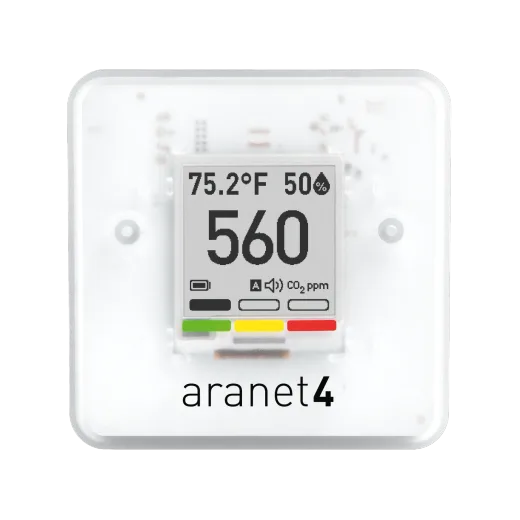
Buy a monitor with a true NDIR sensor. Cheaper sensors estimate CO2 indirectly and drift. The Aranet4 Home is the one covered in our IAQ guide. Put it in a bedroom, leave the door closed for a few nights, and read the trend in the app. If the numbers stay high, an ERV is the usual answer since it brings in fresh air on a schedule instead of waiting for a window to open.
Test for Radon While the House Is Closed Up
The EPA action level for radon is 4 pCi/L. The CDC says a qualified professional should install a reduction system at or above that level, and homeowners should consider one between 2 and 4 pCi/L. Radon is a soil gas, and it enters through crawl space floors, slab cracks, and gaps around pipes.
Short-term kits measure for 2–90 days, and long-term kits run longer than 90 days and show a better yearly average. Put the kit on the lowest lived-in level, at least 20 inches off the floor, somewhere it won’t be disturbed, and away from drafts, heating vents, exterior walls, kitchens, and bathrooms. For a short-term test, keep windows and exterior doors closed for 12 hours before the test starts and for the whole test, apart from normal coming and going. That is easy this time of year, since the house is already shut for the heating season.
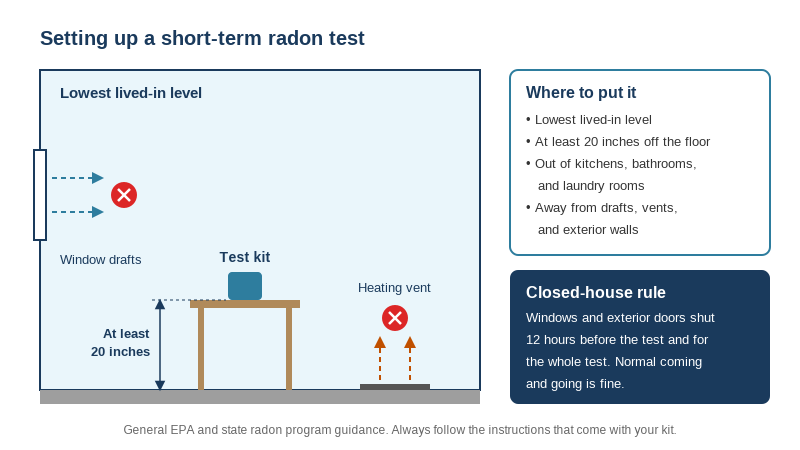
A kit gives you one average for the whole test period. Radon rises and falls with the weather and the time of day, and it usually runs highest in winter, so a single kit result can land high or low. A continuous radon monitor shows how the level moves day to day. Our IAQ guide covers the Ecosense RD200 RadonEye, which updates every 10 minutes and keeps 1-day, 7-day, and 30-day averages in its app.
In recent years, North Carolina has offered free radon test kits each January for Radon Action Month through the NC Radon Program. The kits are grant-funded and limited to one per household, and they tend to run out quickly, so be on the lookout from late December to early January. The state announces the kits in its NCDHHS news releases. Hardware stores also carry short-term kits year-round.
If your result is at or above 4 pCi/L, call a certified radon mitigation contractor. The NC Radon Program can point you to certified professionals in your area.
Fine Particles and Chemical Odors
If you want to go further than the four core checks, a PM2.5 monitor shows how much fine dust, smoke, and pollen is in the room. The useful readings are the spikes. Cooking on the stove, a fireplace, or a vacuum without a sealed filter will push the number up, and how quickly it falls back tells you how well the air is being cleaned.
Consumer VOC sensors are less precise. They show that something changed, such as new paint or a cleaning product, but they cannot tell you which chemical. Treat them as a trend line and not as a lab result.
Why You Should Skip the Mold Test Kit
The EPA says that when mold is visible, sampling is usually unnecessary, and that no federal limits exist for mold or mold spores. A kit result has no standard to be compared against, so a number from a petri dish or an air cassette does not tell you if the level is safe. Sampling has a place when a professional suspects hidden mold, such as behind a wall or under flooring, but a store-bought kit is not that.
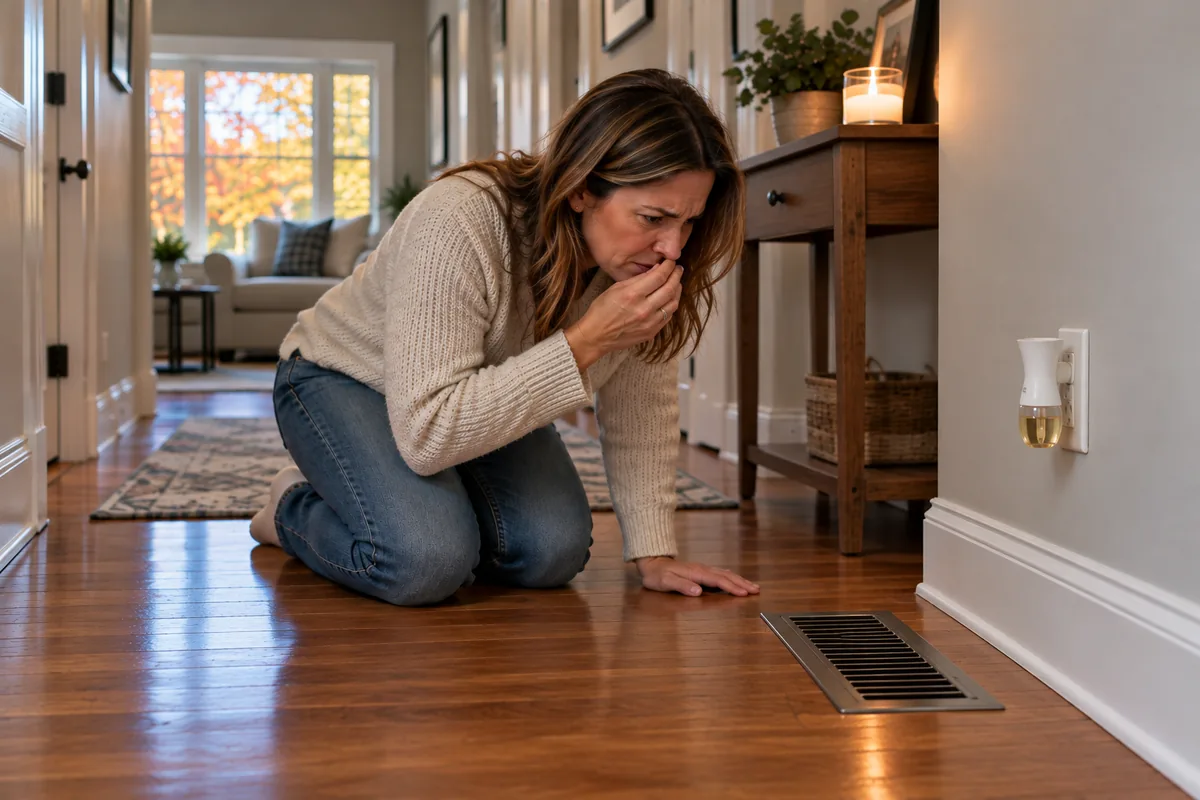
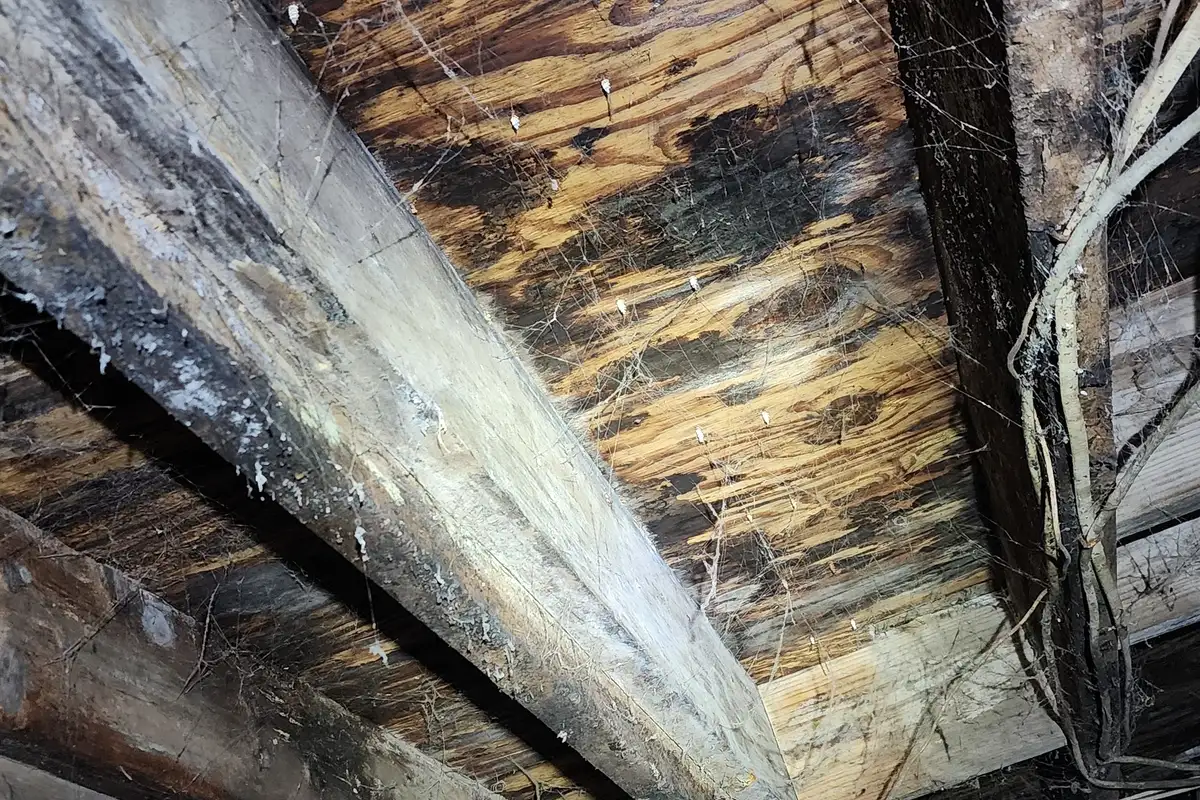
Look and smell instead. A musty odor that gets stronger when the heat or AC runs, dark staining on floor joists, or cupped flooring often point to a moisture problem under the house. The musty smell guide walks through how to trace an odor to its source.
Check the Crawl Space, Where Many Triangle Air Problems Start
Many homes in the Triangle sit on a crawl space, often a vented one, and the stack effect pulls air from that space up through floor penetrations, duct gaps, and openings around plumbing. Mold spores, soil gases, radon, and humidity travel the same path. The crawl space mold health risks post explains the pathway in more detail.
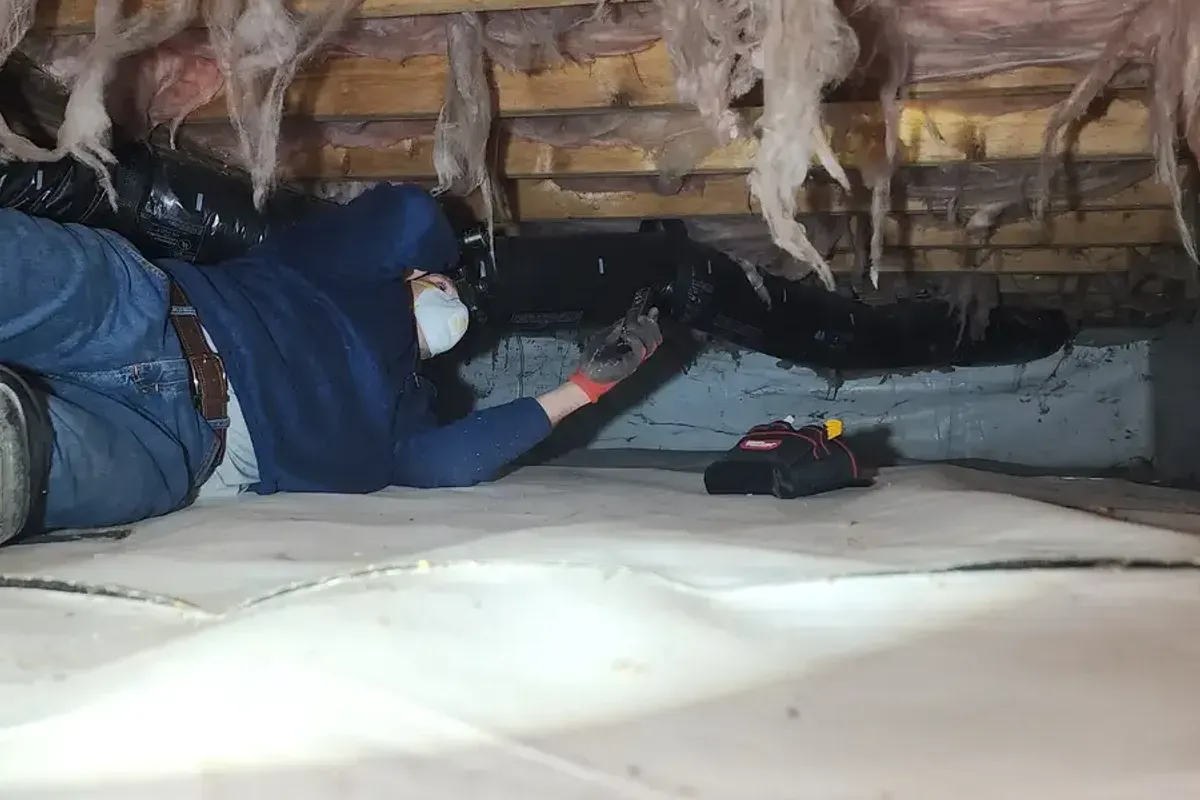
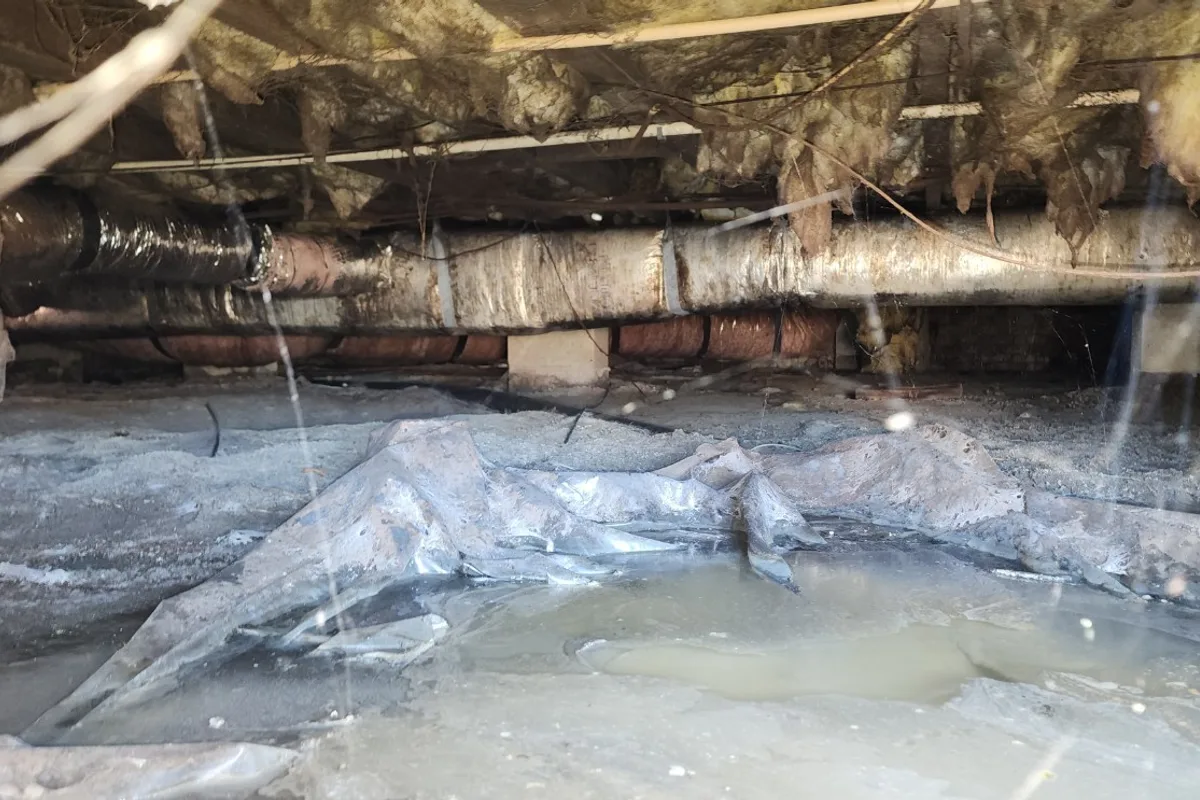
To get a reading, reach in through the access hatch and set a battery hygrometer or data logger as far in as you comfortably can, up off the ground on a block or pier and away from any foundation vents. Leave it for a week. A reading taken close to the hatch mixes in some outside air, so treat it as a rough number, not a final answer. While the hatch is open, shine a flashlight in and look for standing water, insulation hanging from the joists, dark staining on the wood, or a torn ground cover. A winter reading under 55% does not clear the crawl space, either. Humidity there peaks in summer, so staining, sagging insulation, or a musty smell can still mean a moisture problem.
There is no need to crawl in to look further. Crawl spaces can hide mold, standing water, exposed wiring, sharp debris, and pests, and disturbing moldy materials puts spores into the air you are trying to clean up. If anything you see or smell from the hatch suggests a moisture or mold problem, leave the rest to a professional.
A reading that stays above 55% RH, insulation that has dropped from the joists, or a musty smell at the hatch all point to a moisture problem that needs a closer look. If you’re seeing one or more of these issues, schedule a free inspection from Triangle Dehumidifiers. We go into the crawl space, measure the humidity, find the moisture source, and give you a written quote if anything needs fixing, so you do not have to interpret the readings alone or crawl in yourself.
What the Results Point To
Match each reading to the fix that addresses it. The ranges below are estimated installed costs and vary with home size, access, and existing conditions.
| Reading | Likely cause | What addresses it | Estimated cost |
|---|---|---|---|
| Crawl space consistently above 55% RH | Damp soil, outside air through the vents, or a failing vapor barrier | Crawl space dehumidifier, with vapor barrier covering 100% of the ground and the vents closed | $3,000–$4,000 (already encapsulated), $3,000–$5,000 (vented crawl space, vents closed as part of the job) |
| Visible mold on joists | Long-term crawl space moisture | Mold treatment plus moisture control | $1,500–$4,000 for treatment, depending on square footage and how established the mold is. The humidity fix is a separate line item |
| Living space above 55% RH | Crawl space air pulled up through the floor, an AC not removing enough moisture in summer, or a humidifier set too high in winter | Crawl space dehumidifier if the crawl space also reads high, whole-house dehumidifier if it does not | $3,000–$5,000 (crawl space), $4,500–$5,500 (whole-house, standard HVAC integration) |
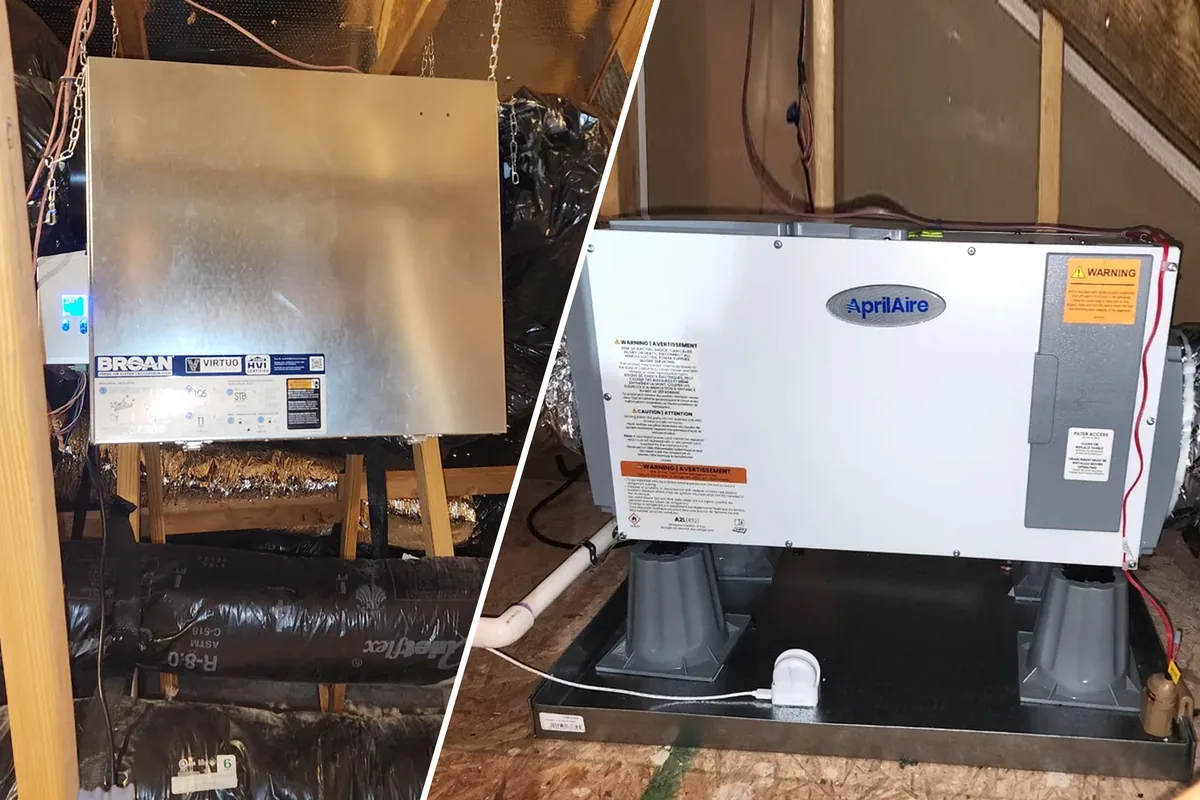
| Bedroom CO2 high overnight | Tight house, little fresh air | ERV installation | $5,000–$7,000 |
| Radon at or above 4 pCi/L | Soil gas entering the home | Certified radon mitigation contractor | Quoted by the radon contractor |
What These Tests Cannot Tell You
Home monitors give you trends, not a diagnosis. They do not identify specific chemicals, they do not replace a lab test for a specific contaminant, and they cannot say whether symptoms like headaches or congestion come from your air. If someone in the house has symptoms that persist, a doctor is the right first call.
What the readings do well is point to the problem you can actually fix. In most Triangle homes that is moisture under the floor or too little fresh air in a tight house.
Frequently Asked Questions
Can I test my home's indoor air quality myself?
Yes, for most of what matters. A hygrometer measures humidity, an NDIR carbon dioxide monitor shows whether the house is getting enough fresh air, and a radon test kit covers radon. A hygrometer in the crawl space shows what is moving up through the floor. A particle or VOC monitor can add more detail, and a lab can test for a specific chemical, but these four checks cover the common causes in Triangle homes.
What should indoor humidity be in winter?
The EPA recommends keeping indoor humidity below 60%, ideally between 30% and 50%. In a heated Triangle home, winter readings often settle in the 30–45% range, which is normal. A living space that stays above 55% in winter has a moisture source. Common ones are a humidifier set too high, a tight house with no fresh air ventilation, or a crawl space with standing water or wet soil. Check the crawl space reading before assuming the problem is in the rooms.
Do I need a mold test if I smell something musty?
Usually not. The EPA notes there are no federal limits for mold or mold spores, so a home test result has no standard to be compared against. Professional sampling can help in specific cases, such as when a professional suspects hidden mold behind a wall or under flooring. For most homes, a musty smell is better treated as a signal to have humidity and the crawl space checked, since that is where the moisture usually starts.
Does Triangle Dehumidifiers test indoor air quality?
Triangle Dehumidifiers does free moisture inspections, which include measuring humidity in the crawl space. The company does not do lab air testing. To find where crawl space and outdoor air is getting into the house, our sister company Peak Energy, Inc. offers home energy audits with blower door and duct leakage testing, which measure how leaky the house and ducts are and help find where humidity, dust, and crawl space air are getting in.
How long should I leave an air quality monitor running?
Leave a humidity and CO2 monitor in place for at least a week, including several nights with the bedroom door closed. One reading tells you very little, because humidity and CO2 change with weather, cooking, and how many people are home. For radon, follow the kit instructions. Short-term kits run 2–90 days, and a continuous radon monitor can stay in place year-round.
Get a Reading From Inside the Crawl Space
If your hygrometer shows the crawl space above 55% RH, or the house smells musty as the heat comes on, a measurement from inside the crawl space will show whether moisture is the source.
Triangle Dehumidifiers, LLC is a crawl space dehumidifier and moisture control company in Raleigh, NC, serving Wake County and the broader Triangle region. Inspections are free. We measure the crawl space, check current humidity, and give you a written quote with no upsells and no scare tactics.
Call or text us at (919) 867-0580 or request your free inspection online. We serve Raleigh, Cary, Apex, Holly Springs, Fuquay-Varina, Garner, Wake Forest, Knightdale, Morrisville, Durham, and Chapel Hill.