Table of Contents
An ERV brings in fresh outdoor air and pushes stale air out. A whole-house dehumidifier removes moisture from the air already inside. They solve different problems. A stuffy house is a reason to check ventilation, and an ERV is a common fix. A house that feels muggy or stays above 55% relative humidity in summer is a reason to look at moisture control. Many tightly built Triangle homes need both.
The 30-second test: a stale, closed-in feel points to ventilation. A sticky, damp feel points to moisture control.
ERV vs. Dehumidifier: What Each One Does
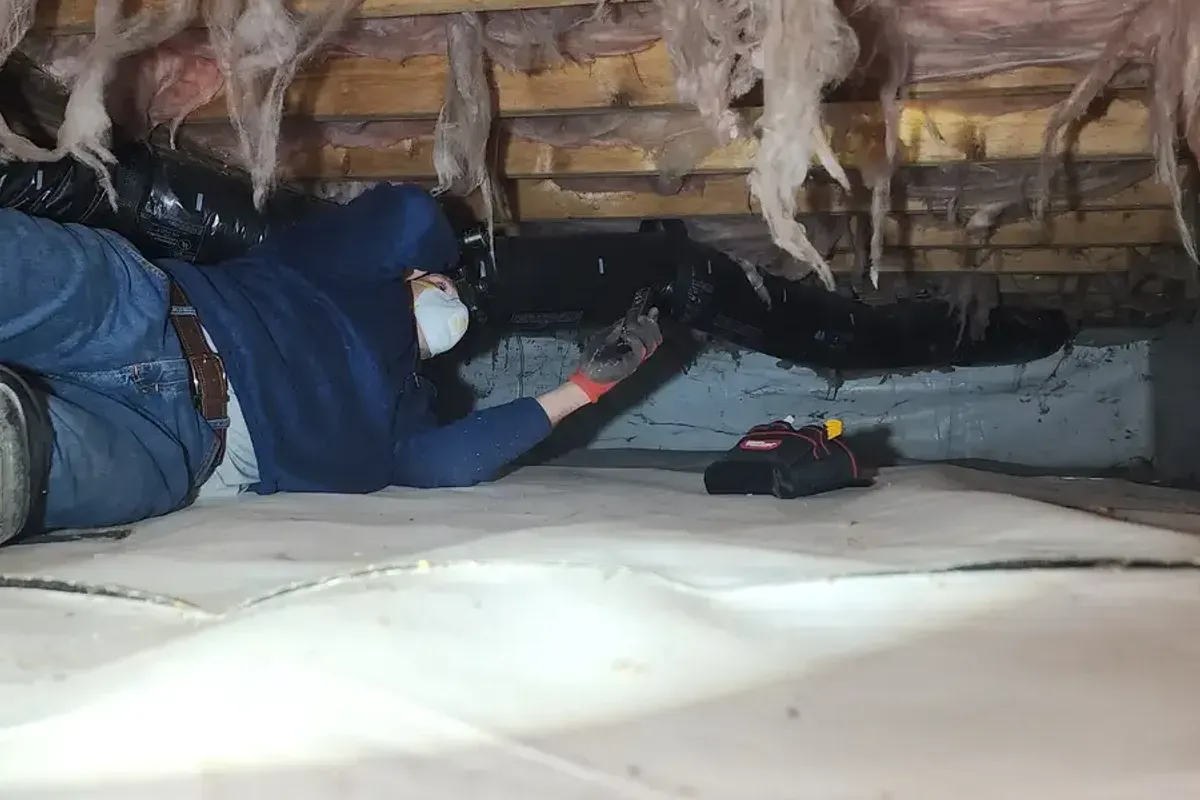
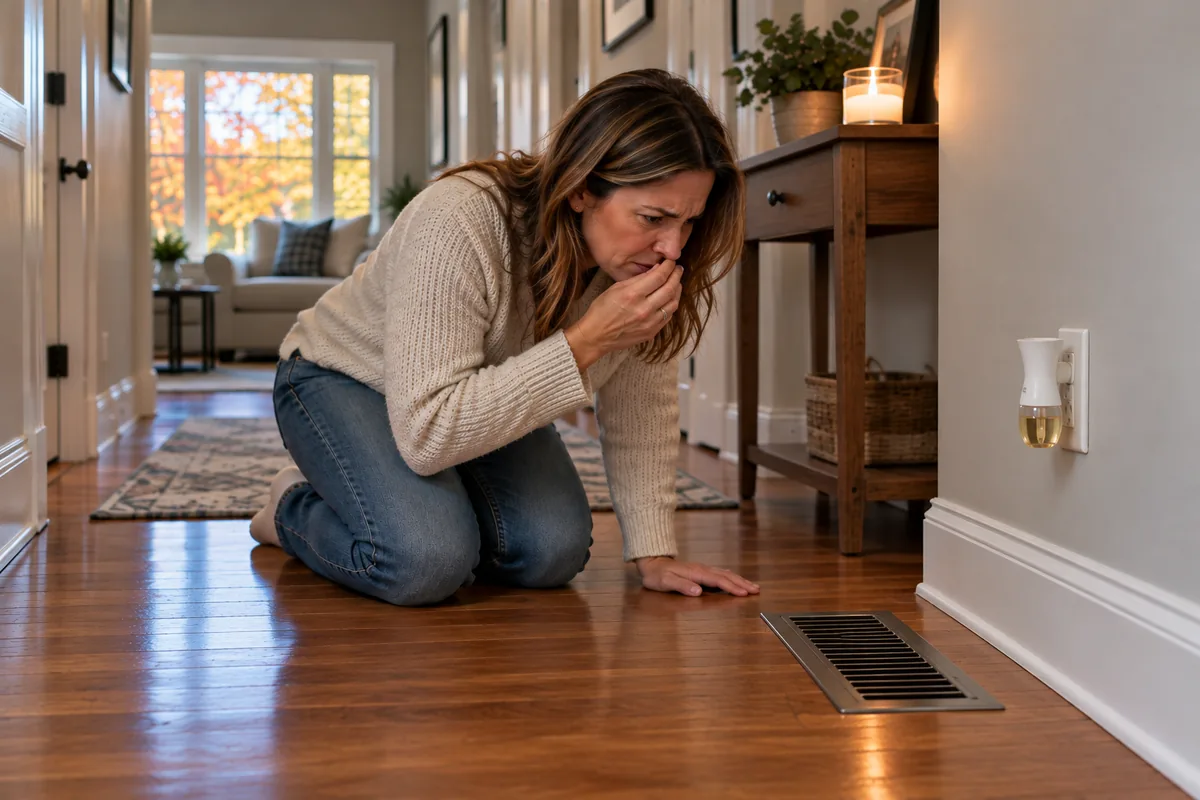
By November in the Triangle, the heat is running most nights and the windows mostly stay shut. That is when many homeowners notice what a closed house smells and feels like. Some find the air is stale. Others still notice a damp, musty smell, often from a crawl space that soaked up moisture all summer. Those are different problems with different fixes. Stale air is a reason to check the ventilation, and the fix is often an ERV. A musty smell from below is a reason to find the moisture source, which in many Triangle homes turns out to be a damp crawl space that needs a dehumidifier. A house that stays sticky all summer even with the AC running may need a whole-house unit.
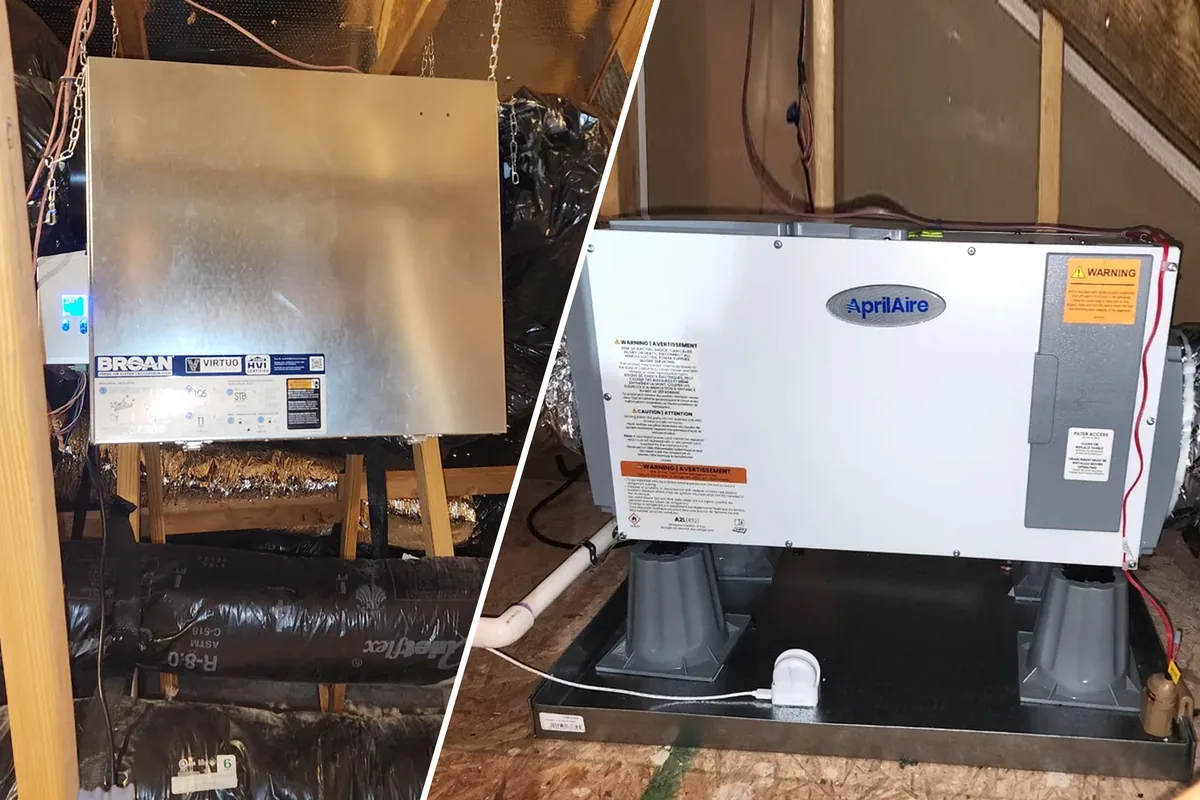
An ERV, or energy recovery ventilator, exchanges air. It exhausts stale indoor air and brings in fresh outdoor air, passing both through a core that recovers heat and some moisture. It is designed for balanced ventilation, roughly as much air in as out, but the actual airflow depends on how the system is ducted and set up at installation. Our post on what an ERV is and whether your home needs one covers how it works in more detail. A whole-house dehumidifier removes water vapor from the air your HVAC system circulates and works to hold relative humidity at a set point, typically a 45–50% RH target. How well it holds that target depends on the unit being sized for the house’s moisture load.
| ERV | Whole-House Dehumidifier | |
|---|---|---|
| Brings in fresh outdoor air | Yes | No |
| Exhausts stale indoor air | Yes | No |
| Dilutes CO2, VOCs, and odors | Yes | No |
| Recovers heat and some moisture from the air it brings in | Yes | No |
| Removes moisture from indoor air | Not its job | Yes |
| Holds a humidity set point | No | Yes, typically 45–50% RH |
| Does the most work | Year-round, especially in a closed-up winter house | Summer and humid stretches of spring and fall |
Triangle Dehumidifiers, LLC is a crawl space dehumidifier and moisture control company in Raleigh, NC, serving Wake County and the broader Triangle region. We install both systems, so the recommendation below does not depend on which one gets sold.
Which Problem Do You Actually Have?
Start with the symptom, not the equipment. Match what you notice to the list that fits, and check the simple things first: kitchen and bathroom exhaust fans that actually vent outside, and any obvious pollutant or moisture source. Whole-house equipment is not a substitute for those.
Signs of a ventilation problem (the bigger issue in a closed-up winter house):
- Bedrooms feel stuffy by morning, especially with the door closed.
- Cooking, pet, or cleaning odors hang around for hours.
- The house smells like new paint, flooring, or cabinets long after move-in.
- A CO2 monitor in an occupied bedroom reads above about 1,000 ppm overnight, night after night. Our guide explains what that reading does and does not tell you.
Signs of a moisture problem (mostly a summer issue):
- The house feels sticky even when the AC is running and the thermostat is at 72°F. Our post on why your AC isn’t removing humidity covers the HVAC side of that.
- A hygrometer reads above 55% RH for days at a time during the cooling season. That is the line Triangle Dehumidifiers treats as worth investigating.
- Interior walls sweat, or a musty smell shows up when the system kicks on.
- You have seen mold on a bathroom ceiling, closet wall, or window sill.
Foggy windows mean different things depending on the season and which side of the glass the water is on. In summer, fog on the outside of the glass comes from humid outdoor air hitting glass that the AC has cooled. That is not an indoor humidity problem, and a dehumidifier will not change it. Our post on condensation on windows in summer explains why. In winter, water on the inside of the glass on a cold morning means the glass is colder than the indoor air’s dew point. That can come from too much indoor moisture, too little fresh air, or very cold older glass, so check the humidity and the windows before picking a fix. Fog between the panes is different. It means the window’s seal has failed, and no ventilation or dehumidifier will fix it.
In winter, the moisture list usually gets shorter. Cold outdoor air generally holds less water vapor than the air inside, and as it warms indoors its relative humidity drops, so in many homes a whole-house dehumidifier has little to do through the heart of winter, roughly December through February. Indoor moisture does not stop, though. Cooking, showers, and people breathing all add water every day. If a living space still reads above 55% in winter, that usually points to a source: a humidifier set too high, weak kitchen or bath exhaust, too little fresh air, a plumbing or roof leak, or a crawl space with standing water or wet soil. With the moisture list shorter, winter is the season when the ventilation list matters most.
Some homes show both lists. That happens often in newer, tightly built homes, where construction can be tight enough to trap both stale air and summer moisture. The EPA recommends keeping indoor humidity below 60%, and ideally between 30 and 50%. A basic hygrometer and an NDIR CO2 monitor will give you an idea of which list you are on before anyone quotes you anything. In winter, a hygrometer mostly reads low, so judge the moisture side by how the house felt last summer or by readings taken then. Our guide to testing indoor air quality in an NC home covers how to take those readings.
Why an ERV Does Not Replace a Dehumidifier
An ERV does move some moisture. When the outdoor air holds more moisture than the indoor air, which is most of a Triangle summer, its core passes part of that difference to the outgoing stream. Broan’s HVI-certified ERV100S, for example, lists cooling-season moisture transfer of 41–50% depending on airflow, under rated test conditions. That cuts the moisture load from bringing in fresh air, but it does not eliminate it, and the ERV is not holding a humidity target. A dehumidifier is built for exactly that job.
Our post on ERV vs. HRV in Raleigh covers the moisture transfer ratings and why an ERV still will not dry out a house. The Building America guide to whole-house ventilation from the U.S. Department of Energy explains why ventilation strategy depends on the climate.
Why a Dehumidifier Does Not Replace an ERV
A standard whole-house dehumidifier works on the air that is already inside. It pulls out water vapor and returns drier air, but it does not bring in outdoor air, so CO2 from breathing, VOCs from new materials, and cooking odors all stay in the house.
Keeping humidity in range makes the house more comfortable and helps limit moisture problems, but it does not remove airborne pollutants or replace ventilation. An ERV dilutes those pollutants by swapping indoor air for outdoor air. If the complaint is stale air, a dehumidifier will make the house less sticky but leave it just as stale. A whole-house dehumidifier is a humidity tool, not a ventilation tool.
Do You Need Both?
In a tight home, the answer is often yes. The flowchart below walks through the decision the way it usually plays out in the Triangle.
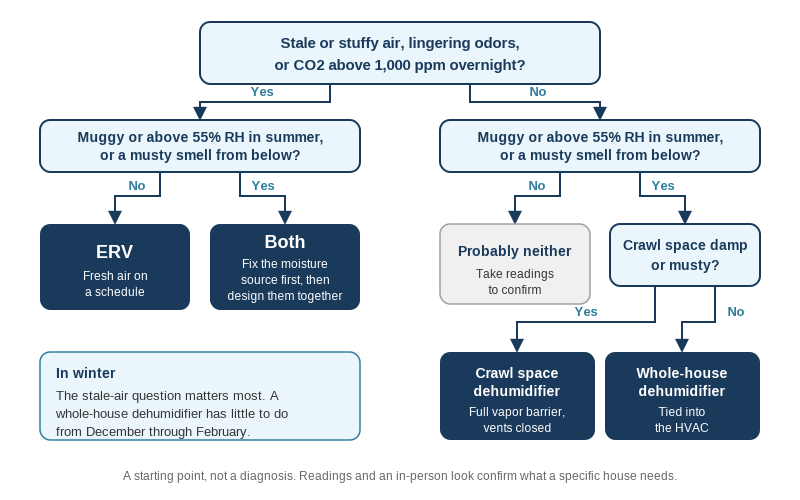
If the crawl space is the source, standing water, drainage problems, and other ways water is getting in get fixed first. Then a crawl space dehumidifier goes in with a vapor barrier covering 100% of the ground and the vents closed. That is the minimum for a dehumidifier to keep up. Full encapsulation goes further, lining the foundation walls with foam board insulation and sealing the vents for good. In an older, drafty house with a damp crawl space, the crawl space fix comes before any talk of ventilation.
Order matters in summer. If the house reads above 55% RH during the cooling season, find and fix the moisture source before counting on more fresh air to help. Bringing in outdoor air during a humid stretch adds moisture to the house, even with an ERV recovering part of it. Ventilation is also a poor first step in a house with a wet crawl space, because the air under the floor is part of the moisture problem. Our comparison of a whole-house vs. crawl space dehumidifier explains how to tell where the moisture is coming from.
Winter usually flips this. During cold weather, ventilation generally lowers indoor humidity. The ERV core holds back some of the moisture that would otherwise leave with the exhaust air, which slows that drying but does not stop it. On mild, damp winter days in the Triangle, the outdoor air can hold about as much moisture as the air inside, so ventilation does little drying.
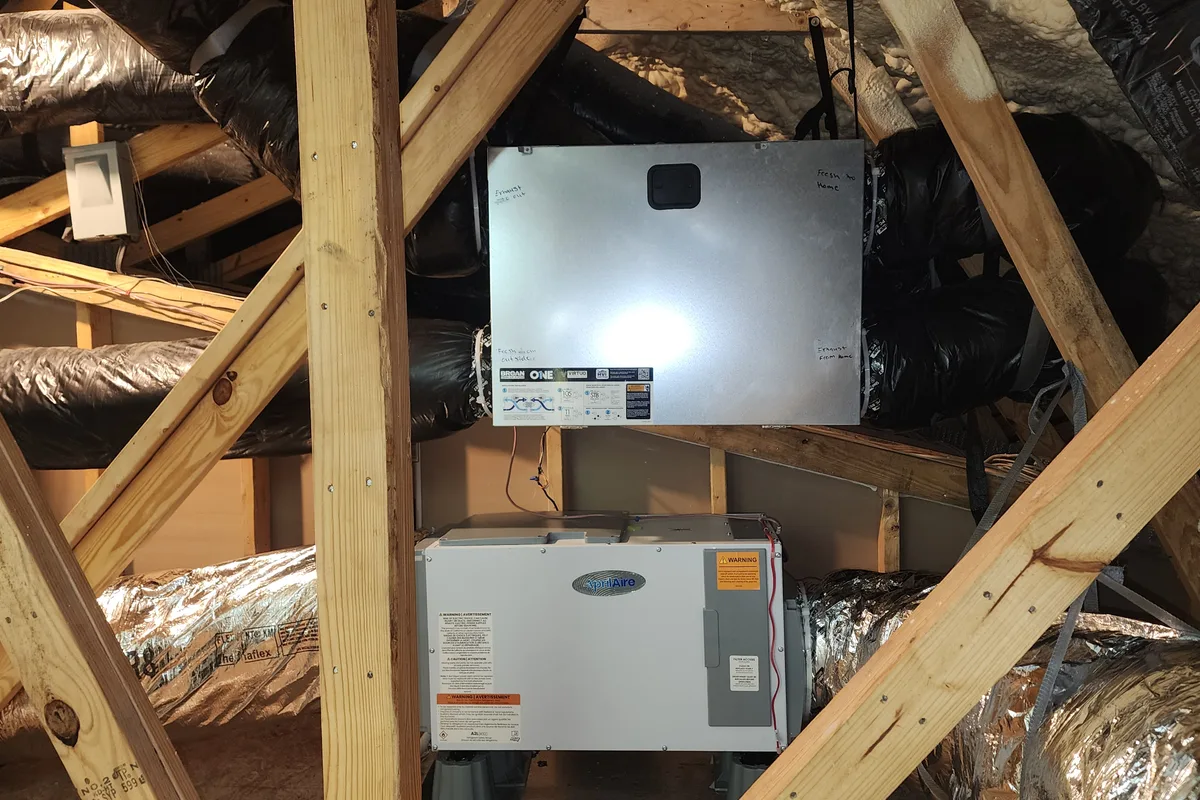
When both go in, they are designed together. The ERV is sized to ASHRAE Standard 62.2 fresh-air rates, and the dehumidifier is sized to the humidity load, which includes the fresh air the ERV brings in. Our post on how ERV installation works walks through the sizing math.
What Each One Costs in the Triangle
Pricing is a range, and the actual number depends on the house.
- ERV installation: typically an estimated $5,000–$7,000, depending on unit selection and duct accessibility.
- Whole-house dehumidifier, integrated with the HVAC: typically an estimated $4,500–$5,500.
- Whole-house dehumidifier, independent or more complex system: typically an estimated $5,000–$7,000.
- Crawl space dehumidifier: typically an estimated $3,000–$4,000 in an encapsulated crawl space, and $3,000–$5,000 in a vented crawl space where the vents are closed as part of the installation.
Each system is quoted on its own after an in-person look at the ductwork, HVAC layout, and the readings inside the house. For the broader picture of ventilation, humidity, and everything else that affects the air inside, see our indoor air quality guide for NC homes.
Frequently Asked Questions
Can an ERV replace a dehumidifier?
No. An ERV ventilates. It swaps stale indoor air for fresh outdoor air and recovers some heat and some moisture in the exchange, but it does not hold indoor humidity at a target. In a Triangle summer, the outdoor air it brings in is humid, so an ERV alone will not fix a muggy house.
Can a dehumidifier replace an ERV?
No. A standard whole-house dehumidifier removes moisture from the air already in the house but brings in no outdoor air. If CO2, VOCs, or odors are the problem, a dehumidifier will not clear them out.
Does a new construction home in Wake County need an ERV and a dehumidifier?
Often both. Newer, tightly built homes trap stale air and off-gassing, and the Triangle's summer humidity still has to be controlled. What a specific house needs depends on its airtightness, HVAC, and the readings inside it, which Triangle Dehumidifiers checks in person.
How much do an ERV and a whole-house dehumidifier cost in the Triangle?
ERV installation typically runs an estimated $5,000 to $7,000. A whole-house dehumidifier integrated with the HVAC typically runs an estimated $4,500 to $5,500, and $5,000 to $7,000 for an independent or more complex setup. Each is quoted for the specific home.
Which should I install first, an ERV or a dehumidifier?
In summer, if the house reads above 55% relative humidity, find and fix the moisture source before counting on ventilation, because fresh air brought in during humid weather adds moisture even through an ERV. When a house needs both, they should be designed to work together. In cold winter weather, ventilation generally lowers indoor humidity rather than adding to it, and stale air is usually the more pressing issue. If humidity is under control and the air feels stale, the ERV is the next step.
Not Sure Which One Your House Needs?
Stale air and damp air can be hard to tell apart by feel, especially when a house has both. A hygrometer and a CO2 reading point you in the right direction, and an in-person look confirms it.
Triangle Dehumidifiers provides in-person evaluations throughout Wake County and the Triangle. We check humidity and CO2, look at your ductwork and HVAC, and tell you what makes sense, including when the answer is only one of the two.
Call or text us at (919) 867-0580 or request a fresh-air and humidity evaluation online. We serve Raleigh, Cary, Apex, Holly Springs, Fuquay-Varina, Garner, Wake Forest, Knightdale, Morrisville, Durham, and Chapel Hill.